2026 Jeju Airport Transportation / Currency Exchange / Immigration Guide
Jeju Airport Complete Guide: Ground Transportation, Driving, Currency Exchange & Tax Refunds, Luggage Storage | Must-have Airport Cheat Sheet for Jeju Travel

- How to get from Jeju Airport to the city
- How to Get to Jeju International Airport from the City
- Which way should you choose to get around Jeju Island?
- How long before your flight should you arrive at Jeju Airport?
- Do you need a passport to fly a domestic flight in Seoul to Jeju Island?
- How do you exchange money at Jeju International Airport? Are the rates good?
- Where do you go for a tax refund at Jeju Airport?
- What facilities are available at Jeju Airport?2

- Jeju Airport FAQ
Last updated: July 29, 2026
Jeju International Airport (CJU) is the main gateway to Jeju Island and one of South Korea’s busiest airports. It serves frequent domestic flights as well as selected international routes across East and Southeast Asia.
This guide is based on an in-person visit to Jeju International Airport and a domestic flight between Seoul Gimpo and Jeju. Time-sensitive information was last checked on July 29, 2026. Flight schedules, transportation services, facility locations, and operating hours may change, so confirm the latest details with your airline or the official Jeju Airport website before departure.
1. Taxis are one of the most convenient ways to get around Jeju, especially for groups and travelers with luggage. You can request a ride through Kakao T or Uber. 2. If you have a late flight, consider storing your luggage at the airport before sightseeing. Check the current location, hours, and rates of the luggage storage service before use. 3. Currency exchange options include staffed bank counters and self-service exchange machines. Availability and operating hours vary. 4. Jeju buses accept compatible transportation cards, including T-money and Cashbee. Seoul’s Climate Card cannot be used in Jeju, and some bus routes may not accept cash. 5. Jeju Airport has a relatively compact layout. Arrivals are primarily on the 1st floor, while departures are on the 3rd floor. |
Jeju International Airport is not that large, and both international and domestic flights use the same terminal. The 3rd floor is the departures floor (departing Jeju Island), and the 1st floor is the arrivals floor (arriving in Jeju Island).
Jeju Airport is a major domestic aviation hub. Typical nonstop flight times are approximately 1 hour 10 minutes from Seoul Gimpo and about 1 hour from Busan, although schedules and actual travel times vary by flight.
Selected International Routes from Jeju Airport | |
| Airline | Destinations |
| Korean Air | Beijing Capital/Tokyo Narita |
| Jeju Air | Beijing Capital/Beijing Daxing/Xi’an, China/Hong Kong Chek Lap Kok |
| T'way Air | Kansai, Osaka/Taipei Taoyuan, Taiwan/Kaohsiung, Taiwan/Singapore |
| Jin Air | Shanghai Pudong |
| Taiwan Tigerair | Taichung, Taiwan |
| Eastar Jet | Shanghai Pudong/Taipei Taoyuan, Taiwan |
| Hong Kong Express | Hong Kong Chek Lap Kok |
| Scoot | Singapore |
| Others | Dalian/Harbin/Fuzhou/Tianjin/Shenyang/Ningbo/Hangzhou/Nanjing/Guangzhou/Shenzhen/Zhengzhou/Changsha, etc. |
| Jeju Airport Domestic Routes | |
| Airline | Destinations |
| Korean Air | Seoul Gimpo/Busan Gimhae/Daegu/Cheongju/Gwangju/Yeosu/Sacheon/Ulsan |
| Asiana Airlines | Seoul Gimpo/Daegu/Cheongju/Gwangju/Yeosu |
| Jeju Air | Seoul Gimpo/Busan Gimhae/Daegu/Cheongju/Gwangju |
| Jin Air | Seoul Gimpo/Busan Gimhae/Daegu/Cheongju/Gwangju/Yeosu/Gunsan/Ulsan/Wonju/Mokpo Muan/Pohang/Gyeongju |
| T'way Air | Seoul Gimpo/Daegu/Cheongju/Gwangju |
| Eastar Jet | Seoul Gimpo/Busan Gimhae/Cheongju/Gunsan |
| Air Busan | Seoul Gimpo/Gangwon-do Yangyang |
| Air Seoul | Seoul Gimpo/Gimpo |
| Air Korea | Cheongju |
Just looking at this lineup, you can clearly see how important a hub Jeju Island is. Nearly every airline in Korea operates domestic routes here.
This time, the author flew from Seoul Gimpo to Jeju on Eastar Jet, but it is absolutely no problem even if you cannot get on the same flight as your friends. Flights from different airlines depart about every 10 to 15 minutes, so this is an easy route to book tickets for.
Jeju Airport is not open 24 hours, and travelers cannot stay inside the passenger terminal overnight. Terminal access hours may vary according to flight operations, so check the latest official information if you have an early or late flight.
How to get from Jeju Airport to the city
💬The main options are taxis, buses, and rental cars. Since Jeju Island doesn’t have a subway, it’s a good idea to check your transportation plans in advance.
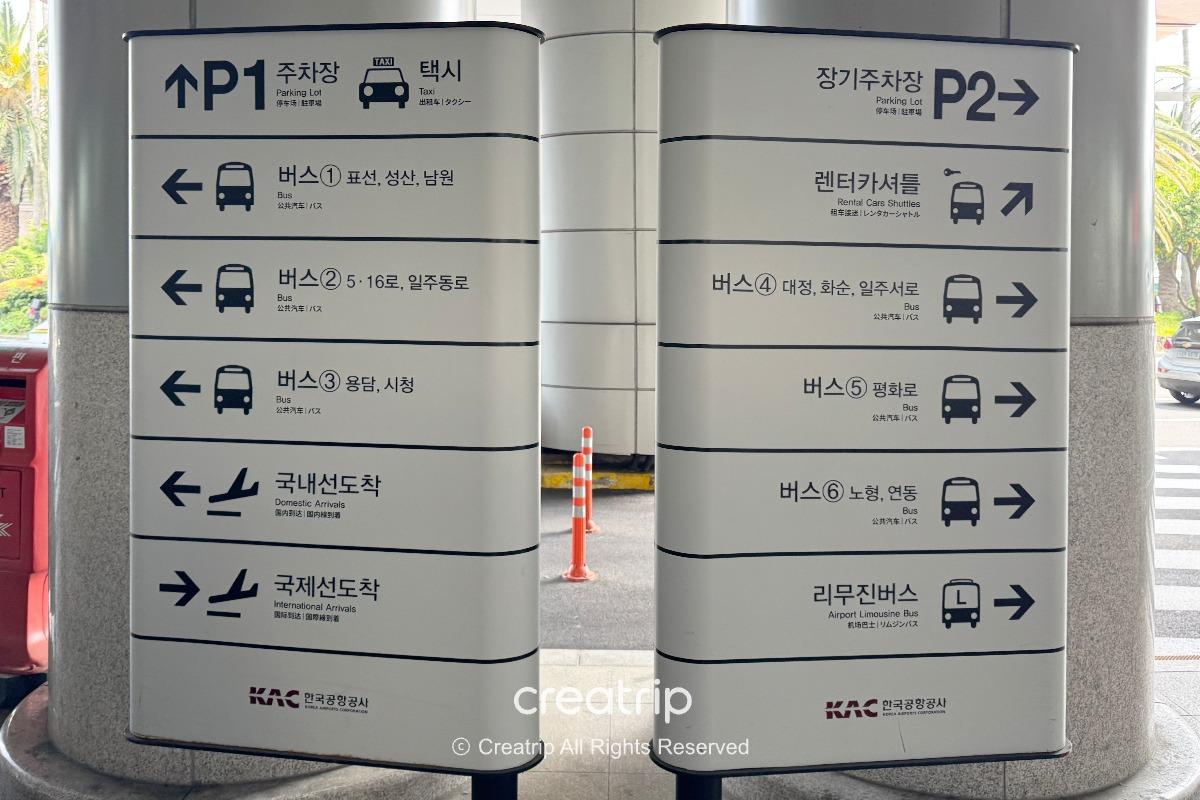
Getting from the airport to the city comes down to three choices, bus, taxi, or rental car. There’s no rail service, so all travel is by road.
If you’ve booked a rental car, the usual process is to meet the rental company at the designated spot after you arrive, then take their shuttle to the pickup location. For taxis or a private charter, you can simply catch one directly on the 1st-floor arrivals level.
1. Taxi
- Taxi stand: Exit 1st floor Gate3 or Gate4, then cross the road to the platform on the opposite side

At Jeju Airport, taxis operate on a queue system at the taxi stand. A standard 4-passenger taxi can usually fit about two suitcases in the trunk, so be mindful of your group size and luggage. You’ll want to avoid situations like not being able to fit, or getting an unhappy look from the driver.
Below are the airport’s published estimates for travel time and fares (they may vary slightly depending on traffic and weather).
| Destination | Approximate Taxi Time | Estimated fare (Standard taxi) |
| Central Jeju City | 30 min | ₩9,000 |
| Aewol | 55 min | ₩25,000 |
| Hallasan | 60 min | ₩30,000 |
| Jungmun area | 80 min | ₩35,000 |
| Seongsan-eup | 100 min | ₩45,000 |
🍊Editor’s Tip
Our group of six split into two taxis because we were carrying several large suitcases. If you are traveling with a larger group or multiple full-size bags, request a larger vehicle in advance where possible. Vehicle availability and luggage capacity vary, so confirm the vehicle type before boarding. |
2. Bus
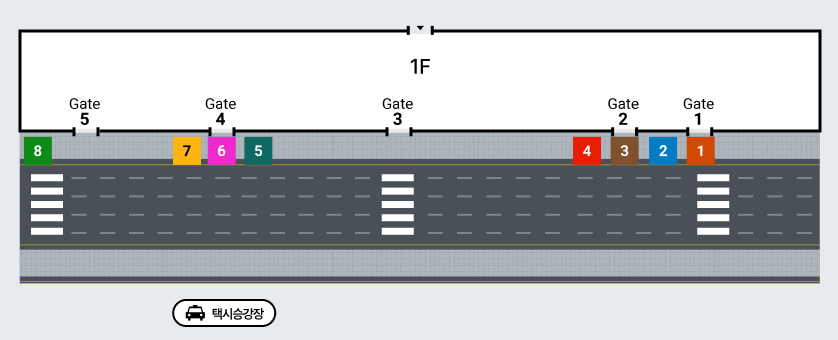
Source: Jeju Airport Official Website
The boarding areas and main routes are as follows.
| Boarding location | Route |
Gate 1, 2 | ① Toward Pyoseon, Seongsan, Namwon |
| ② Toward Route 516, Ilju Dong-ro | |
| ③ Toward Yongdam, City Hall | |
| ④ Tourist attraction loop bus | |
Gate 3 | Cross the road to the taxi stand |
Gate 4 | ⑤ Toward Daejeong, Hwasun, Ilju Seo-ro |
| ⑥ Toward Hwapyeong-ro | |
| ⑦ Toward Nohyeong, Yeondong | |
Gate 5 | ⑧ Airport limousine bus |
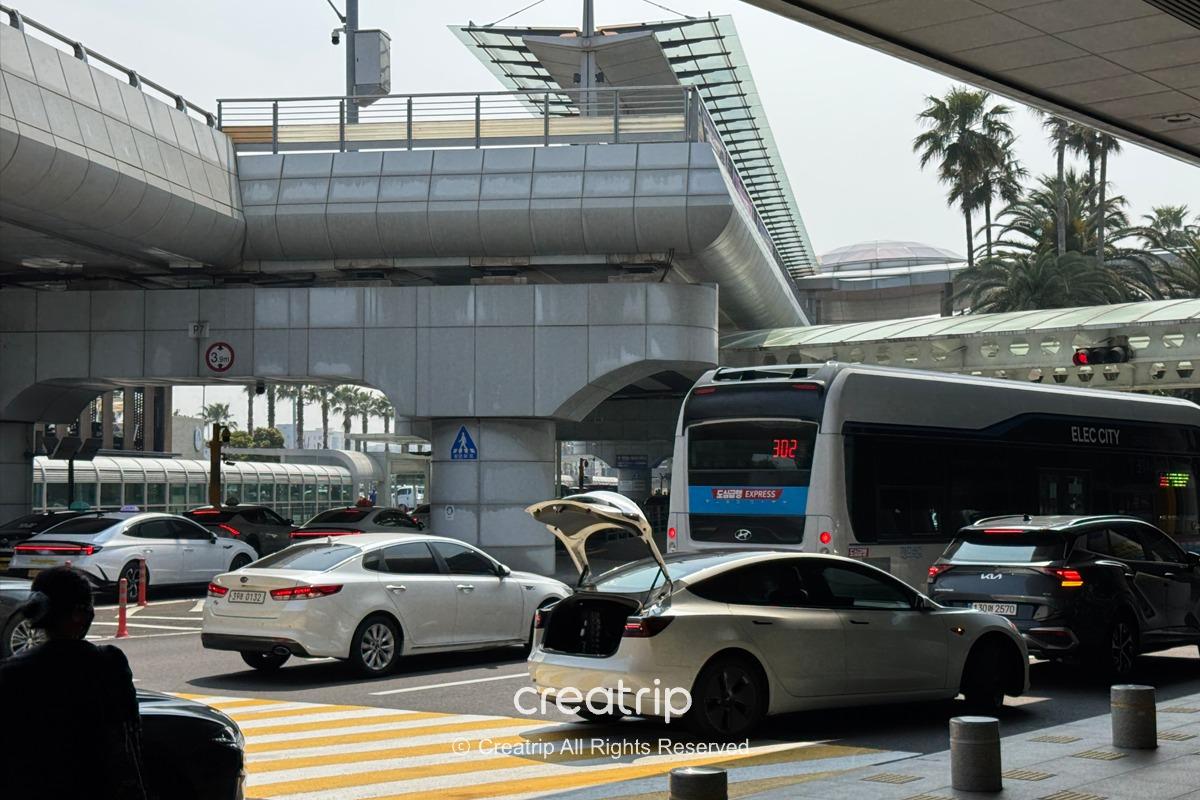
There are a lot of routes, and honestly it can be pretty confusing. On top of that, some routes allow large suitcases and others do not. Regular city buses often don’t have dedicated luggage space, while express buses (급행) often have areas where you can stow luggage, similar to airport buses.
If you’re prioritizing budget, or you’re traveling light and have plenty of time, taking the bus is totally fine. That said, we recommend checking in advance whether there’s luggage space before you board. Otherwise, it’s usually less stressful and more comfortable to just take a taxi.
🍊 Quick tip from the writer
On the official Korean-language website for Jeju Airport, you can check detailed bus information, but if you switch to Japanese or other languages, the amount of information drops significantly. If you cannot read Korean, have luggage, and do not want to spend extra time, taking a taxi is the smoothest option. If you really want to travel by bus, choosing a route with a slightly higher fare (from ₩3,000) often means there is luggage space, but be sure to confirm on site. |
How to Get to Jeju International Airport from the City
💬 The most convenient option is a taxi, if you rented a car, you will need to travel from the return location to the airport. On your last day, we recommend dropping off your luggage at the airport first, then enjoying sightseeing in the city.
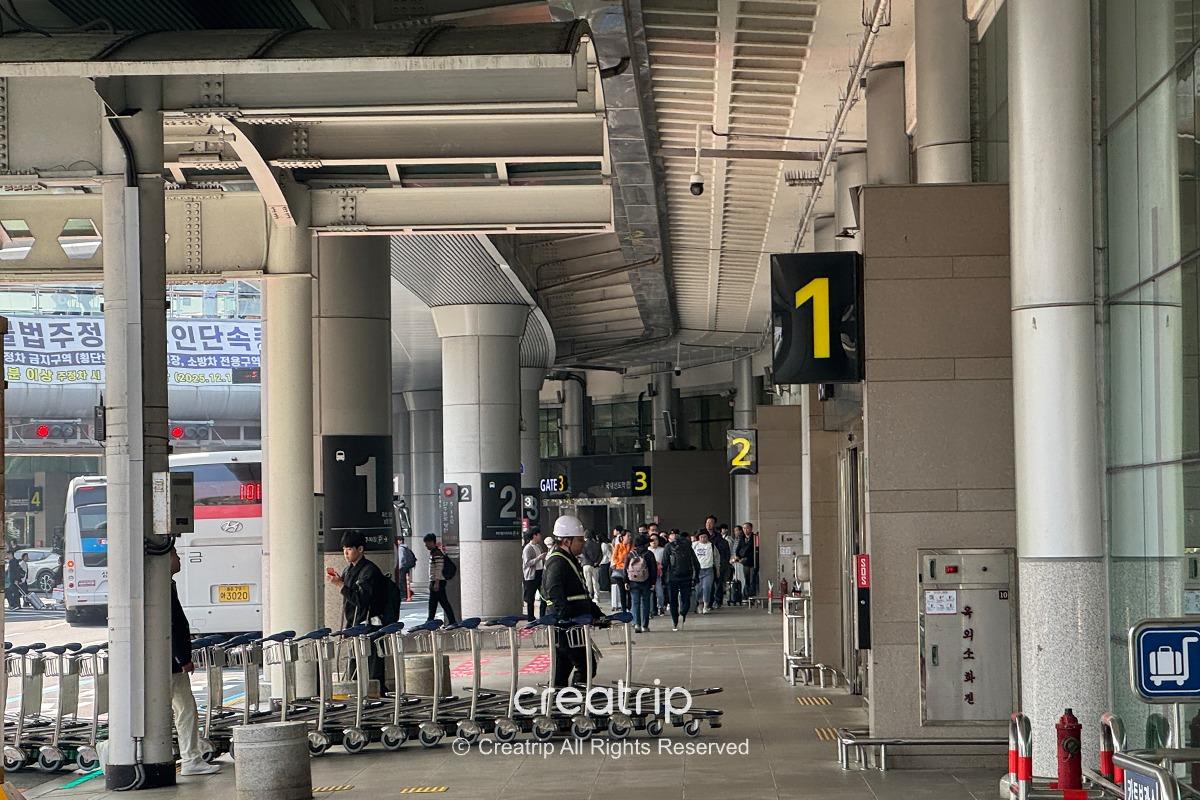
Jeju International Airport is located very close to the city. If you are coming from other areas, it is a bit farther away, and the best way to plan your trip will depend on your flight time.
1. Early morning to midday flights
Call a taxi right after you check out and head straight to the airport. (Note: Based on what a local taxi driver told us, it can be very hard to get a taxi around 11:00. This is right during the checkout rush when app bookings pile up, so it is safer to check out a little earlier.) |
2. Afternoon to early evening flights
After checking out, leave your luggage somewhere, visit one or two spots around your accommodation, then take a taxi to the airport.(Note: Around 5:00 pm, during the evening rush hour, traffic jams are more likely in the city, so plan with plenty of time.) |
3. After dinner to your late-night flight
Since my flight this time was departing at 20:00, after checking out I left my luggage at the airport, then took a taxi or bus back into the city and visited two or three places. Without luggage, it’s much easier to get around, and if the attractions you want to see are clustered in the same area, getting from place to place is also simple. |
Most people want to enjoy Jeju Island as much as possible before heading home, so for your last day, it is best to focus your plans on the downtown area near the airport. If you go sightseeing after leaving your luggage at your accommodation, you will have to go back and pick it up later, so it is much easier to just store it at the airport.
🍊Writer’s one tip
If you’re renting a car, you can leave your luggage in the vehicle, but make sure to plan your schedule with enough time after returning the car and before airport check-in. If you want to store your bags at the airport, we recommend “ZIM CARRY,” located at the back of Gate5 on the 1st-floor Arrivals level. Pricing is in 4-hour blocks, and there’s an additional fee for any extra time, but the rates are reasonable. Try making good use of it.. |
Which way should you choose to get around Jeju Island?
After checking the transportation info to and from Jeju Airport that we put together, you might still feel a bit confused, no worries. We have summarized everything into a table so you can compare at a glance. Also, “airport buses” do not only mean transportation between the airport and downtown, they can also be a practical option for travelers getting around Jeju Island, helping you decide how to travel point to point on Jeju.
Pros | Cons | |
Taxi | Flexible pick-up and drop-off locations | Relatively expensive |
Great for a first trip to Jeju Island | ||
Fastest way to get there | Watch out for peak hours | |
Good if you have lots of luggage or a larger group | ||
Bus, city bus | Cheapest option | Routes can be complicated |
Great for backpackers | Not ideal if you have lots of luggage | |
Rental car (self-drive) | Very flexible itinerary | Relatively expensive |
Pay attention to traffic rules and driving conditions | ||
Worth it when you split the cost | ||
Be mindful of pick-up and return times |
If you want to decide your main mode of transportation based on how you plan to explore Jeju Island, we have also put together a comparison table for you:
P-type travelers with no fixed itinerary | Taxi |
J-type travelers with a clear plan | Taxi, rental car (self-drive) |
A couple traveling together | Taxi, rental car (self-drive) |
Backpackers | Bus |
Family trip | Rental car (self-drive) |
First time visiting Jeju Island | Taxi |
Road trip around the island | Rental car (self-drive), bus |
How long before your flight should you arrive at Jeju Airport?
💬 For international flights, just follow your usual routine, arrive at the airport around 3 hours before departure. For domestic flights, decide based on whether you have checked baggage and whether online check-in is available.
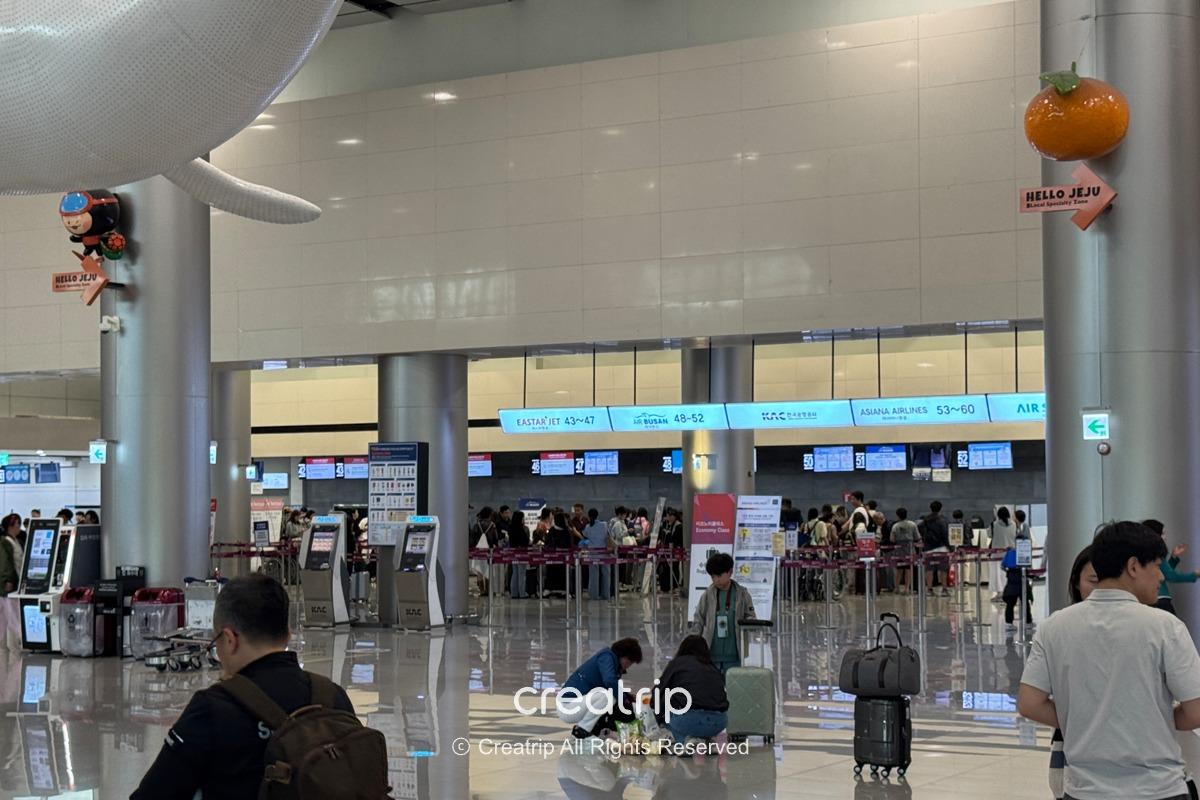
This answer is mainly divided into three parts, whether it’s a “domestic flight” and whether you have checked baggage, and whether you’re taking an “international flight.”
Route | Baggage | Latest check-in time |
Domestic flights (Within Korea, round trip) | With checked baggage | 1 hour before departure |
No checked baggage (Carry-on only) | 40 minutes before departure |
For domestic flights with checked baggage, plan to arrive about 1.5 to 2 hours before departure. If you are traveling with carry-on baggage only and have already completed online check-in, allow about 1 to 1.5 hours for identity checks, security screening, and boarding. Always follow the check-in, baggage-drop, and boarding deadlines provided by your airline.
That said, for those taking a domestic flight in Seoul to Jeju Island, we still recommend not cutting it too close even if you don’t have checked baggage, just in case online check-in suddenly isn’t available and the airport counter has already closed.
🍊 Editor’s handy Jeju Airport tips from our visit
When flying on a domestic route within Korea to and from Jeju Island, carry-on baggage is not subject to the “liquids must be checked” restriction. For example, drinks or water you buy before security can go through the security screening with you, so you do not need to pour them out. However, please note that standard rules still apply on international flights, such as liquids over 100 ml must be checked, and you cannot bring drinks through X-ray security. |
Route | Baggage | Recommended arrival time for check-in |
international (To and from Jeju Island from overseas) | Checked baggage | 3 hours before departure |
No checked baggage (Carry-on only) | 2 hours before departure (Complete check-in before the counter closes) |
For international flights, it is the same as regular overseas travel, it depends on whether you have luggage and whether you can check in online in advance. To be safest, arrive at the airport 3 hours before departure, then queue to check in, drop off checked baggage, clear immigration and security, and board. If you do not have luggage, arrive at a time that works for you, just do not cut it too close.
Even though Jeju Island is not very large, international flight procedures are the same as at most airports. Most airlines close check-in counters 1 hour before departure, so even if you are not checking baggage, you should still complete check-in at least 1 hour in advance.
🍊Editor’s handy tips from visiting Jeju Airport
If you’re worried about the departure crowds at Jeju Airport and want to check the congestion in real time, you can click here to check the official Jeju Airport website. It provides live waiting-time updates (left, time required for identity check, right, time required for security screening). |
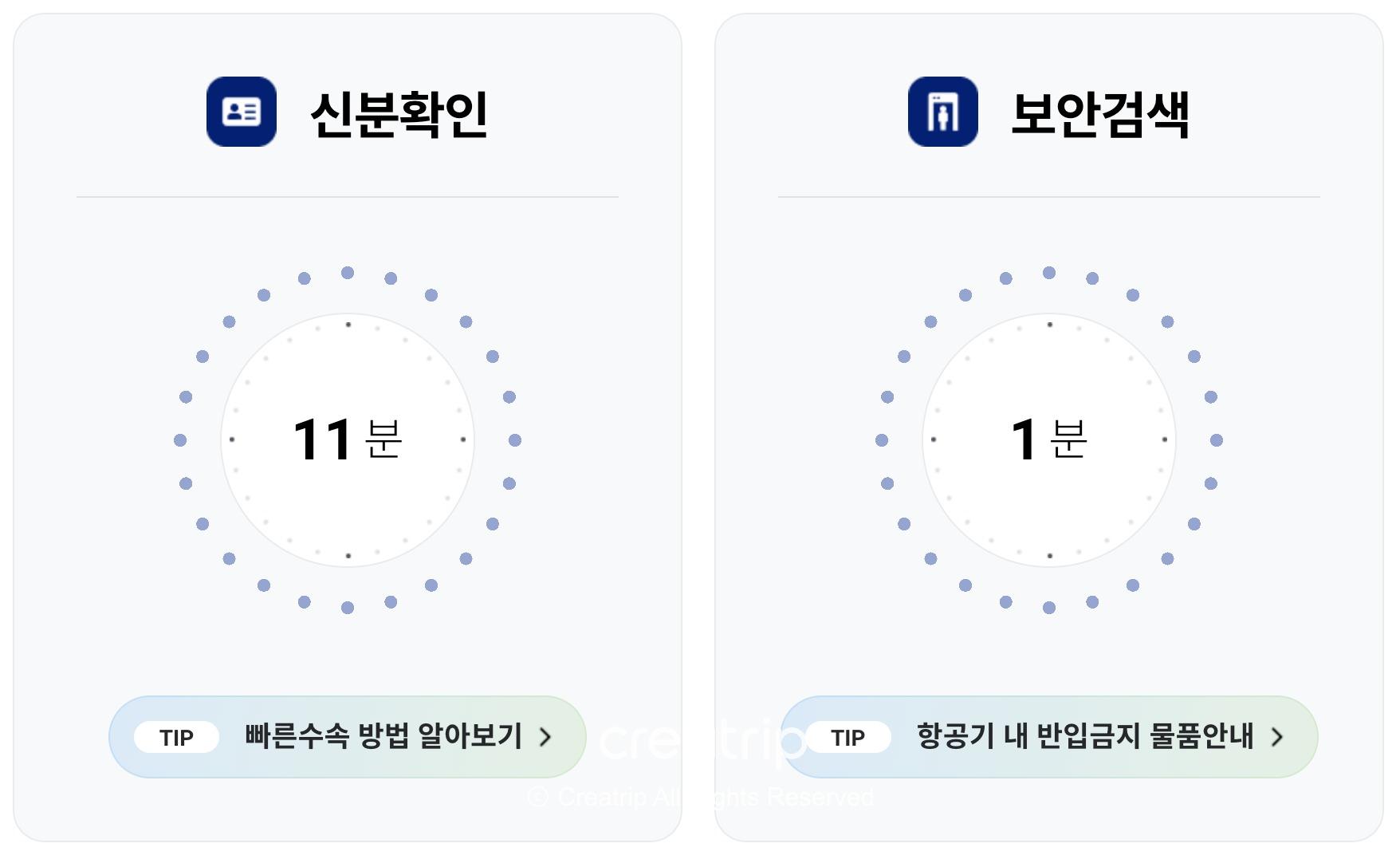 Source: Official Jeju Airport website Source: Official Jeju Airport website |
Do you need a passport to fly a domestic flight in Seoul to Jeju Island?
💬If you have a Korean Residence Card (ARC), that is enough. Regular visitors should be sure to carry your passport.
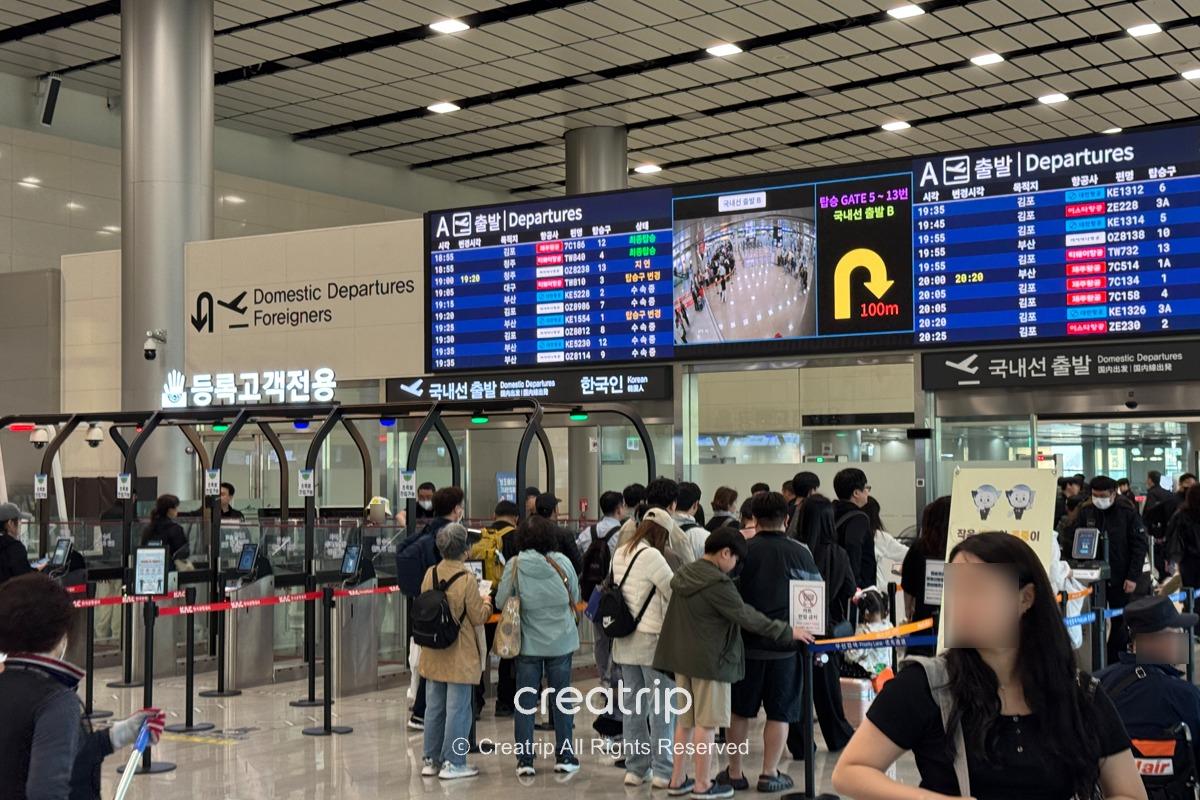
When taking a domestic flight in Seoul to Jeju Island, long-term residents with an Alien Registration Card (ARC) only need to show their ARC to board, no need to carry a passport. However, short-term tourists must carry their original passport for identity checks.
Eligible passengers may be able to use biometric identification lanes after completing registration. Eligibility and procedures vary, and biometric access may not replace every identity check. Foreign travelers should still carry the original identification accepted by their airline.
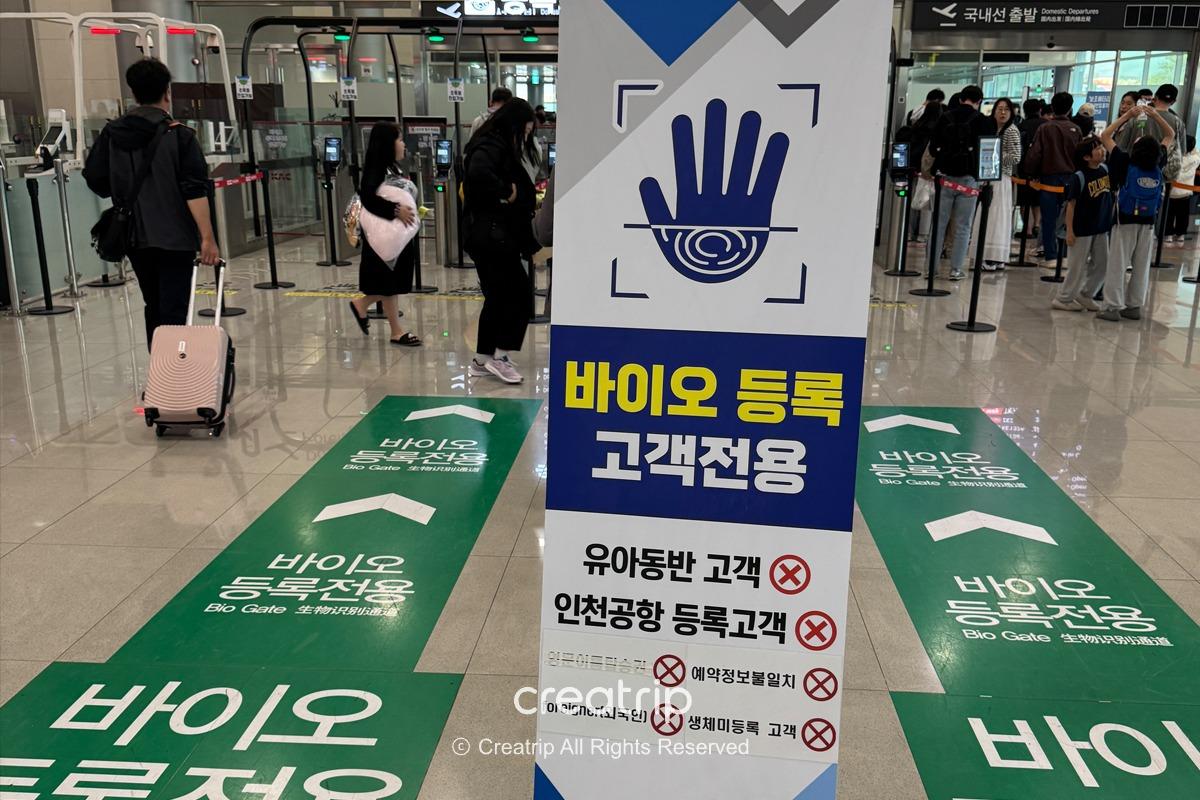
🍊Tips from my Jeju Airport visit
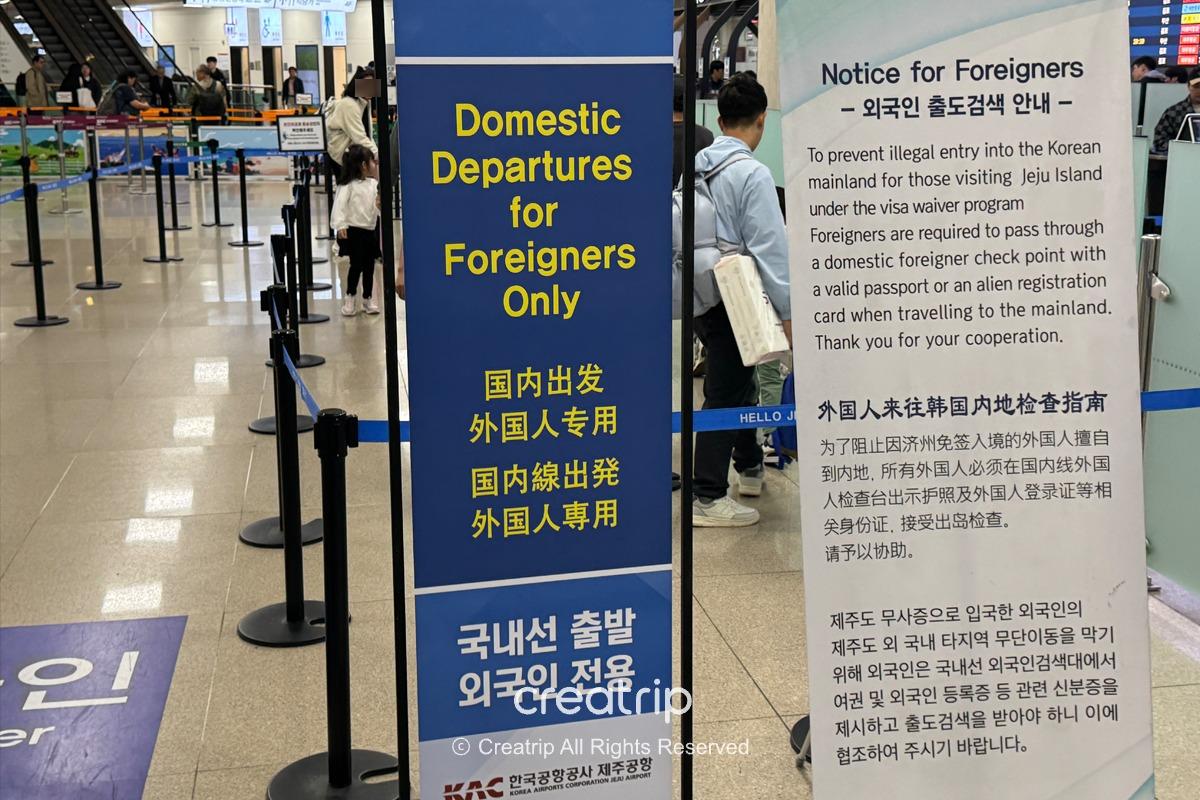
However, when taking a domestic flight from Jeju Airport back to the Korean mainland, even foreigners who have registered still need to use the foreigner lane for an ID check, you cannot go through the Korean lane to board. This is because Jeju Island offers visa-free entry for many countries, but the Korean mainland is not visa-free for most countries, so foreigners need to have their identity verified again. |
 |
How do you exchange money at Jeju International Airport? Are the rates good?
1. Bank currency exchange counters at Jeju Airport
- Shinhan Bank: Next to Gate 5 on the 1st floor
- Jeju Bank: Across from Gate 5 on the 1st floor
[Image slider] 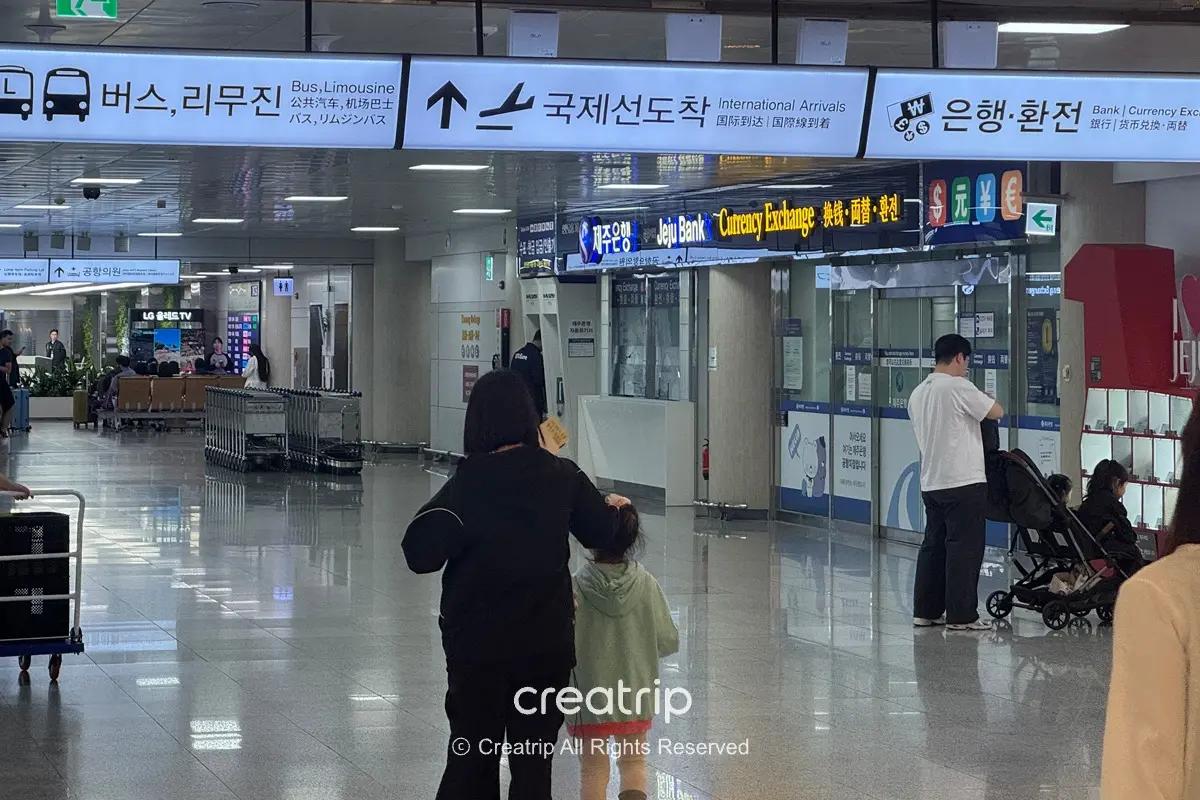
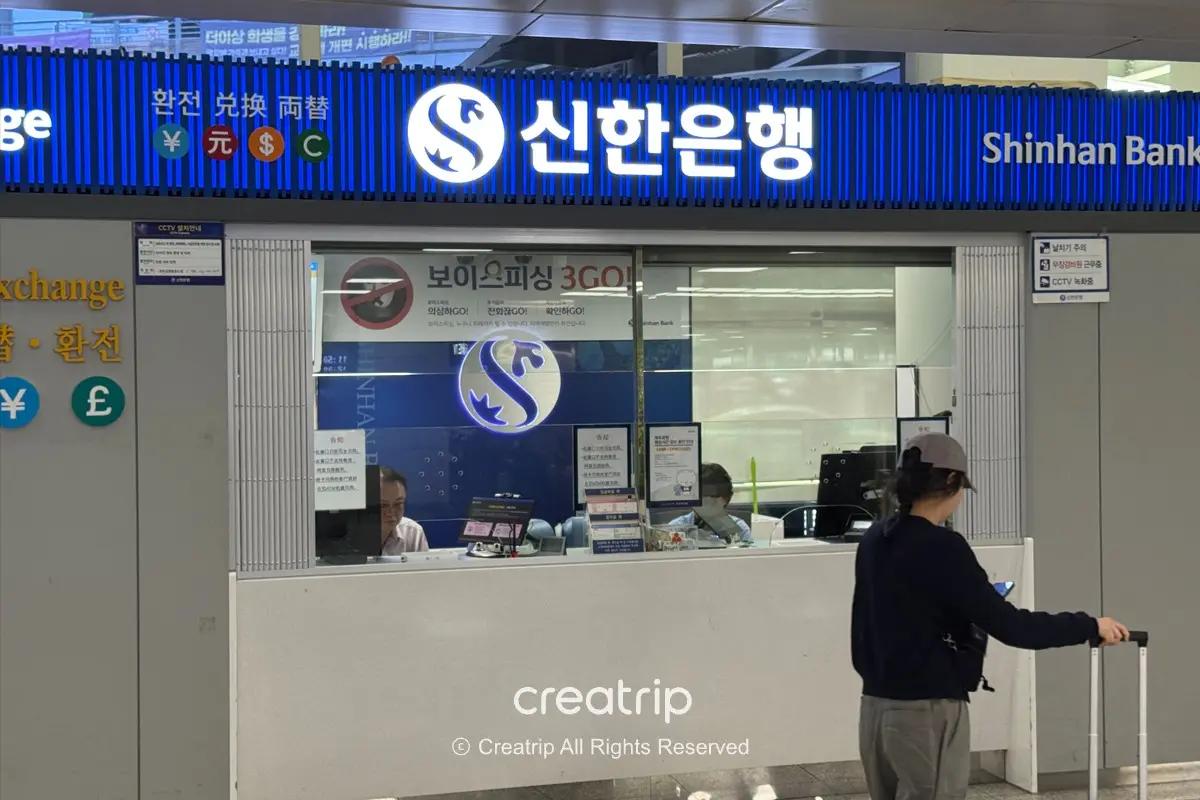
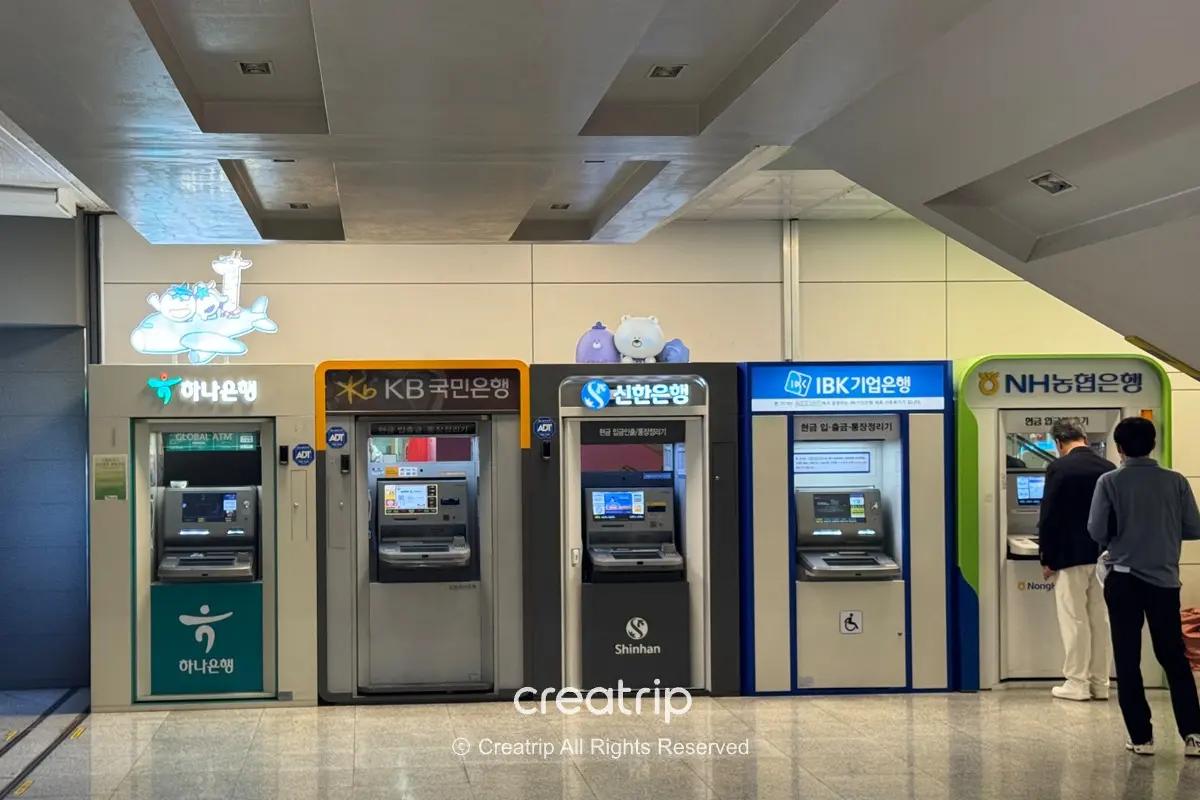
If you want to exchange money at Jeju Airport, head to the international area on the 1st-floor arrivals level, where you will find two banks, Shinhan and Jeju (closed on weekends and public holidays, open 09:00 to 16:00). For domestic flights, it is mostly ATMs for cash withdrawals.
Also, on the 3rd-floor departures level (departures level) inside the international duty-free zone, there is a Jeju Bank currency exchange counter as well (open 06:00 to 23:00), which travelers can make good use of.
| Exchange Rates on May 4, 2026 | ||
| Jeju Airport currency exchange | Myeongdong currency exchange shops | |
| US dollars | 1420.97 | 1465 |
| Japanese yen | 9.0431 | 9.28 |
| Hong Kong dollars | 181.25 | 186.3 |
| Chinese yuan | 197.91 | 212 |
When our editor walked by, we didn’t see an exchange-rate board for New Taiwan Dollars, but you can “definitely” exchange them. Based on comparisons with money changers in Seoul Myeongdong, the TWD rate at Jeju Airport is likely about 2 TWD lower than in Seoul.
2. Jeju Airport Wowpass Currency Exchange Machine
- Location: 1F, next to the Gate3 escalator, next to the SKT counter at Gate5
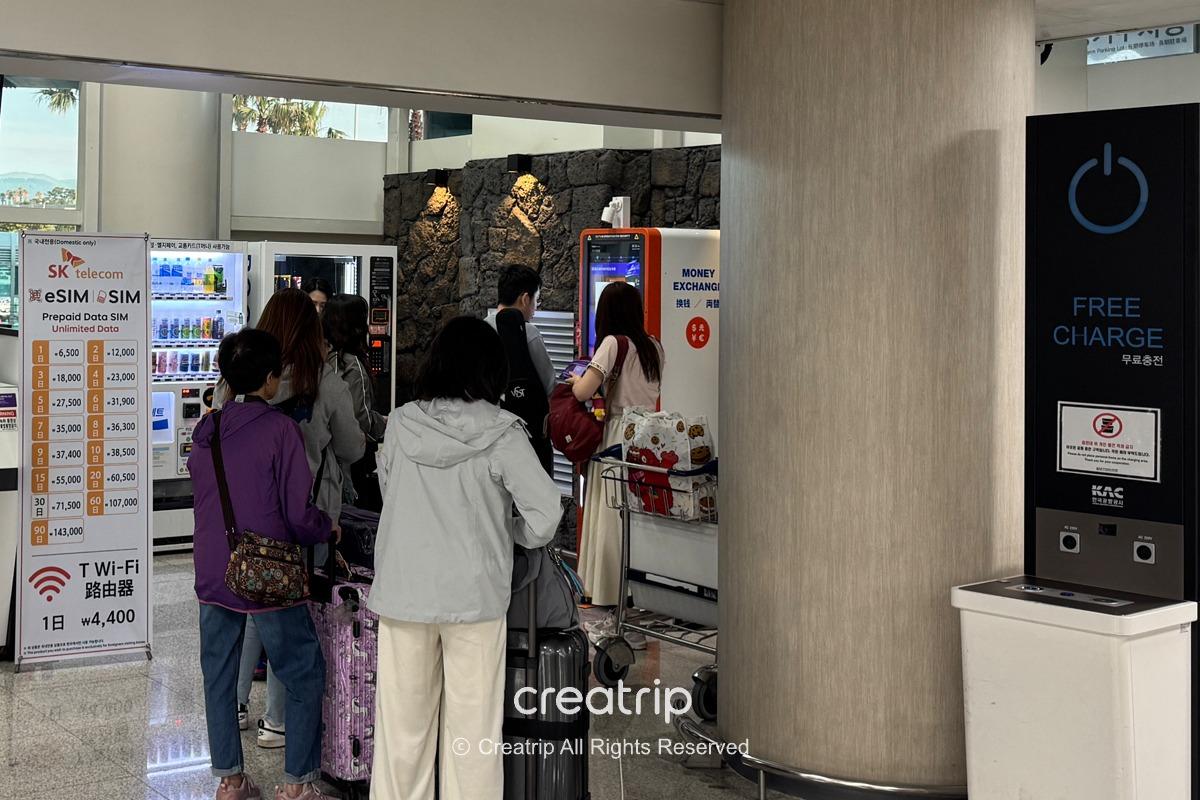
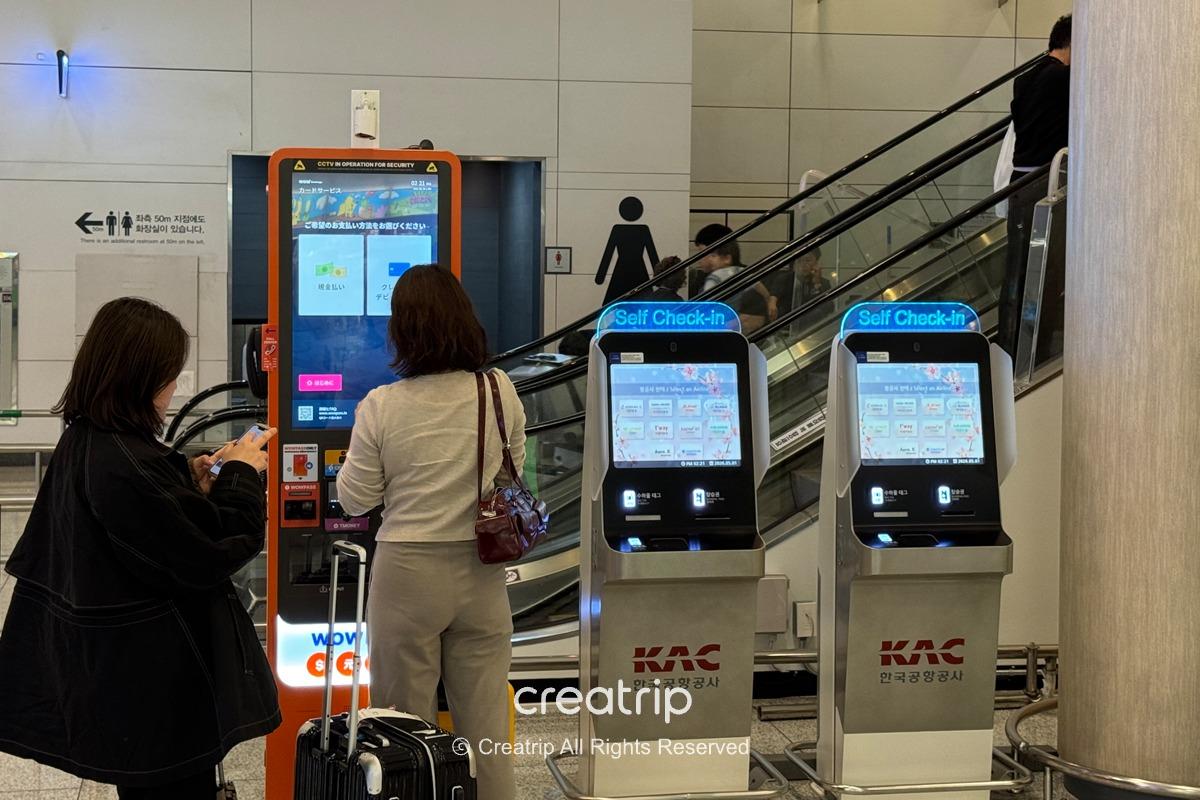
If the bank rate isn’t good, or it’s after business hours and you can’t exchange money, you can also use the Wowpass exchange machine at Jeju Airport.
🍊 Handy Tips From Our Editor’s Visit to Jeju Airport
In fact, most shops and restaurants on Jeju Island accept card payments. Only some traditional markets or market vendors require cash, so you do not need to exchange too much cash. Just make sure you have enough balance on your transit card (T-money transit card and Cashbee can be used throughout Korea, including Jeju Island, but the Climate Companion Card is only valid in Seoul). |
Where do you go for a tax refund at Jeju Airport?
Step 1. Before security: Scan your tax refund form at the kiosk near Gate 5 on the 3rd-floor international departures level.
Step 2. After security: Follow the instructions on your tax refund form and confirm the current refund-counter location on the airport display.
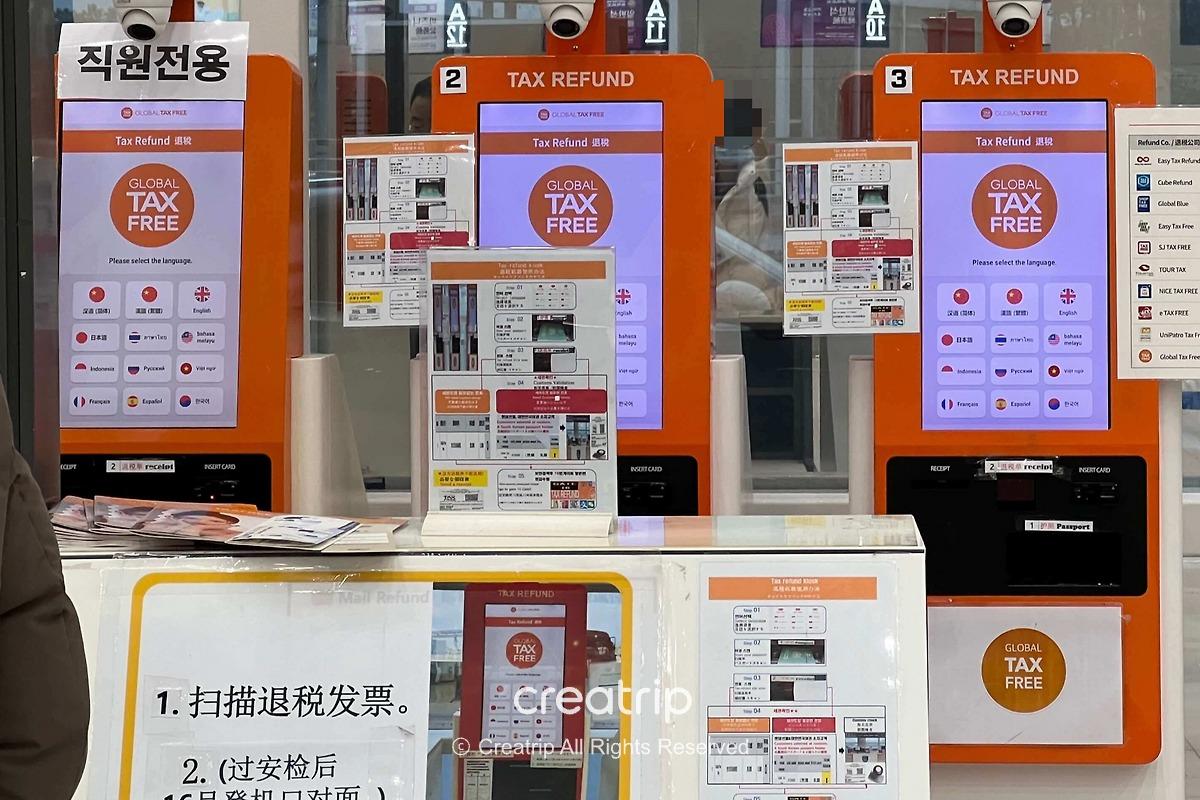
To get a tax refund at Jeju Airport, go to the international departures level on the 3rd floor. First, scan your tax refund form at the Tax Free self-service kiosk next to Gate5. Then after you pass security, pick up your tax refund cash at the staffed Global Tax Free counter at Gate 16.
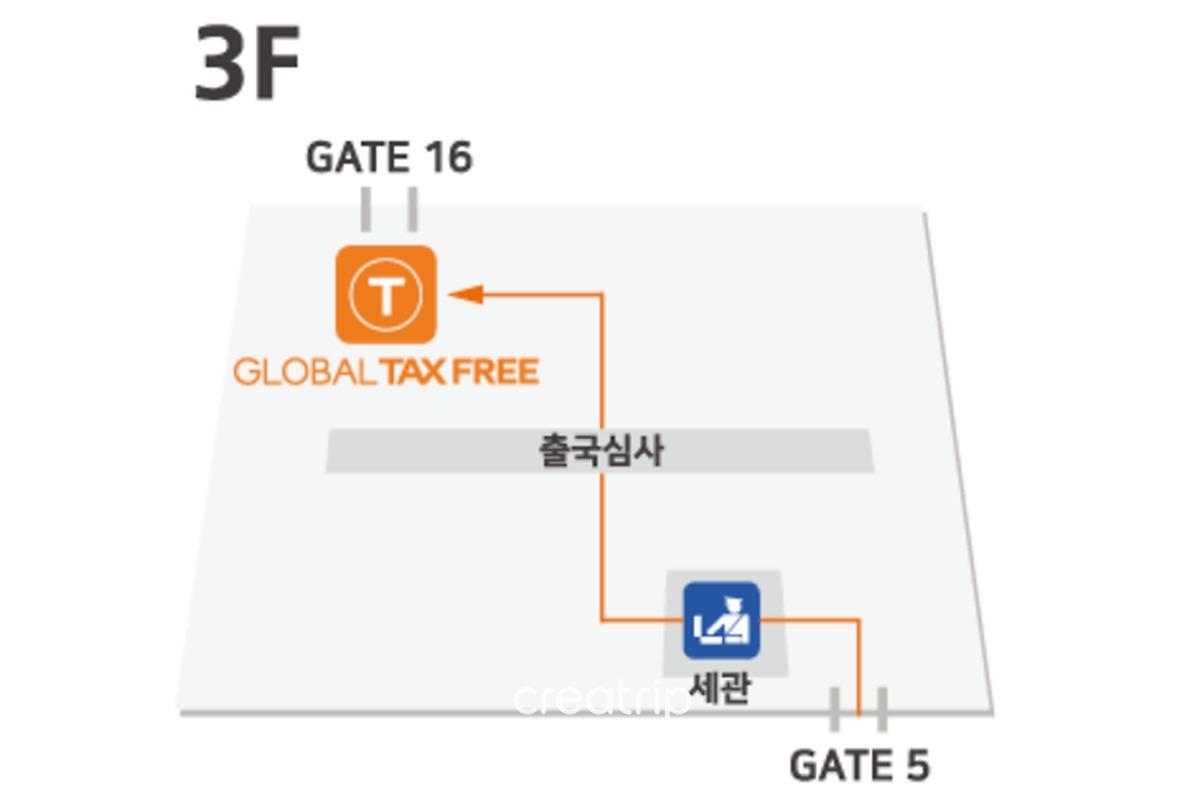
🍊 Editor’s tip: Handy Jeju Airport tax refund pointers
If the items require a customs inspection, an “X” will appear when you scan the tax refund form at the self-service kiosk, so ask the staff on site for help and head to customs to have the refund items inspected, then after you pass security screening you can collect your refund at Gate 16. |
What facilities are available at Jeju Airport?
[Spot] Olive Young e-gift voucher (buy and use immediately, tax refund eligible)
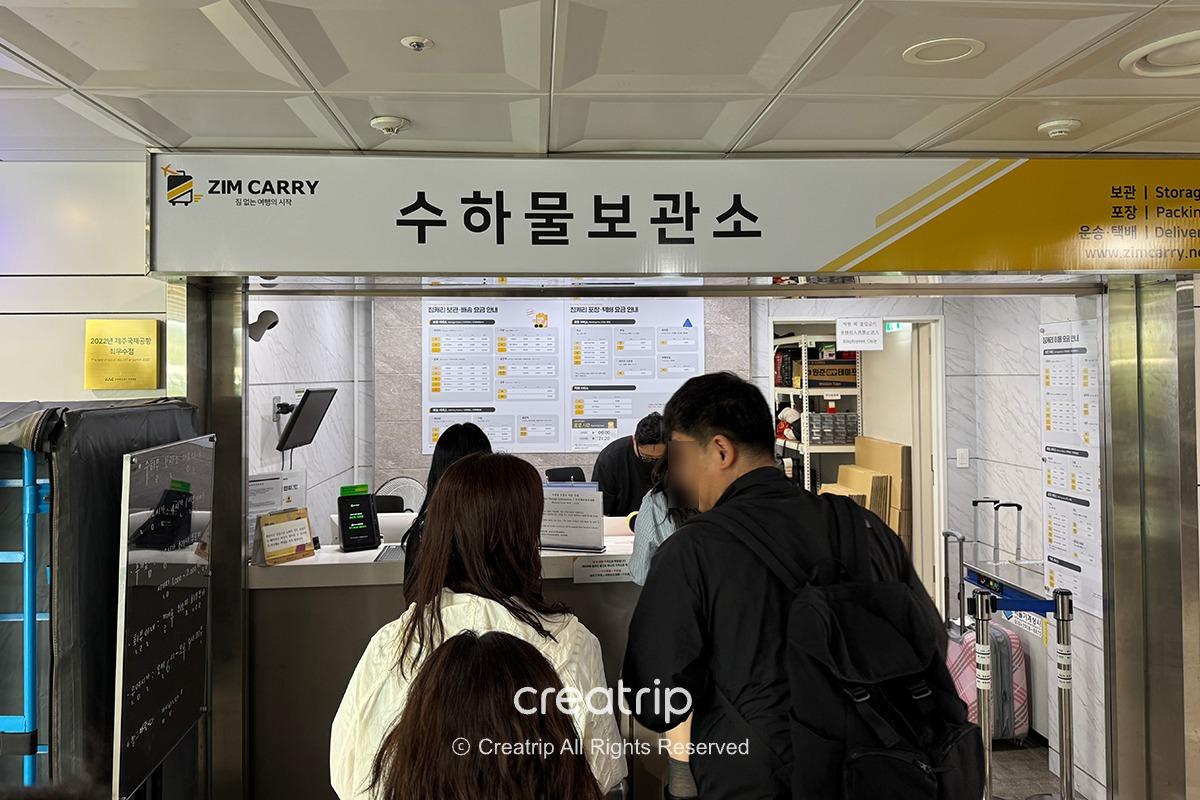
2. Luggage storage, ZIM CARRY
- Location: 1st floor, Gate5
- Hours: 06:00 to 21:20
☑️ Make sure your phone supports eSIM (best for iPhone users) ☑️ You need a Korean 010 phone number to register for restaurant waitlists on Jeju Island ☑️ Heavy phone user who wants truly unlimited data ☑️ A local Korean carrier, not an overseas multi-region plan or roaming ☑️ Want excellent signal all across Korea, so you do not have to worry about slow speeds 🔗 If you are interested, you can check the highly rated reviews from over 7,000 buyers via the link below. You can also enjoy fast high-speed internet on Jeju Island, and you will not have to worry about losing the SIM card you took out, it is genuinely stress-free. |
[Spot] Buy now and use right away🎉 SKT eSIM (Includes a 010 number, unlimited native network data)
[Image slider] 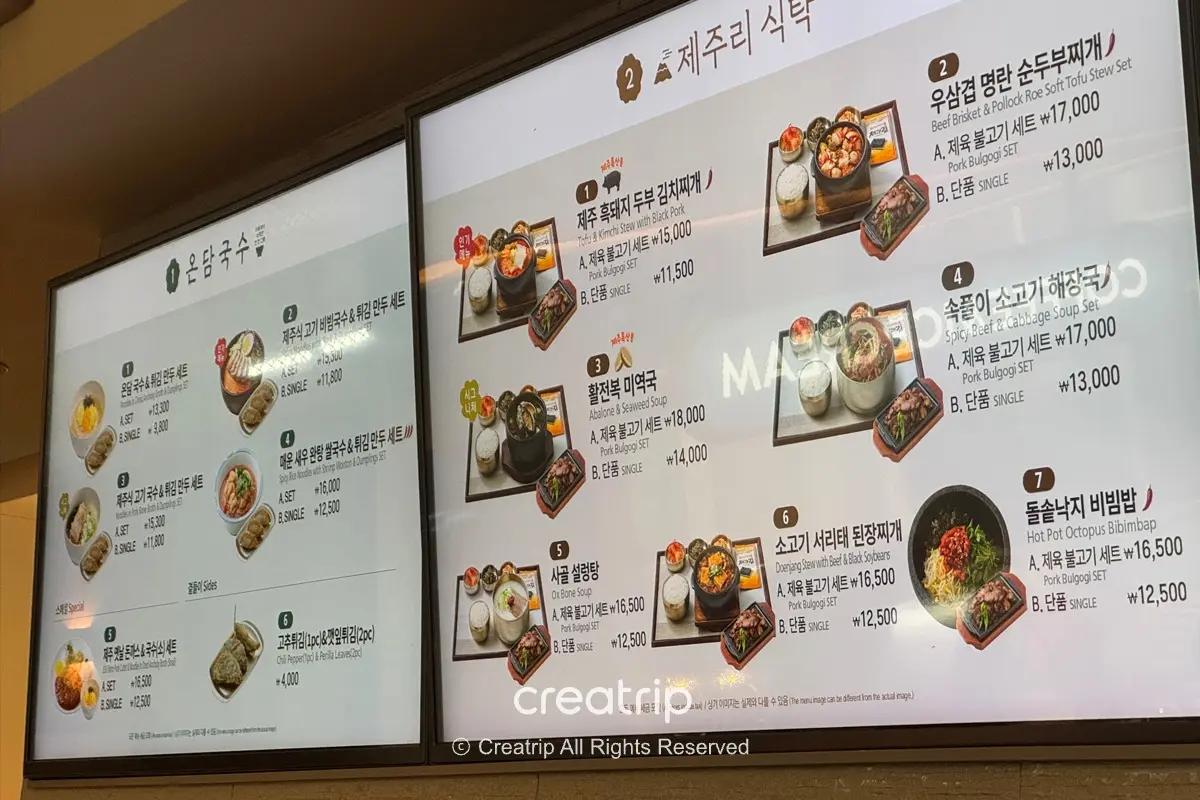
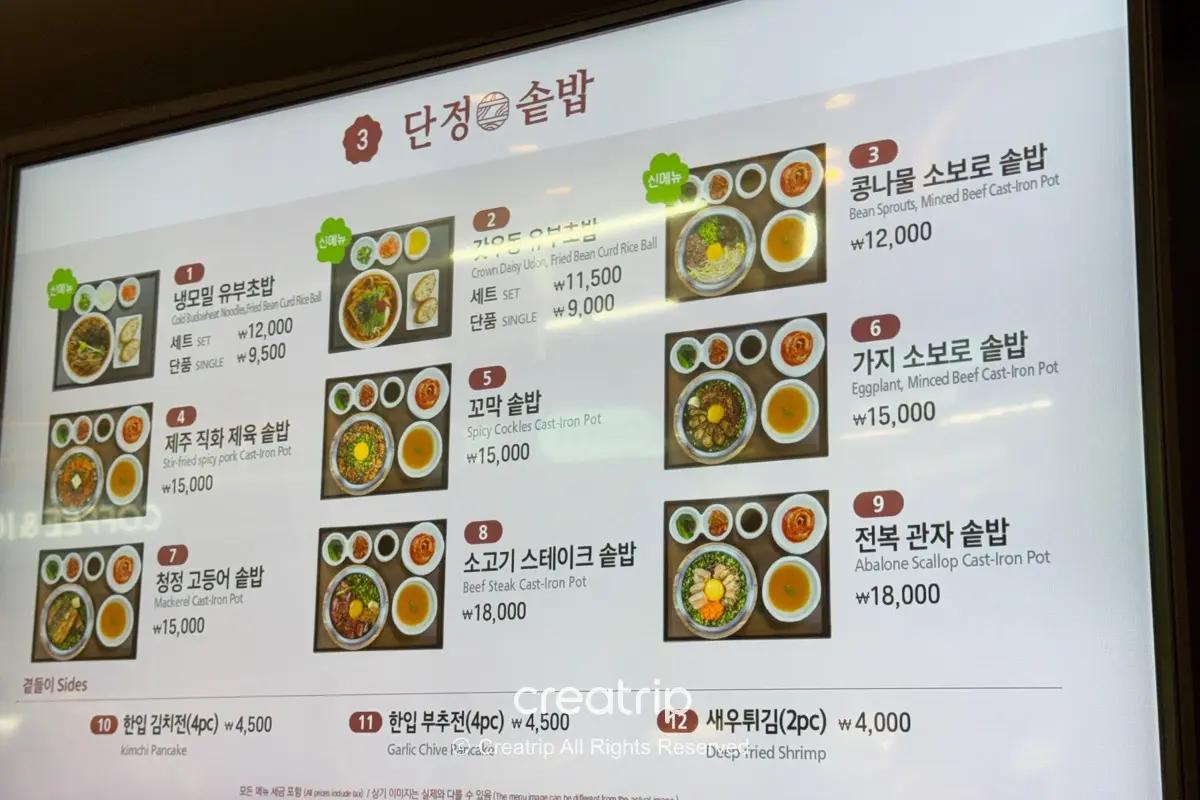
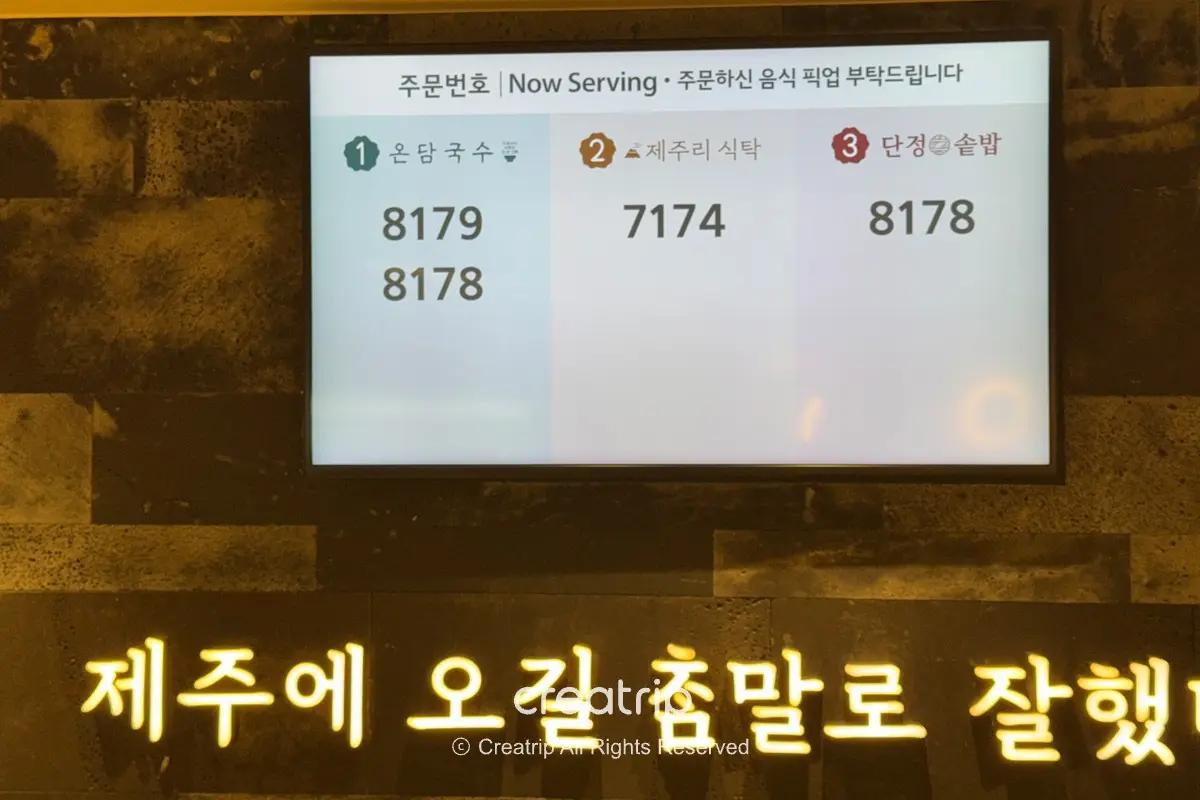


🍊 Editor’s tips from a visit to Jeju Airport
In the area of Jeju Airport after you pass security, there are far fewer food options, and most shops mainly sell souvenirs and local specialty products. So if you want to eat a proper meal, the best choice is to fill up first on the 1st-floor arrivals level. Also, if you bought coffee outside and are taking a domestic flight, you do not need to throw it away, since there are no restrictions requiring liquids to be checked on South Korea’s domestic flights. However, if you are taking an international flight, you must dispose of it at the customs and security checkpoint. |
Jeju Airport FAQ
1. Is Jeju Airport large?
Jeju Airport is busy but relatively compact compared with Incheon Airport. Domestic and international flights use the same terminal, with arrivals primarily on the 1st floor and departures on the 3rd floor. Follow the terminal signs for your airline and flight. |
2. Can you stay overnight at Jeju Airport?
Jeju Airport has a curfew and closes after midnight, so you cannot stay inside. In general, flights do not arrive too late, so travelers do not need to worry too much. |
3. After entering Korea via Seoul, can you take a domestic flight to Jeju Island and spend a few days there?
Usually, yes. Travelers who have already completed immigration on the Korean mainland can generally take a domestic flight to Jeju, subject to their immigration status and airline requirements. Carry the original identification accepted by your airline and follow any separate identity-check instructions at Jeju Airport. Travelers entering Korea directly through Jeju under a Jeju-specific visa-free arrangement may be subject to different conditions when continuing to mainland Korea. Check the latest requirements with Korean immigration and your airline. |
4. Is it difficult to get a tax refund at Jeju Airport?
Getting a tax refund at Jeju Airport is pretty straightforward. First, before you go through security, scan your tax refund form at the machine on the 3rd floor at Gate5. After security, pick up your cash at Gate 16. It operates whenever there are flights arriving or departing, so no need to worry. |
5. How much time should you allow to get to Jeju Airport for your flight?
For domestic flights, plan to arrive about 1 to 2 hours before departure, depending on your baggage and check-in method. If you have checked baggage, allowing about 1.5 to 2 hours is safer. For international flights, plan to arrive about 2 to 3 hours before departure. Always follow your airline’s check-in, baggage-drop, security, and boarding deadlines. |
6. Which way is most recommended for getting from Jeju Airport to downtown?
In general, taking a taxi is the most convenient option, and it is not expensive either. On this trip to Jeju Island, our editor did not book a private car or drive, we just used an app to hail taxis, and we were pretty happy with both the speed and the cost. Unless you are heading deep into the mountains or somewhere truly remote and you are worried it might be hard to get a ride, using taxis is a great way to get around for most attractions and in the city. |
7. Can you store luggage at Jeju Airport?
Yes, Jeju Airport offers luggage storage services, which is ideal for travelers who want to keep sightseeing after checking out on their last day. If your return flight is in the afternoon or evening, storing your luggage at the airport can save you time compared with leaving it at your hotel or guesthouse, and you will not need to make an extra trip back to pick it up. However, the exact counter location, business hours, and fees may change depending on on-site operations, so it’s best to check the airport’s signs or official information after you arrive. |
8. Can you pay for taxis in Jeju by card?
Most taxis departing from Jeju Airport accept both Korean and international credit cards, but it is still a good idea to double-check before you get in. If you are an international traveler and do not speak Korean, the easiest option is to book a ride through Korea’s Kakao Taxi App or Uber Taxi. It is usually more convenient than trying to communicate on the spot, and you can also see an estimated fare in advance. If you are traveling with a larger group or have big suitcases, you may also want to consider a jumbo taxi or a private car, which is typically a more comfortable option. |
9. Can you bring drinks through domestic security at Jeju Airport?
If you are flying on a Seoul domestic flight, carrying drinks on board usually is not subject to the strict 100 ml liquid limit you see on international routes, so many travelers buy coffee or other drinks before security and bring them onto the plane. However, if you are taking an international flight, you still need to follow the standard international flight rules, liquids over the allowed volume cannot be taken through security. In short, domestic flights are relatively more relaxed, but international flights still follow the standard rules, so do not mix them up. |
10. Can you stay overnight at Jeju Airport in the early morning or late at night?
Jeju Airport has a curfew and closes overnight, so it is not open 24 hours for travelers to wait inside until the next day. If your flight is early, it is best to stay near the airport or arrange early-morning transportation in advance rather than planning to spend the night inside the terminal. For international visitors, checking the distance from your accommodation to the airport and whether it is easy to book a ride ahead of time will feel much more reassuring than trying to figure it out on the spot. |
11. If you’re taking a domestic flight from Jeju Airport, what ID do you need to bring?
If you’re visiting for a short trip, the safest approach is to carry your original passport with you. If you live in Korea long-term and have an Alien Registration Card, you may be able to board a domestic flight with just your registration card or your original personal driver’s license (issued in Korea), but the actual requirements can vary depending on the airline and the ID check process. So for most foreign travelers, be sure to bring your passport, don’t rely only on a photocopy or a photo on your phone, to avoid issues at check-in or security screening. |
12. About how long does it take from Jeju Airport to Aewol, Seogwipo, and Seongsan?
Travel times vary depending on the exact destination, route, traffic, and weather. As a general guide, allow about 15–30 minutes to central Jeju City, 40–60 minutes to Aewol, 60–90 minutes to Jungmun, 70–100 minutes to central Seogwipo, and 80–110 minutes to Seongsan by taxi. Check the live route and estimated travel time in your map or taxi app before departure. |
13. Can you bring large luggage on the Jeju Airport Bus?
You can, but not every bus route is suitable for traveling with large luggage. Some routes are just like regular city buses, with no extra space on board for luggage. Express buses or certain airport buses are usually more convenient. If you are carrying a large suitcase of 24 inches or 28 inches and up, or traveling with a bigger group, we recommend taking a taxi instead, it is faster and you are less likely to feel rushed or overwhelmed. |
That wraps up our latest 2026 guide to Jeju Airport, covering facilities, currency exchange, tax refunds, and transportation, we hope it helps everyone planning a trip to Jeju Island.
If you have any questions, feel free to reach out via the comments, email (help@creatrip.com), or our official LINE and official WhatsApp (Japanese support available).