Seoul, South Korea: Meaning, Location, Population, and Travel Context
A friendly Creatrip explainer on what Seoul actually means, where the city sits, and why its population numbers can look so different.

Seoul is easy to recognize on a boarding pass, a weather app, or a K-drama subtitle. It gets a little less simple the moment numbers enter the conversation. Is Seoul a city of 9.5 million? Ten million? More than 26 million? And why does the name Seoul itself sound different from older Korean city names like Hanyang or Hanseong?
The short answer is warm and tidy: Seoul is the capital of South Korea, officially the Republic of Korea. It sits on the Han River in the northwestern-central part of the Korean Peninsula, about 60 km inland from the Yellow Sea. Its official city population was 9,579,177 in the fourth quarter of 2025, while the wider Seoul Capital Area, including Incheon and Gyeonggi Province, has more than 26 million people.
For travelers, that difference matters more than it may seem. It affects how far a hotel really is from a station, whether a place described as being near Seoul is actually inside the city, and why the capital can feel busy even when the official city population is slightly below ten million.
Seoul in one clean sentence
Seoul is the capital city of South Korea and a special city-level local government, often referred to in English through the Seoul Metropolitan Government or Seoul Special City. Administratively, Seoul itself is divided into 25 autonomous districts, called gu, and covers about 605 to 606 square kilometers.
That makes Seoul the country’s political and administrative center, but also its densest everyday stage: government, business, culture, universities, shopping streets, residential towers, river parks, old neighborhoods, and new glassy districts all packed into a relatively compact area.
For a visitor, Seoul is best understood in two layers:
- Seoul city proper: the official city inside Seoul’s administrative boundary, with about 9.58 million residents as of Q4 2025.
- The Seoul Capital Area: Seoul plus Incheon and Gyeonggi Province, a much larger region of more than 26 million people.
The useful trick is to check which Seoul someone means. A café, clinic, hotel, or museum in Seoul city proper belongs to the first layer. A place described vaguely as Greater Seoul or the Seoul metro area may be outside the city boundary, even if it still feels connected by the wider urban region.

Where is Seoul?
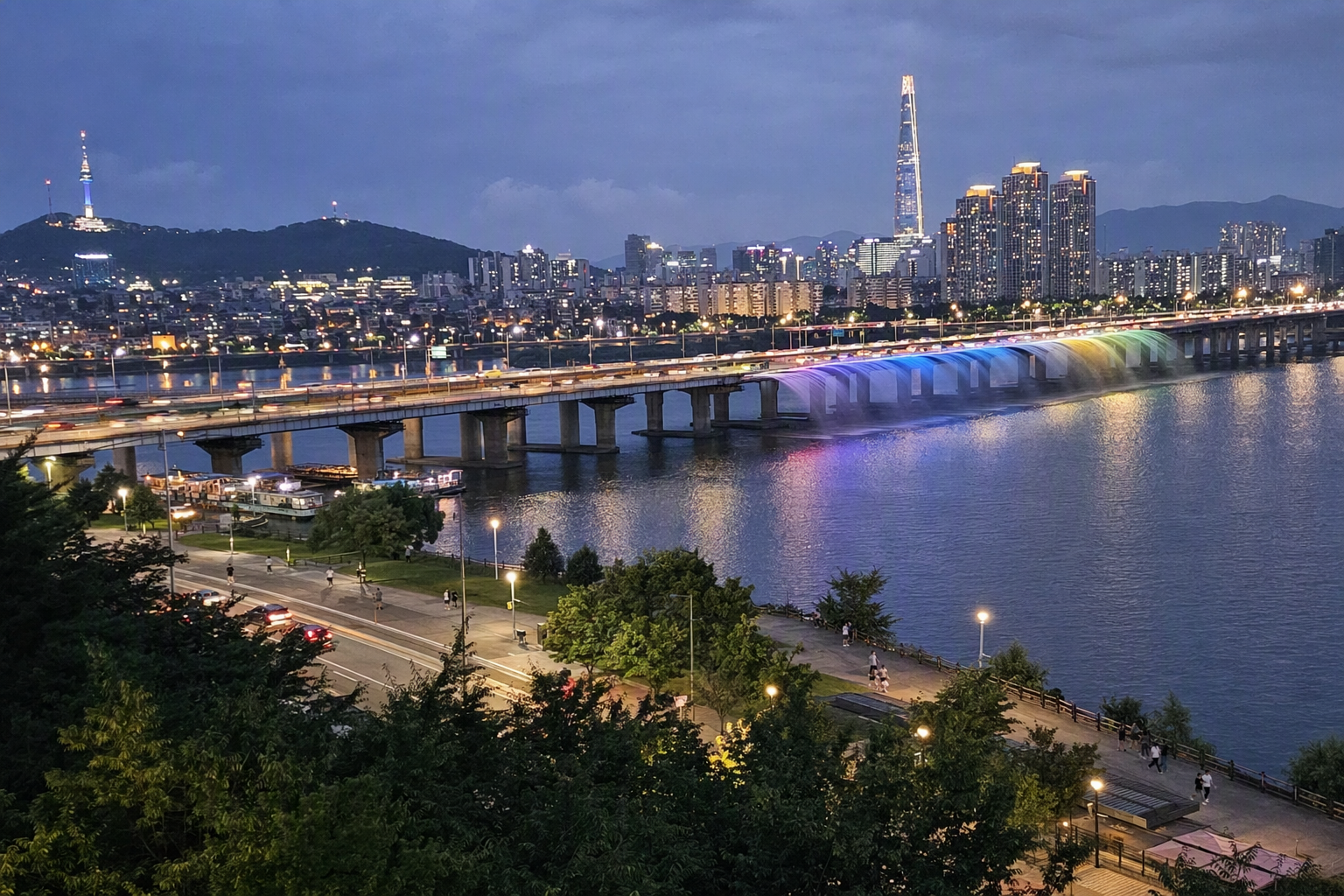
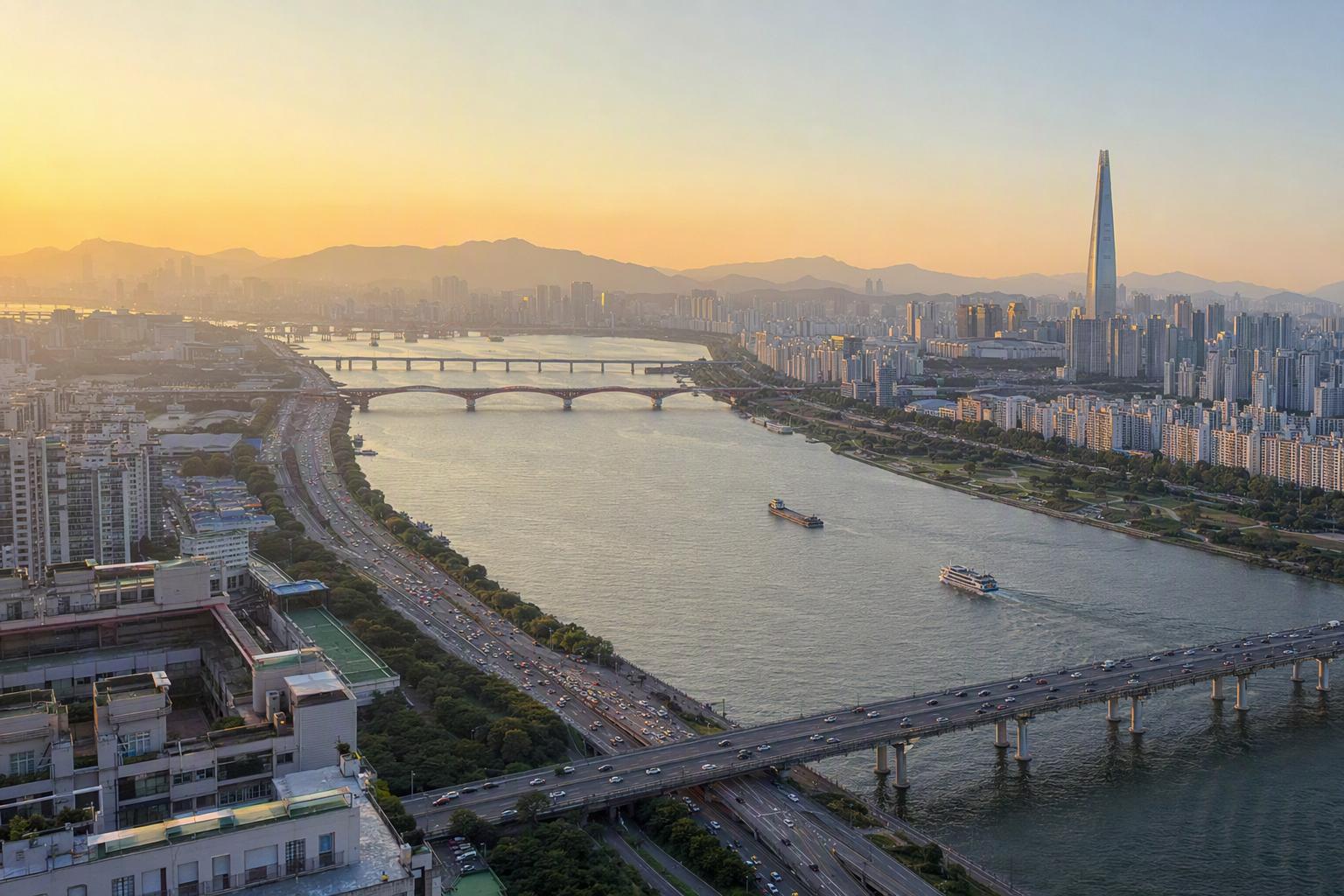
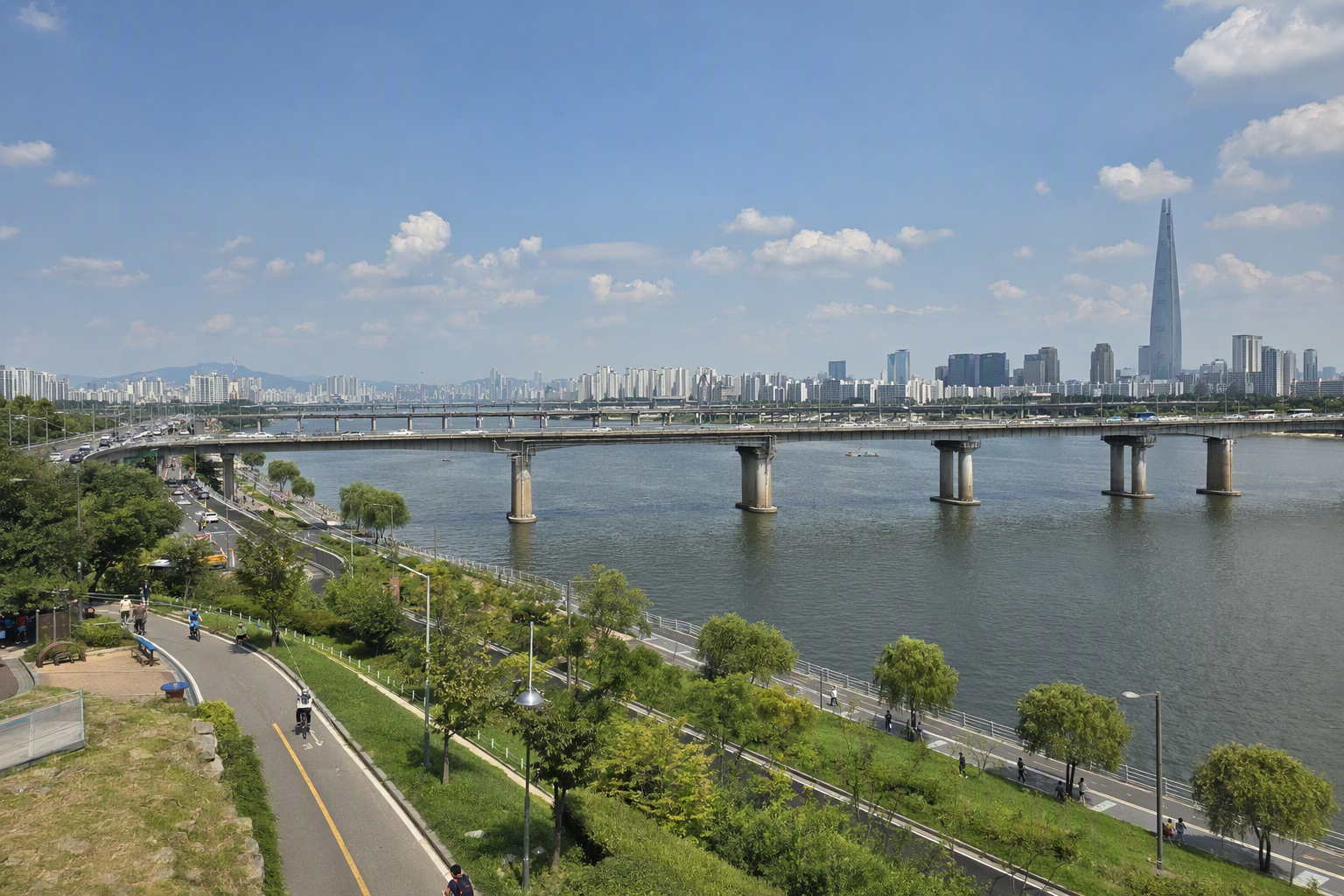
Seoul is in the northwestern-central part of the Korean Peninsula, in the basin of the Han River. It is around 60 km inland from the Yellow Sea, which helps explain why the capital is closely tied to the west coast while still feeling like a deep inland metropolis once you are inside the city.
The Han River is not just a pretty line on the map. It gives Seoul its wide horizontal shape and creates a natural north-south rhythm in the city. On an actual travel day, this matters. Crossing from one side of the river to another is completely normal, but doing it several times in one afternoon can quietly eat up time.
Seoul’s official area, about 605 km², is not enormous compared with some global mega-cities. The reason it feels so big is density. At the end of 2024, Seoul’s registered population density was about 15,858 people per square kilometer. Add commuters, students, short-term visitors, business travelers, and day-trippers from the wider capital region, and the city’s busy feeling makes more sense.
A comfortable Seoul itinerary usually works better when the day has a geographic flow. Pair places that sit on the same side of the river or in the same general part of the city, instead of bouncing across Seoul just because the map makes two dots look close.
Seoul, Korea or Seoul, South Korea?
In everyday travel English, Seoul, Korea usually means Seoul, South Korea. More formally, Seoul is the capital of the Republic of Korea. For flights, forms, reservations, and official documents, South Korea or Republic of Korea is the safer wording.
This is also why the phrase capital of Korea can feel a little loose. In travel contexts, people almost always mean Seoul, the capital of South Korea. When accuracy matters, write Seoul, South Korea.
What does Seoul mean?
The name Seoul literally means capital or capital city in Korean. This is one of the loveliest little facts about the city: unlike many Korean place names, Seoul was not originally a Sino-Korean name written with traditional Hanja characters. It comes from a native Korean word meaning capital.
The most widely accepted explanation connects modern Seoul with older forms related to Seorabeol or Seobeol, names associated with the ancient Silla capital. Over time, the word developed into a general term for a capital city, and after Korea’s liberation and the formation of the modern Republic of Korea, Seoul became the city’s official modern name. Seoul City was established in 1946, and Seoul Special City followed in 1949.
This background explains something that can confuse travelers reading older materials: Seoul has had many names across history.
Older names connected to Seoul
Depending on the historical period, the Seoul area has been known by names such as:
- Wiryeseong
- Hanseong
- Hanyang
- Namgyeong
- Gyeongseong / Keijo during the Japanese colonial period
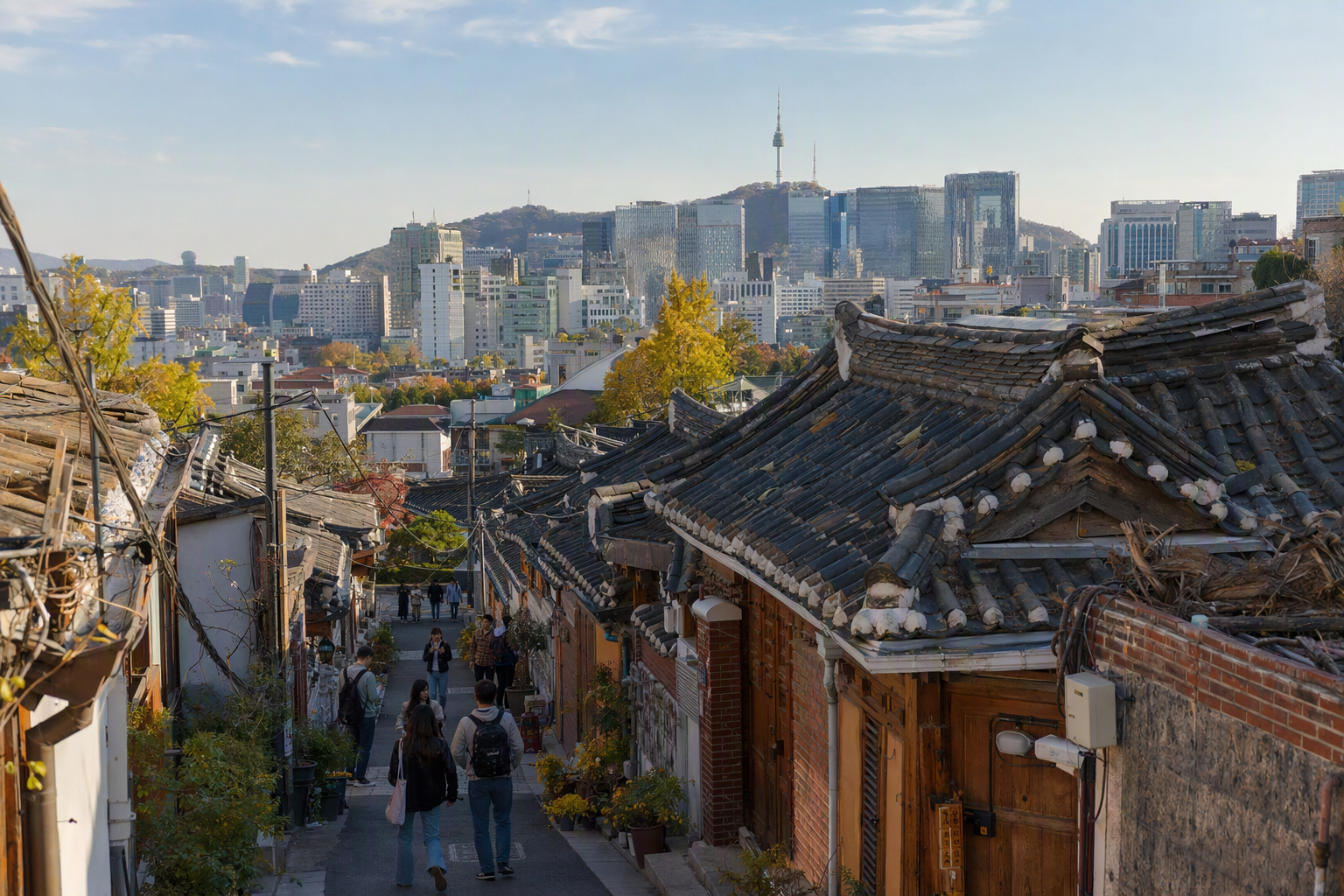
These are not random unrelated cities. They reflect different political eras and naming systems in the same broad capital region. So when a historic context mentions Hanyang or Hanseong, it is often pointing back to Seoul’s older identity.
Why some Chinese-language materials use different names
Because Seoul did not have a traditional Hanja name, Chinese-language materials long used Hanseong, reflecting one of the city’s older names. In 2005, Seoul selected Shou’er as its official Chinese-language rendering. That detail may not affect most short trips, but it is useful for travelers comparing older maps, historical texts, or Chinese-language travel information.
How many people live in Seoul?
Seoul city proper had an official population of 9,579,177 in the fourth quarter of 2025. The city’s official English population profile breaks that down as 4,601,282 men and 4,977,895 women.
It also separately identifies 279,629 registered foreign residents, made up of 120,183 men and 159,446 women.
| Seoul city population measure | Q4 2025 |
|---|---|
| Total population | 9,579,177 |
| Male population | 4,601,282 |
| Female population | 4,977,895 |
| Registered foreign residents | 279,629 |
| Registered foreign residents, male | 120,183 |
| Registered foreign residents, female | 159,446 |
So yes, Seoul is still very close to ten million people, but the more precise official figure is a little under that. Rounded travel writing often says around ten million, which is fair for a general impression. For exact writing, statistics, or official planning, use the dated number and check the latest Seoul data because these figures update regularly.

Why Seoul population numbers look different
Population numbers change depending on what is being counted. Seoul is a perfect example of this.
The city’s registered population combines resident registration figures with registered foreign residents. Registered foreign residents are long-term foreign nationals listed in official foreign registration records, so this number does not simply mean every foreign traveler or temporary visitor physically in Seoul on a given day.
Other population concepts tell different stories:
- Resident registration population focuses on registered residents and excludes foreigners in some national datasets.
- Registered population adds registered foreign residents to the resident registration base.
- Census population can differ because it uses a different counting method and reference date.
- Living population estimates the number of people actually present in Seoul by using sources such as mobile data. In September 2025, Seoul’s living population was listed at about 10.014 million, higher than the registered resident figure.
For travelers, the practical takeaway is simple: the city can have an official resident count under ten million and still feel like a ten-million-person city during the day. Workers, students, shoppers, visitors, and people moving in from the wider capital region all add to the atmosphere.
Seoul city vs Seoul Capital Area
This is the population mix-up that causes the most confusion.
Seoul city proper is the official city of Seoul. That is the 9.58-million figure from Q4 2025.
The Seoul Capital Area, also called the Sudogwon, includes:
- Seoul
- Incheon
- Gyeonggi Province
Together, this wider region has more than 26 million people and contains just over half of South Korea’s population. This is why some sources or casual conversations make Seoul sound like one of the largest urban regions on earth, while official city figures put it under ten million. Both can be true, but they are measuring different things.
A slightly annoying travel mistake is assuming anything in the Seoul Capital Area will feel like being in Seoul city. It may be well connected, and it may make sense for a day out, but the timing is different. A location outside Seoul’s city boundary can still be part of the same economic and commuter region while needing a much more generous schedule.
Seoul is shrinking a little, while the wider region keeps growing
Another detail that surprises people: Seoul city proper has been slowly losing residents, while parts of the surrounding capital region keep growing.
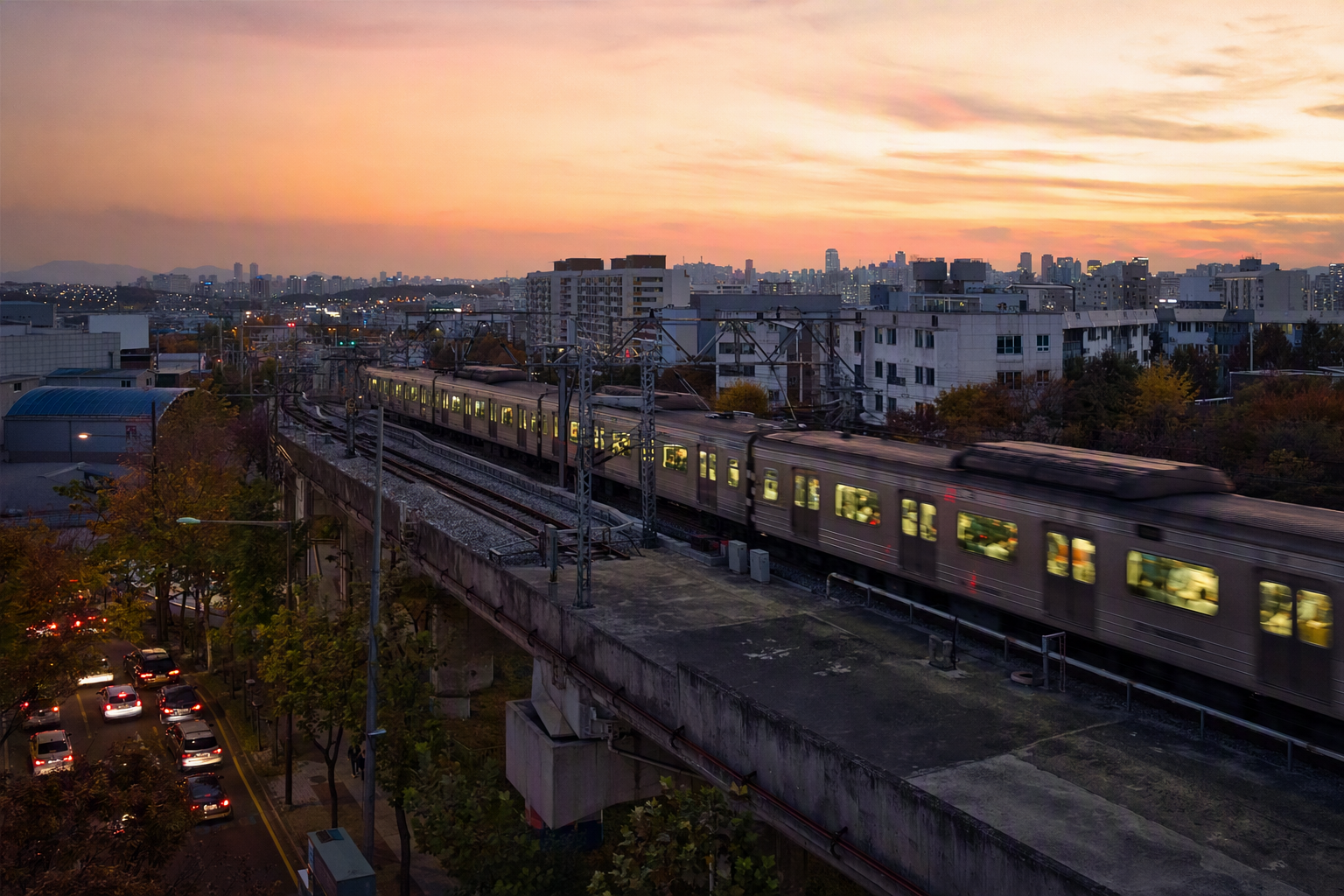
Recent figures show Seoul’s city population dipping, even as Incheon and Gyeonggi Province gain people. In 2025, Seoul had net out-migration, while Gyeonggi and Incheon saw strong net inflows. The wider capital region still attracts people overall, but the growth is not concentrated inside Seoul’s city boundary.
For travel, this helps explain the shape of modern life around the capital. Seoul remains the symbolic and practical center, but daily life in Korea’s largest urban region stretches far beyond the city line. Newer residential areas, commuting patterns, and large-scale development often spill into Gyeonggi and Incheon.
What Seoul’s size feels like on a trip
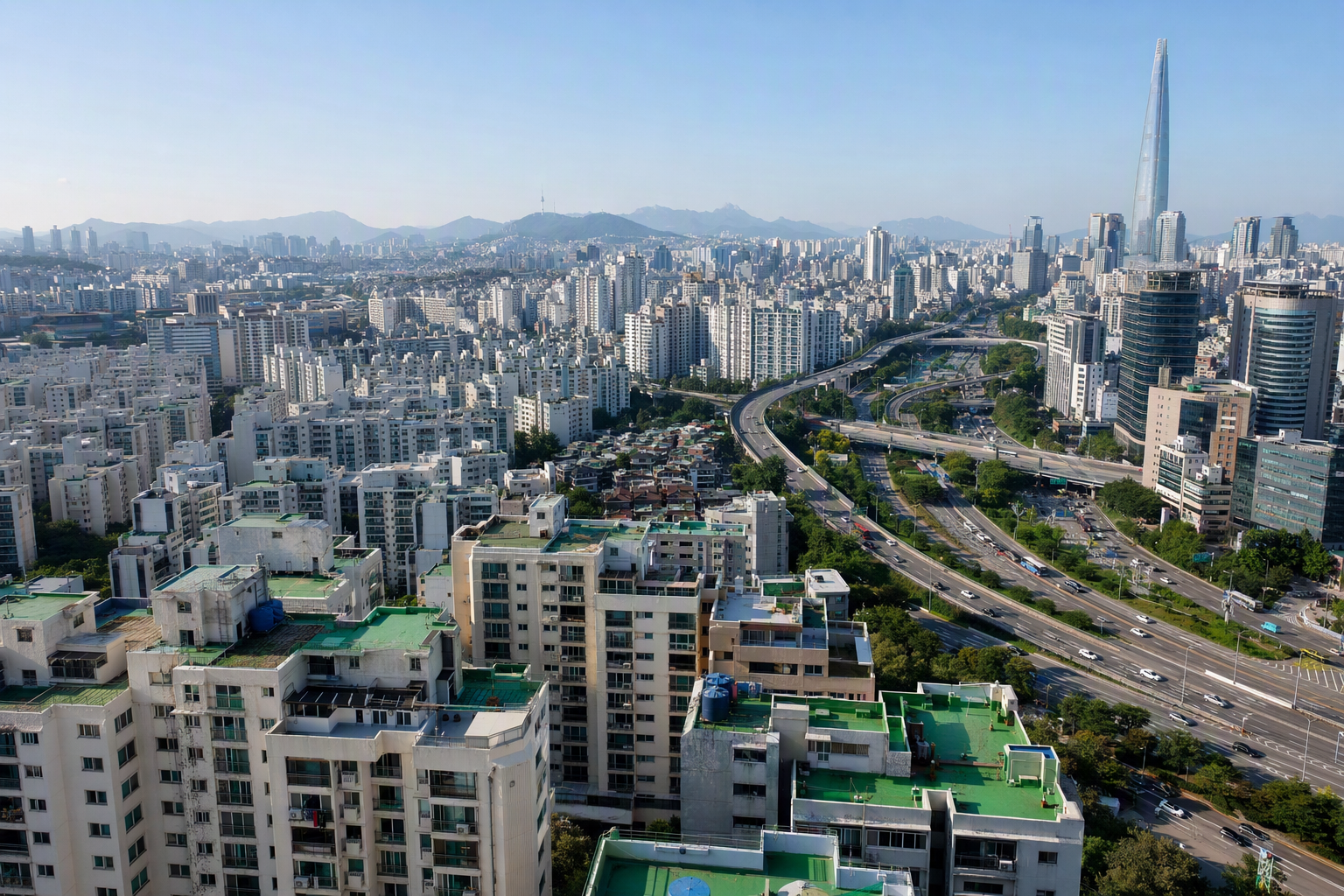
Seoul is not a city to treat like a single neighborhood. It is dense, layered, and wide enough that a map can be misleading. Two places may both be in Seoul and still sit far enough apart to change the mood of your day.
The better way to think about Seoul is not just distance, but friction: river crossings, transfer points, rush-hour movement, and the sheer number of people sharing the same streets and stations. Even without memorizing all 25 districts, it helps to group the day by area.
A few planning habits make Seoul feel much smoother:
- Avoid stacking too many cross-city plans into one day. Seoul rewards focus more than frantic hopping.
- Treat the Han River as a real divider on your map. Crossing it is easy, but repeated crossings add time.
- Check whether a place is in Seoul city or only in the wider capital area. Near Seoul can still mean a longer trip than expected.
- Use rounded population numbers casually, exact numbers carefully. Around ten million is fine in conversation; 9,579,177 is the official Q4 2025 city figure.
- Remember that registered foreign resident numbers are not tourist counts. They refer to registered long-term foreign residents, not everyone visiting that week.
A clear way to describe Seoul
When someone asks what Seoul is, this wording works well:
Seoul is the capital of South Korea, officially the Republic of Korea. It is a special city on the Han River, about 60 km inland from the Yellow Sea, with an official city population of 9,579,177 as of Q4 2025. The wider Seoul Capital Area, including Incheon and Gyeonggi Province, has more than 26 million people.
That one paragraph avoids the usual mistakes. It separates Seoul city from Greater Seoul, gives the current official city population, and places the capital properly on the map.
Why the name feels so fitting
There is something almost poetic about a capital simply called Capital. Seoul has carried royal, colonial, administrative, and modern names through centuries of Korean history, but the name visitors know today is direct and native to Korean. It does not need ornate characters to explain itself.
At the same time, modern Seoul is more than a label on a map. It is a city of just under ten million inside a capital region of more than 26 million; a river city that functions as the country’s political center; a place where old names like Hanyang and Hanseong still echo beneath the glass towers and crowded crossings.
For travelers, understanding that scale adds a little patience and a lot of clarity. Seoul is big, but not vague. Once the city boundary, capital region, and name history fall into place, the map starts to feel more readable.