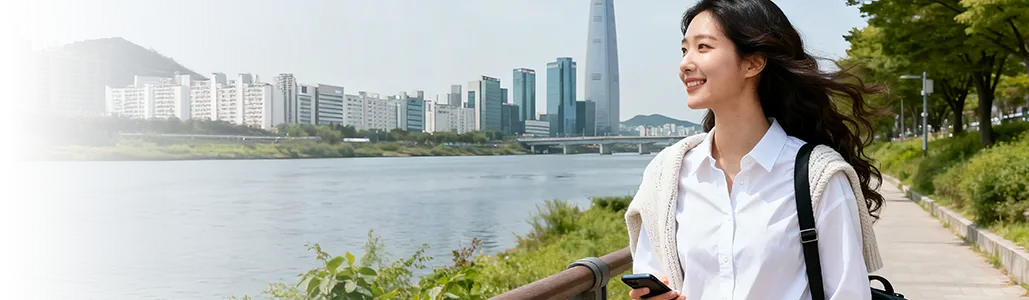
What to Eat in Korea: A Seoul Food Guide for First-Time Visitors
A Creatrip-style route through Korean barbecue, market snacks, baekban, noodles, soups, and the Seoul neighborhoods that do each one best.

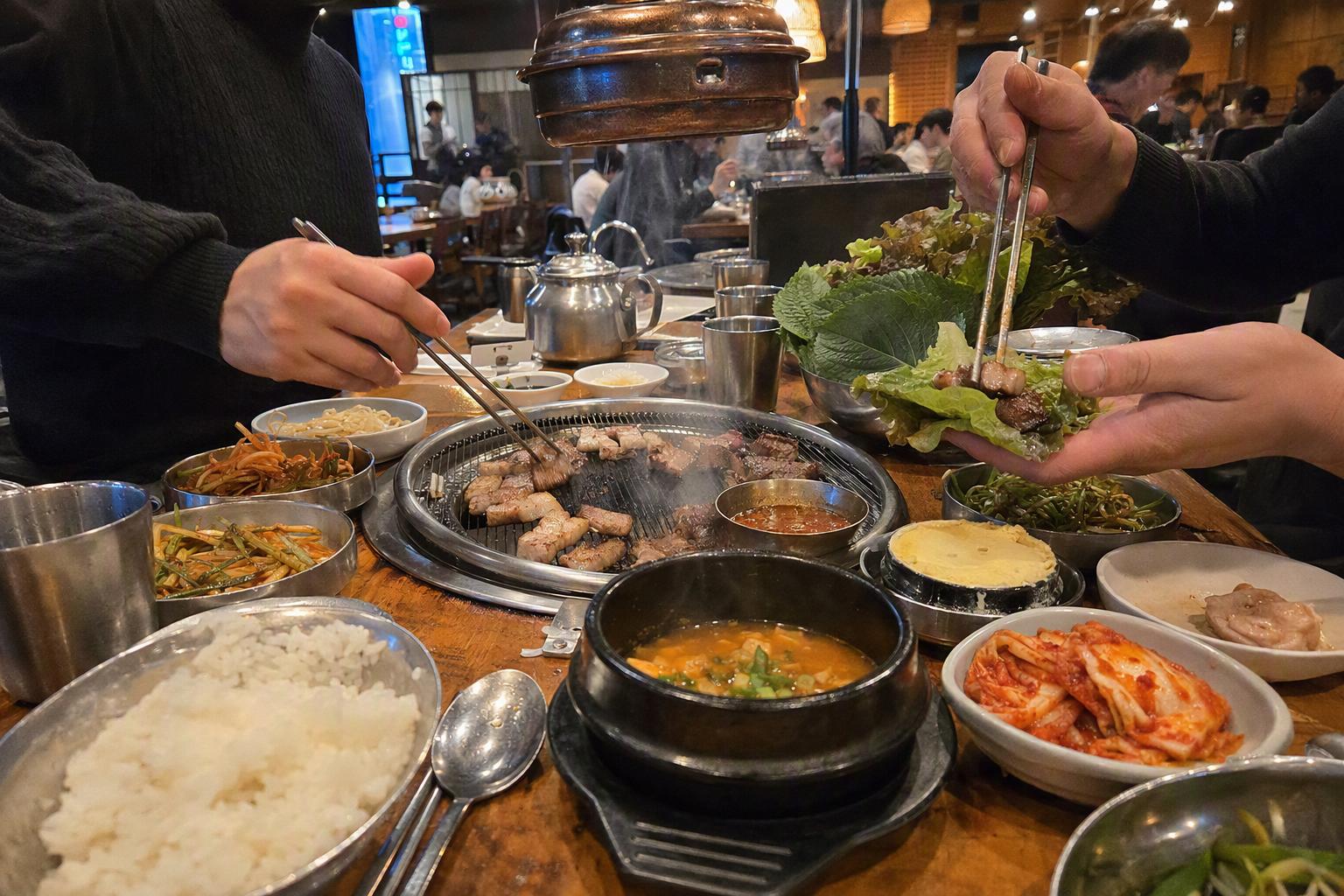
Korea is one of those places where eating well has less to do with chasing one famous restaurant and more to do with choosing the right food for the right neighborhood. A smoky pork dinner in Mapo, a quick plate of mung bean pancake at Gwangjang Market, a calming bowl of beef soup near lunchtime, a banchan-filled baekban in a regular office district — each meal shows a different side of Korean food.
The most satisfying Seoul food trip usually has a bit of range. Not only barbecue, not only street food, and definitely not only the dishes that look dramatic on camera. Korean food gets much more interesting once rice, soup, side dishes, market snacks, noodles, and late-night drinking food all have a place in the itinerary.

Start with the Korean table: rice, soup, banchan, and sharing
A Korean meal is not built like a Western course meal. In many everyday restaurants, everything arrives together: rice, soup or stew, kimchi, and several small side dishes called banchan. Some dishes are served individually, while stews, grilled meat, and side dishes are often shared from the middle of the table.
Banchan are not free appetizers in the way many visitors imagine. They are part of the meal itself — salty, fermented, seasoned, crunchy, spicy, or mild little companions for rice. Kimchi is only the beginning. A table might include seasoned vegetables, braised beans, stir-fried fish cake, pickles, egg dishes, grilled fish, dried seafood, or whatever the kitchen made that day.
In most casual restaurants, banchan are included and can usually be refilled. Ask politely and take only what you will eat. The best banchan tables feel generous, but food waste is not charming anywhere.
Baekban: the everyday Korean meal travelers often miss
For a simple, local-feeling lunch, baekban is one of the best choices in Korea. It usually means rice, soup or stew, and a changing spread of side dishes, sometimes with grilled fish, spicy pork, or another main dish. It is not flashy. That is exactly the point.
In Seoul and the surrounding area, baekban often sits around ₩10,000–15,000, though cheaper neighborhood spots and more generous regional-style restaurants still exist. In smaller cities, prices can be closer to ₩8,000–9,000. Inflation has pushed casual lunch prices upward, so treat these as working ranges rather than fixed rules.
Baekban is especially good for travelers who want one meal that explains how Korean people actually eat on a regular day. It is also easier for solo diners than barbecue, and it usually feels better than trying to make a full lunch out of snacks.

Hanjeongsik: the polished cousin
Hanjeongsik or a formal Korean set meal is the more elegant version: more dishes, more presentation, and sometimes a course-like rhythm. Prices vary widely, but a typical nicer set can run ₩20,000–50,000 or more. It is a lovely choice when you want calm, variety, and a slower meal, but for understanding everyday Korean food, baekban is often the more honest introduction.
Korean barbecue: the classic first dinner, but choose your lane
Korean barbecue is the obvious crowd-pleaser, and for good reason. The sizzle, scissors, lettuce wraps, garlic, dipping sauces, kimchi on the grill — it is social, fragrant, and very Seoul. But barbecue is not one category. The experience changes depending on whether you are eating pork belly in a casual neighborhood shop, old-school galbi in Jongno, or premium Hanwoo in Cheongdam.
Samgyeopsal: pork belly with the full Korean rhythm
Samgyeopsal, or pork belly, is the easiest barbecue entry point. It is rich, forgiving, and built for wrapping in lettuce with ssamjang, garlic, green onion salad, and kimchi. Pork cuts like moksal shoulder, hangjeongsal pork jowl, and gabeurisal pork cheek or neck area are also common, especially at restaurants that specialize in better pork.
A common Seoul price range for pork barbecue is around ₩13,000–22,000 per 150–200g serving, depending on the restaurant and cut. A realistic dinner with drinks often lands around ₩30,000–50,000 per person.
One small catch: many barbecue restaurants expect a minimum order of two servings, sometimes more depending on the group size. Solo travelers can still eat barbecue in Seoul, but it helps to search for honbap gogi or 1-person samgyeopsal on Naver Map, or choose a restaurant that clearly welcomes solo diners.

Galbi and u-dae galbi: sweeter, smokier, often pricier
Galbi is beef or pork rib, often marinated, and it brings a sweeter, deeper flavor than plain pork belly. U-dae galbi, a thick beef rib cut, has become especially famous at certain modern barbecue restaurants.
For beef ribs and galbi, prices can move quickly upward. General galbi or LA galbi may sit around ₩25,000–45,000, while premium beef goes much higher.
Mongtan in Samgakji and Yongsan is one of the best-known modern examples, famous for straw-smoked beef rib. It is also famous for waiting. Recent reports describe on-site waiting only, with queues that can stretch past two hours on busy evenings and weekends. Go early, stay flexible, and check the latest system before building a whole day around it.
Hanwoo: worth it when you want a premium meal
Hanwoo, Korean beef, is a different budget category. A premium Hanwoo meal can easily run ₩100,000–150,000 per person or more, and omakase-style beef experiences can go far beyond that. This is not casual snacking money, but it can be memorable if you care about beef texture, marbling, and service.
For premium beef, Gangnam, Cheongdam, and Majang-dong are better hunting grounds than the tourist streets around Myeongdong. Born and Bred in Majang-dong is one famous Hanwoo name, with more casual options as well as much harder-to-book premium experiences.
Seoul barbecue neighborhoods that make sense
- Mapo: Strong for pork barbecue and aged pork. A safe area for a classic Korean meat dinner.
- Euljiro: Smokier, older, more casual. Good when you want energy more than polish.
- Jongno: Old-school galbi, drinking streets, and long-running meat restaurants.
- Yaksu and Sindang: Famous names like Geumdwaeji Sikdang draw serious queues.
- Hongdae, Hapjeong, Sinchon: Useful for later-night pork barbecue and younger crowds.
- Gangnam and Cheongdam: Premium beef, private rooms, and staff-grilled meals.
A few restaurant names come up often for good reason. Geumdwaeji Sikdang near Yaksu is known for YBD pork and Michelin recognition, but waiting can be intense. Namyeongdon is a practical alternative for travelers who want a strong pork meal with reservation options through booking platforms when available. Yeonnam Seosikdang is famous for standing-style marinated galbi and old-school character, though it can close early when ingredients sell out.
Barbecue timing matters. The queue curve usually turns sharp around 6:30 PM, especially for famous places. A 5 PM dinner may feel early at home, but in Seoul it can be the difference between eating and watching your evening disappear into a waiting list.
Bibimbap and dolsot bibimbap: the friendly first bowl
Bibimbap is a bowl of rice topped with seasoned vegetables, gochujang, sesame oil, egg, and sometimes beef. It is familiar enough for cautious eaters but still very Korean in structure: rice as the base, vegetables as balance, sauce as personality.
The version we especially like for visitors is dolsot bibimbap, served in a hot stone bowl. The rice crisps at the bottom, turning the meal into something more textural and satisfying. Typical prices are around ₩9,000–15,000, though location and ingredients can shift that.
Vegetarian travelers often look at bibimbap first, and it can work well, but confirm the broth, sauce, and toppings if you avoid meat or seafood strictly. Korean vegetable dishes are not always fully vegetarian by default.

Tteokbokki, eomuk, sundae: the street-food trio
Korean street food is not subtle, and that is part of the fun. The classic starting trio is tteokbokki, eomuk, and sundae.
Tteokbokki is chewy rice cake in a spicy-sweet red sauce. It is less about clean heat and more about that sticky, addictive gochujang flavor. Street portions often cost around ₩3,000–6,000, with many basic stalls sitting around ₩3,000–5,000.
Eomuk, also called odeng, is fish cake on skewers, usually served with hot broth. A skewer can be as low as ₩500–1,500 in regular areas, but tourist zones can charge more. In Myeongdong, prices may feel inflated, so check before ordering.
Sundae is Korean blood sausage, usually served sliced with salt or sauce depending on the region. It is chewy, earthy, and more filling than it looks. Market prices vary, often around ₩3,000–7,000, though busy tourist markets can be higher.

A small etiquette note: in Korea, people usually eat street food near the stall rather than walking down the street with sauce and skewers in hand, especially outside tourist-heavy areas. Return trays, cups, and skewers where the vendor indicates.
Gwangjang Market: classic, crowded, still useful
Gwangjang Market is the Seoul market most travelers know by name. It dates back to 1905, sits in Jongno, and is easy to reach from Jongno 5-ga Station exits 7 or 8. The food alley is generally active from morning into late evening, often roughly 09:00–23:00, while fabric and general shops close earlier. Individual vendors take different days off, so always check current hours for any specific stall.
Gwangjang is famous because it is genuinely efficient: in one walk, you can try several classic Korean foods. It is also crowded, touristy, and not always as cheap as people expect. Both things can be true.

What to eat at Gwangjang Market
Bindaetteok is the market star: a savory mung bean pancake fried until crisp outside and soft inside. Sunhui-ne Bindaetteok is the famous name, with pancakes often around ₩5,000–6,000 and makgeolli commonly around ₩3,000, though prices can change.
Mayak gimbap is a small seaweed rice roll served with mustard dipping sauce. The name means addictive gimbap, and the appeal is in the simplicity: rice, pickled vegetables, sesame oil, and that sharp sauce. Expect around ₩3,000–5,000 depending on portion.
Yukhoe, Korean beef tartare, is another Gwangjang specialty. Buchon Yukhoe, operating since the 1960s and Michelin-recognized, is one of the best-known places. A plate of yukhoe is often around ₩20,000, yukhoe bibimbap around ₩15,000, and yukhoe with live octopus can be around ₩32,000. Raw beef is not for every traveler, but if you like steak tartare, this is a very Korean version of the pleasure.
Other easy wins include dumplings, tteokbokki, twisted doughnuts, kalguksu, and hot fish cake broth.
How to enjoy Gwangjang without getting tired of it immediately
Weekday mornings around 09:00–11:00 and late afternoon around 16:00–18:00 are generally gentler. Lunch, dinner, and Saturdays can be shoulder-to-shoulder. Bring small cash even though larger shops may accept cards. Avoid dragging suitcases through the food alleys. Check posted prices, especially after recent complaints about overcharging in tourist-heavy markets.
For a cleaner, calmer meal, pick a stall or restaurant with indoor seating rather than hovering in the busiest central aisle. The food may be similar, but the mood changes completely.
Namdaemun Market: better for daytime snacks and local energy
Namdaemun Market feels more practical and more local than Gwangjang in many ways. It is huge, busy, and best during the day, especially around 10:00–17:00 for food and general shopping. Many retail shops close on Sundays, and market hours vary by section.
The snack to plan around is Namdaemun vegetable hotteok. Unlike the sweet cinnamon-sugar hotteok many travelers know, this one is savory, filled with vegetables and glass noodles, then griddled until crisp. The line can run 20–40 minutes at peak times. A hotteok is usually around ₩1,500–2,000.

Other Namdaemun foods worth working into the route include Gamegol hand mandu, galchi jorim braised cutlassfish in the market’s fish alley, and simple tteokbokki or noodle stalls. Compared with Myeongdong, Namdaemun is usually less polished for visitors but better value and more meal-like.
Myeongdong street food: convenient, fun, and often overpriced
Myeongdong is the easiest night snack zone for many visitors because it sits right where hotels, shopping, cosmetics stores, and subway access meet. Stalls usually begin setting up around 16:00–17:00, with the busiest window around 18:00–21:00. Some stay later, but options can thin out after around 21:30.
This is the place for egg bread, grilled skewers, hotteok, tornado potatoes, lobster cheese, tteokbokki, and photogenic snacks. It is also one of the places where prices can feel 20–30% higher than less touristy areas.

Recent typical ranges include ₩3,000–5,000 for tteokbokki, ₩2,000–3,500 for hotteok, ₩2,000–3,000 for egg bread, ₩3,000–7,000 for skewers, and much higher prices for novelty items like lobster cheese. Cards are common but not guaranteed. A simple rule works well here: no posted price, no purchase.
Myeongdong is not the place we would choose for your only Korean street food meal. It is great when you want easy nighttime snacking without navigating a traditional market.
Soups and noodles: the category travelers underrate most
A lot of visitors spend their food budget on barbecue and then treat soups and noodles as backup meals. That is a shame, because Korea’s soup and noodle restaurants are often where Seoul feels most comforting. They are also good for solo diners, rainy days, hangovers, and palace-area lunches.

Kalguksu and mandu
Kalguksu is knife-cut noodle soup, often served in beef bone, chicken, seafood, or anchovy broth depending on the restaurant. Mandu are dumplings, and in Korea they can be big, soft, and meal-worthy.
For a palace and Bukchon day, Hwangsaengga Kalguksu is an easy anchor. The main branch is near Samcheong-dong, Bukchon, Gyeongbokgung, and the National Museum of Modern and Contemporary Art. It is known for beef bone kalguksu and handmade dumplings, with Michelin Bib Gourmand recognition. Reported hours are generally 11:00–21:30, with last order around 20:40, but holidays and policies can change.
Expect a wait at lunch, sometimes 30–40 minutes, though turnover is fairly quick. Late afternoon can be calmer. Recent prices for noodles and dumplings have been around the low ₩10,000s, while hot pot and bossam are much more expensive. One useful note: the main branch has much stronger reviews than some branch locations, so check the exact address before going.
Gomtang
Gomtang is beef soup, sometimes clear and delicate, sometimes rich with collagen. It is a beautiful reset meal after too much fried food or barbecue.
Two current Seoul names with strong signals are Gomtang Lab in Gangnam and Neungdong Minari in Yongsan. Gomtang Lab is known for collagen-rich beef soup simmered for long hours, while Neungdong Minari serves beef soup topped with generous minari, a fresh Korean water parsley. Hours, limited bowls, and waiting systems may change, so check before heading across town.
Naengmyeon and buckwheat noodles
Naengmyeon is cold buckwheat noodle soup, famously refreshing in summer but loved year-round by fans. Pyongyang naengmyeon can surprise first-timers because it is subtle rather than punchy; the broth is restrained, the noodles are firm, and the flavor builds quietly.
For cold noodles, names like Mijin near Gwanghwamun, Seoryeong near Namdaemun, and Okdol Hyeonok for pure buckwheat Pyongyang-style naengmyeon are useful reference points. Mijin has been serving cold buckwheat noodles since the 1950s, which gives it that old Seoul gravity many travelers are looking for.
Manduguk and northern-style comfort food
Manduguk, dumpling soup, is another gentle but memorable meal. Mifildam in Hapjeong is known for handmade northern-style dumpling soup inspired by Hwanghae-do family recipes. This kind of meal does not shout for attention, but it stays with you: soft dumplings, clear broth, and a sense of home cooking from a region many visitors know little about.
The Korean market snack list, without overcomplicating it
When you are standing in a market and everything looks good, this little list helps keep the meal balanced:
| Food | What it is | Typical Seoul price range |
|---|---|---|
| Tteokbokki | Spicy-sweet rice cakes | ₩3,000–6,000 |
| Eomuk | Fish cake skewers with hot broth | ₩500–1,500 in regular areas, more in tourist zones |
| Hotteok | Sweet or savory filled pancake | ₩1,000–2,500, higher in Myeongdong |
| Bungeoppang | Fish-shaped pastry, often red bean filled | 2–3 pieces around ₩1,000–2,000 |
| Mandu | Korean dumplings | 4–5 pieces around ₩3,000–5,000 |
| Bindaetteok | Mung bean pancake | Often ₩5,000–6,000 at famous Gwangjang stalls |
| Sundae | Korean blood sausage | Often ₩3,000–7,000, higher in some markets |
| Twisted doughnut | Fried sweet dough, good as a quick bite | Around ₩1,000–1,500 in many markets |
Prices change by neighborhood, season, and tourist traffic. Markets are not automatically cheap anymore, especially the famous ones. The smartest move is still the simplest one: look for posted prices and busy stalls with steady turnover.
Late-night Seoul: pocha, chicken and beer, and the second dinner
Seoul eats late, but not every neighborhood does it in the same way. Hongdae and Yeonnam are good for late-night chicken and beer, casual pubs, and younger crowds. Jongno 3-ga is better when you want old-school outdoor drinking tent energy.
Around Jongno 3-ga, pojangmacha tents line parts of the street near exits 5 and 6, often operating roughly 18:00–02:00. Cash is commonly preferred, seating may be shared, and the mood is more about drinking food than a polished restaurant meal. Think skewers, soups, stir-fries, seafood, and soju under plastic tent covers.
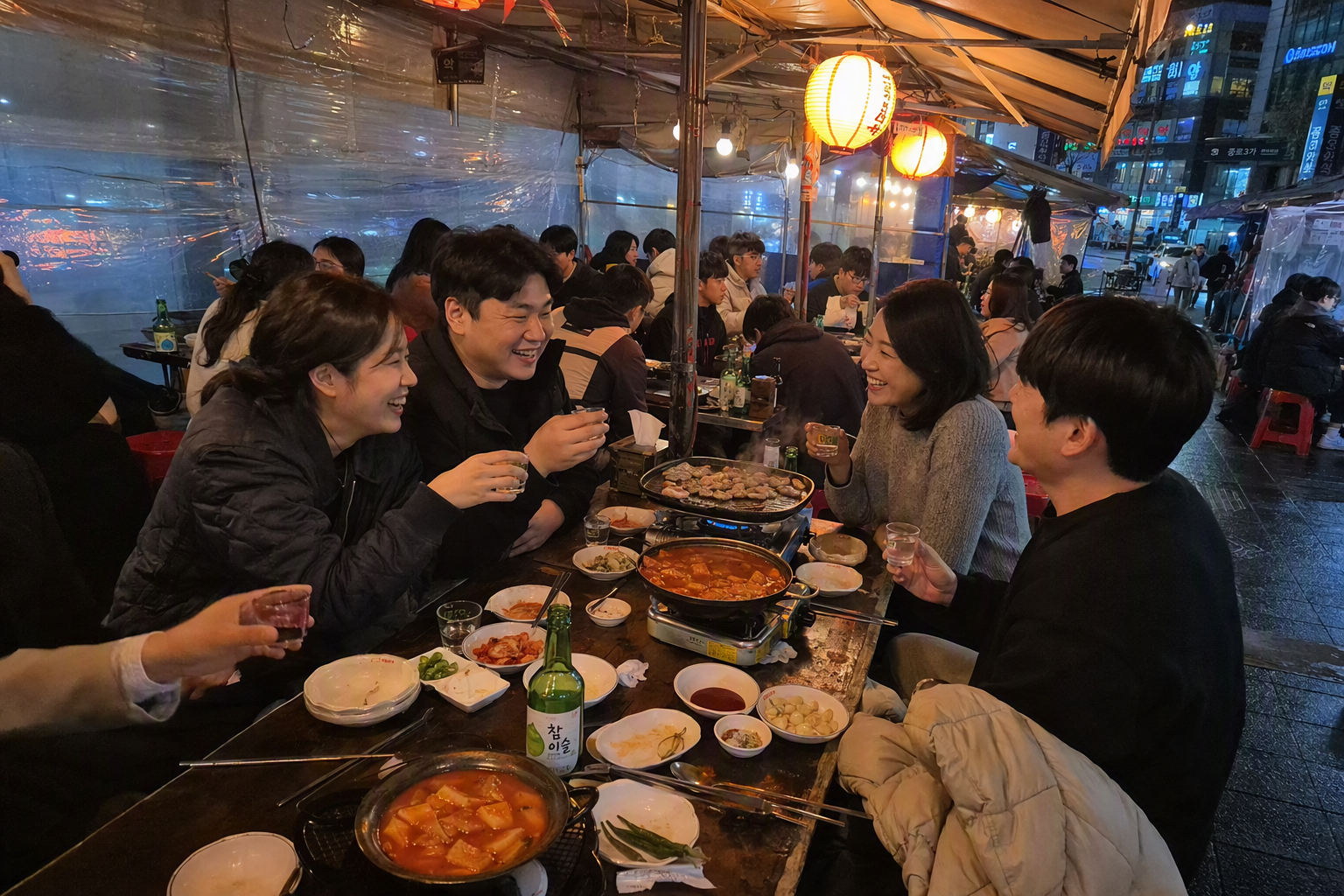
It is fun, but it is not the cheapest way to eat if you order freely while drinking. For travelers who mainly want snacks, market stalls are easier. For travelers who want the feeling of late-night Seoul, pocha is hard to replace.
Where to eat by neighborhood
Seoul is easier to eat through when you stop treating the city as one giant restaurant list. Each area has its own food personality.
Mapo, Euljiro, and Jongno
These are strong choices for barbecue, drinking food, and older Seoul energy. Mapo is a natural pick for pork. Euljiro is rougher-edged and atmospheric, with smoky restaurants and after-work crowds. Jongno is good for old-style galbi, pojangmacha, and traditional restaurants that pair well with palace or museum days.
Gwangjang Market
Best for one concentrated traditional market food session: bindaetteok, mayak gimbap, yukhoe, dumplings, tteokbokki, and quick noodles. It is iconic and efficient, but not peaceful. Go off-peak if crowds drain you.
Namdaemun Market
Better for daytime eating, practical shopping energy, vegetable hotteok, mandu, and braised cutlassfish. It feels less staged for tourists than Myeongdong and often gives better value.
Myeongdong
Best for convenience, not depth. Good for an easy night snack after shopping or skincare runs. Prices are higher, and the food leans more novelty-friendly.
Hongdae, Yeonnam, Hapjeong, and Sinchon
Good for late nights, chicken and beer, casual barbecue, cafes, and younger dining streets. Hapjeong also puts you near restaurants like Mifildam for quieter comfort food.
Gangnam, Cheongdam, and Seongsu
Gangnam and Cheongdam are better for premium beef, sleek rooms, and polished service. Seongsu is more trend-driven, with cafes and modern restaurants. These areas are fun when you want the newer side of Seoul, but not where we would send someone for the cheapest classic meal.
A balanced Seoul eating plan
A good food trip in Korea feels better when each meal has a different job. This route keeps the classics in play without turning every day into a heavy dinner marathon.
Day 1: soft landing, strong dinner
Start with dolsot bibimbap or baekban near your hotel. It is filling, easy to understand, and does not require a reservation. For dinner, choose pork barbecue in Mapo, Euljiro, Jongno, or Yaksu. Eat early if the restaurant is famous.
Day 2: palace area and noodles
After Gyeongbokgung, Bukchon, or Samcheong-dong, go for kalguksu and mandu at Hwangsaengga Kalguksu main branch or another nearby noodle restaurant. If lunch lines are long, shift to a late lunch or early dinner. Finish the day with old-style galbi in Jongno or a light pocha night around Jongno 3-ga.
Day 3: market day
Use late morning or late afternoon for Gwangjang Market. Try bindaetteok, mayak gimbap, tteokbokki, and maybe yukhoe if raw beef appeals. Keep some cash ready and do not arrive with a rolling suitcase. If Gwangjang feels too intense, Namdaemun is a good alternative for daytime snacks.
Day 4: soup, noodles, or modern comfort food
Choose a calmer bowl: gomtang at Gomtang Lab or Neungdong Minari, manduguk at Mifildam, cold noodles at Mijin or Okdol Hyeonok, or buckwheat noodles at Seoryeong. This is the day that saves the trip from becoming only grilled meat and sugar.
Day 5: choose your splurge or your street-food night
For a premium meal, book Hanwoo in Gangnam, Cheongdam, or Majang-dong. For a casual last night, go to Myeongdong for easy snacks or Hongdae and Yeonnam for chicken and beer. Both are valid; they just scratch different itches.

Restaurant anchors worth knowing
These are not the only good places in Seoul, but they are useful landmarks when building a food route. Check current hours, reservation apps, and waiting systems before visiting, since popular Seoul restaurants change operations often.
For barbecue
Geumdwaeji Sikdang, Yaksu and Sindang
Famous for premium pork and long waits. Great for travelers who enjoy destination restaurants, less ideal for anyone with a tight evening schedule.
Mongtan, Samgakji and Yongsan
Known for straw-smoked beef rib. The waiting system is part of the experience, for better or worse. Go early and keep backup dinner plans nearby.
Namyeongdon, Namyeong
A strong pork barbecue option with reservation possibilities through dining platforms when available. Good for travelers who want quality without gambling the whole evening on a walk-in queue.
Born and Bred, Majang-dong
A Hanwoo name for serious beef lovers. Premium experiences may need booking far in advance and can be expensive.
Yeonnam Seosikdang
Standing-style marinated galbi with old-school charm. It can close when ingredients run out, so do not leave it too late.
For noodles, soup, and dumplings
Hwangsaengga Kalguksu main branch, Bukchon area
Beef bone kalguksu and handmade dumplings, useful with a palace or museum route. Choose the main branch and expect lunch waits.
Mijin, Gwanghwamun
Long-running cold buckwheat noodle restaurant, especially good for travelers who want old Seoul rather than trend Seoul.
Yonggeumok, Jongno
Known for chueotang, loach soup, with a history going back to the 1930s. A more adventurous traditional choice.
Gomtang Lab, Gangnam
Modern beef soup with rich, collagen-focused broth. Some signature bowls may be limited.
Neungdong Minari, Yongsan
Beef soup with fresh minari. Good for a clean, comforting meal.
Mifildam, Hapjeong
Northern-style handmade dumpling soup. Quietly memorable and easier to enjoy solo than barbecue.
Okdol Hyeonok
Pure buckwheat Pyongyang-style cold noodles, plus dumplings and other dishes. Better for travelers curious about subtle Korean flavors.
For markets
Sunhui-ne Bindaetteok, Gwangjang Market
The classic mung bean pancake stop. Expect crowds.
Buchon Yukhoe, Gwangjang Market
A famous yukhoe restaurant with a long history. Good if you are comfortable with raw beef.
Namdaemun vegetable hotteok stall, Namdaemun Market
A savory hotteok that makes a great daytime snack. Lines are common.
Gamegol hand mandu, Namdaemun Market
A practical dumpling stop while exploring Namdaemun.
Common mistakes that make Korean food trips less fun
Eating only barbecue
Barbecue is wonderful, but five barbecue dinners in a row can flatten the trip. Add baekban, noodles, soup, markets, and one cold noodle or dumpling meal. Your stomach will thank you, and the food memories will be more varied.
Assuming famous markets are always cheap
Gwangjang and Myeongdong are convenient and fun, but they are not guaranteed bargains. Some snacks are still affordable; others cost more because of location and tourist demand. Posted prices matter.
Ignoring waiting times
Famous Korean restaurants often draw lines before opening, and dinner queues can build fast. For high-demand barbecue, early dinner is not a compromise; it is a strategy. For markets, off-peak hours make the food taste better simply because you are not eating with someone’s elbow in your ribs.
Treating banchan like a pre-meal bonus
Banchan are part of the meal. Eat them with rice, meat, soup, and noodles. Refill what you like, but do not empty every dish just because it is free.
Forgetting solo-diner realities
Soup, noodles, bibimbap, baekban, markets, and convenience stores are solo-friendly. Standard barbecue can be trickier because of minimum orders. Search specifically for solo meat restaurants or ask before sitting.
Trusting branch locations blindly
Some famous restaurants have branches that feel very different from the original. Hwangsaengga is a good example where the main branch has much stronger word-of-mouth than some offshoots. Check the exact location, not just the name.
Practical dining notes for Korea
- No tipping. Korea does not have a tipping culture.
- Cards are widely used, but markets still like cash. Bring small bills for street stalls, especially at traditional markets.
- T-money is for transport and convenience stores, not market food stalls. Do not expect it to work at snack counters.
- Use Naver Map, Papago, and Google Lens. English menus exist in tourist areas, but many better local restaurants still operate mainly in Korean.
- Reservations are fragmented. Some restaurants use Catch Table, Naver Reservation, Egg Dining, phone calls, kiosks, or on-site waiting only.
- Restaurant hours change. Holidays like Seollal and Chuseok can affect opening days, and small shops may close unexpectedly.
- Order the signature dish. Korean specialty restaurants are often strongest when you follow what they are known for.
- Do not bring luggage into crowded markets. Gwangjang and Myeongdong can be physically packed.
- Check minimum orders at barbecue restaurants. Two servings is common.
- Look for posted prices in tourist areas. Especially in Myeongdong and famous markets.
The short list: foods to prioritize in Korea
For a first Seoul trip, this is the food portfolio we would build:
- Samgyeopsal — pork belly barbecue with lettuce wraps, garlic, sauces, and grilled kimchi.
- Galbi or u-dae galbi — rib barbecue, often sweeter and more dramatic than pork belly.
- Hanwoo — premium Korean beef for a splurge meal.
- Dolsot bibimbap — mixed rice in a hot stone bowl with crispy rice at the bottom.
- Tteokbokki — chewy rice cakes in spicy-sweet sauce.
- Bindaetteok — mung bean pancake, especially at Gwangjang Market.
- Mayak gimbap — tiny rice rolls with mustard sauce.
- Yukhoe — Korean beef tartare, especially at a specialist restaurant.
- Kalguksu and mandu — knife-cut noodle soup and handmade dumplings.
- Gomtang — beef soup, clean or rich depending on the shop.
- Naengmyeon or buckwheat noodles — cold noodles with subtle broth and firm texture.
- Baekban — everyday rice, soup, and side-dish meal.
- Hotteok — sweet or savory filled pancake.
- Eomuk — fish cake skewers with hot broth.
- Sundae — Korean blood sausage, best approached in a market or specialist shop.
- Pojangmacha anju — late-night drinking food under a street tent.
The best Korean meals are not always the most expensive or the most famous. Sometimes it is a perfect piece of pork belly wrapped with garlic and ssamjang. Sometimes it is a quiet bowl of dumpling soup after a long museum morning. Sometimes it is a ₩2,000 hotteok eaten beside a market stall while Seoul rushes around you.
Build the trip with contrast — smoke, rice, broth, spice, crunch, fermentation, late-night warmth — and Korea becomes much easier to taste.