Korean Street Food, Simplified: Seoul & Busan Routes, Bites, and Real-World Tips
A warm, practical guide to classic snacks, smart routes, and how to eat well on real streets.

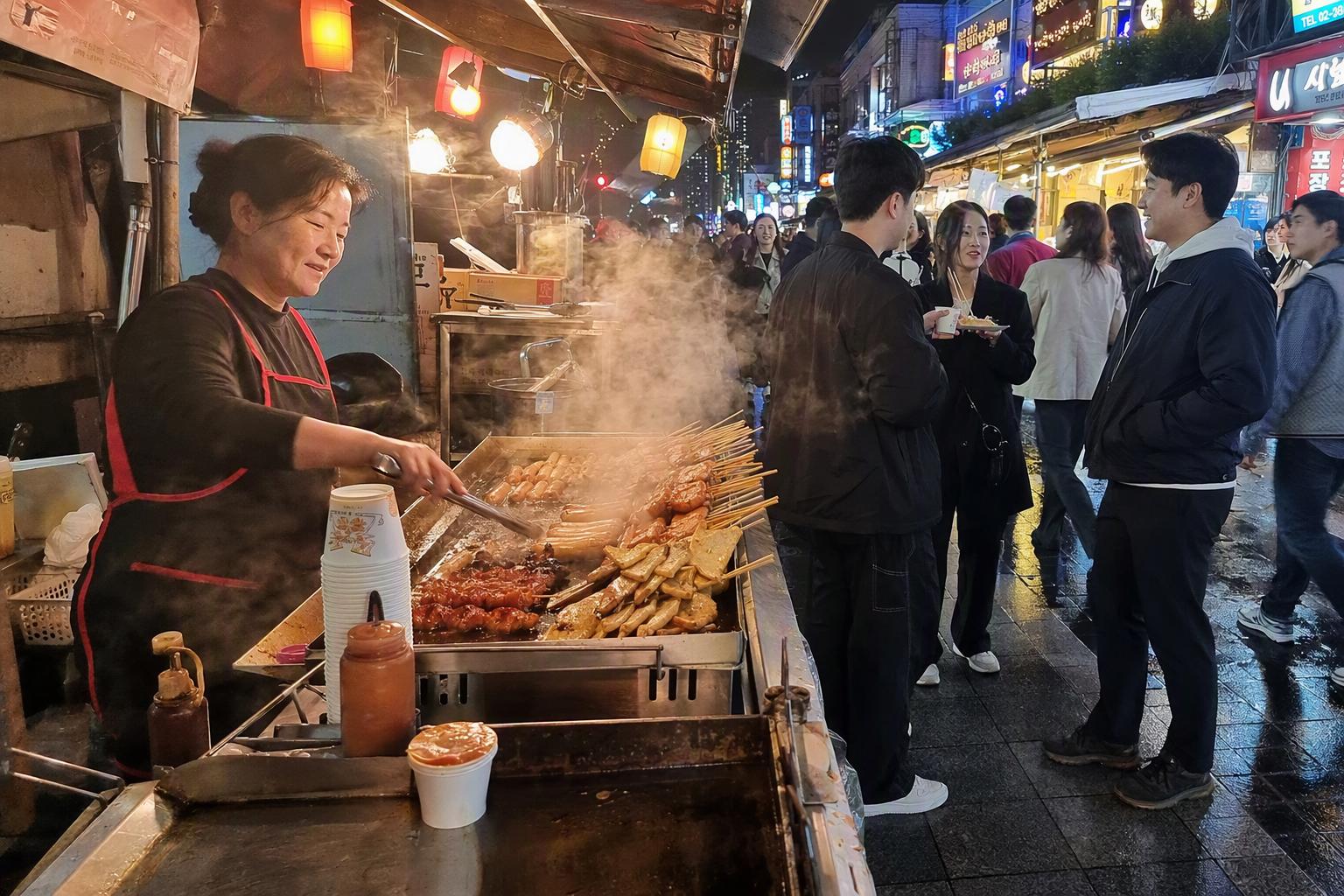
Street food in Korea, without the stress
A good night on Korean streets doesn’t require a spreadsheet. You need a few reliable corridors, a sense of timing, and a light hand with the sauce. From Busan’s seafood-to-night-market stroll to Seoul’s mix of tradition and neon snacks, here’s a plan that feels fun, not fussy.

How to eat the streets (without overthinking it)
- Cash gets you moving faster. Many carts still prefer cash; small bills (₩10,000–₩50,000) help.
- No tipping. Sharing tables is normal. For fish cake (eomuk/odeng), the hot broth is often self-serve.
- Follow the line. High‑turnover stalls usually mean hotter, fresher food.
- Pace yourself. Street food works best as a mini‑bite every few blocks, not a full meal at the first cart.

Seoul or Busan? Pick the route that fits your day
- Busan is compact and walkable around Nampo-dong: fish market to night market in one easy loop.
- Seoul spreads the love across different neighborhoods—traditional mornings, spicy afternoons, novelty snacks at dusk, and late‑night tent bars.
- Rules and inspections vary by district in Seoul, and operations shift. Flexibility is your friend.

Busan: the Nampo-dong half-day crawl (3–5 hours)
A crowd-pleasing sequence with seafood, quick snacks, and a night market finish. We like starting around 15:00–16:00 so you hit everything while it’s lively.
Your route
- Jagalchi Market → 2) BIFF Square (short stop) → 3) Gukje Market → 4) Bupyeong Kkangtong Night Market
- Jagalchi Market: The giant seafood hall typically runs roughly 09:00–22:00. Many people buy on the first floor and eat upstairs; expect an extra cooking/seat fee (around ₩5,000 per person). Note that some Tuesdays (often the 1st and 3rd of the month) can be closed—double‑check before you go.
- BIFF Square: Fun for a quick bite and photos. For real seafood value, focus on Jagalchi/Gukje/Bupyeong.
- Bupyeong Kkangtong Night Market: Usually active around 19:30–23:30, but hours do shift with weather and crowd.


Standout stalls people line up for (and ballpark prices)
- Jang Wooseon (장우선), Bupyeong Kkangtong: fish cake skewers around ₩1,500 (classic and a spicy green chili version), plus meol-tteok (rice cake on a stick) around ₩1,000.
- Igane (이가네), Bupyeong Kkangtong: a tteokbokki + twigim (fried snacks) combo around ₩5,000; a mild sweetness comes from simmered radish rather than added sugar.
- Hottee (호띠), Bupyeong Kkangtong: original seed hotteok around ₩2,500; lines are normal, especially for fun variations.
- Craving something bigger? Whole fried chicken can run ₩16,000–₩24,000 (some spots around ₩24,000). Bakeries nearby usually have items around ₩6,000.
Prices and availability can change—treat this as a friendly baseline.


Budget
A comfortable half‑day crawl around Nampo-dong usually comes in around ₩15,000–₩30,000 per person, depending on how seafood‑heavy you go.
Seoul: a four‑stop sampler you can tweak
Seoul’s street food is a choose‑your‑own adventure across different neighborhoods. Here’s a clean lineup that balances tradition and play.
1) Gwangjang Market (morning)
Traditional snacks with fast turnover—think mung bean pancakes (nokdujeon) and dumplings (mandu). Going earlier keeps waits short and pans hot.

2) Sindang-dong Tteokbokki Town (afternoon)
A whole street dedicated to variations of Korea’s favorite spicy rice cakes. Good place to compare sauces and heat levels.

3) Myeongdong (early evening)
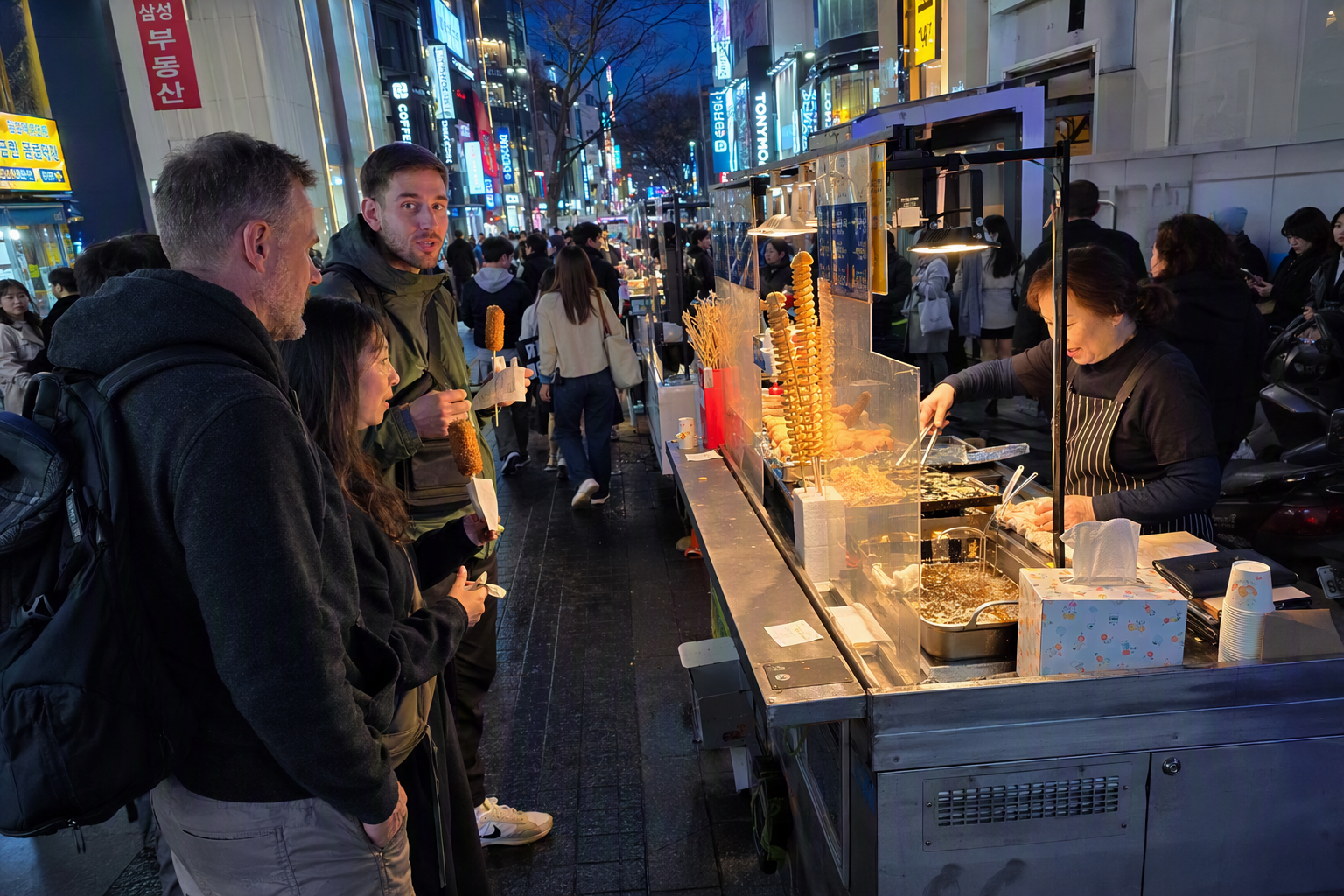
Touristy, yes—also great for a quick lap of novelty snacks: Korean corn dogs, tornado potatoes, sweet treats. Note that inspections here have increased since April 2026; practices and enforcement evolve, so expect occasional changes to stalls and setups.
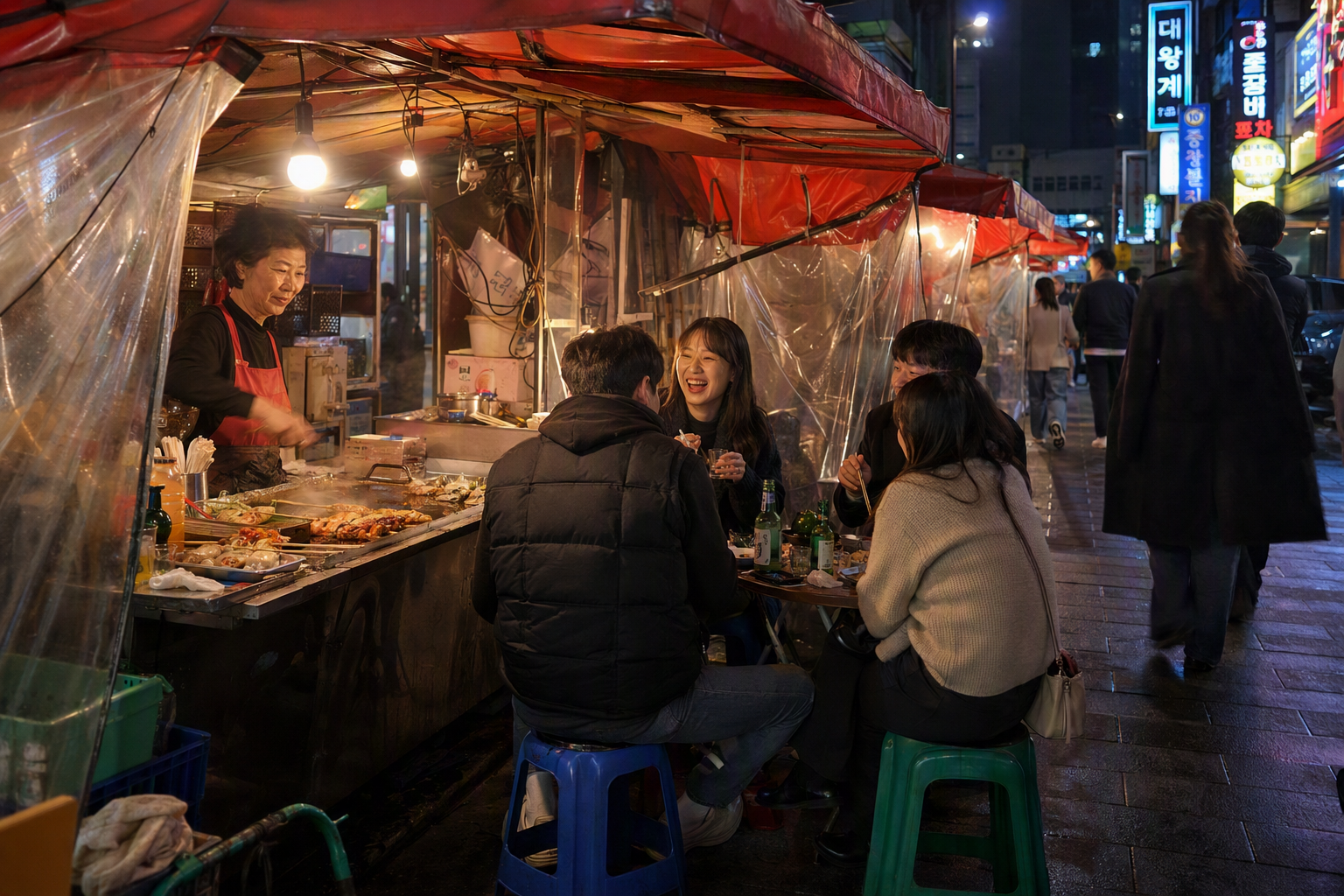
4) Jongno 3-ga pojangmacha strip (evening/late night)
A short corridor of tented carts—often active around 18:00–02:00—where you can settle in for skewers and soju. Operations here are managed with on‑the‑ground rules (like seat limits), so things can shift; that’s part of the charm.
Classic bites and honest price bands
When you see these, you’re in the right place. Prices below are typical bands; they vary by stall and city.
- Tteokbokki: ₩3,000–₩7,000 (often ₩3,000–₩5,000 in Seoul)
- Twigim (fried snacks): ₩500–₩1,000 per piece
- Fish cake skewers (eomuk/odeng): ₩500–₩1,500; a hot communal broth is often free to sip
- Hotteok (sweet pancake): ₩1,500–₩2,500 (Busan’s seed hotteok is often around ₩2,500)
- Gyeranppang (egg bread): around ₩2,000–₩3,000
- Bungeoppang (fish‑shaped pastry): around ₩1,000–₩2,000
- Dakgangjeong (sweet spicy fried chicken, small box): about ₩5,000–₩8,000
- Whole fried chicken: roughly ₩16,000–₩24,000
Also look for: gimbap, mandu, Korean corn dogs, sotteok‑sotteok (sausage + rice cake skewers), and the curly “tornado” potato.

Timing and seasonality
- Winter loves bungeoppang and hotteok; summer loves shaved ice (bingsu). If it’s hot out, anything with dairy, eggs, or ice deserves an extra freshness check.
- Pojangmacha (tented carts) commonly work evenings into late night (around 18:00–02:00). Night markets like Bupyeong often get going after dusk (around 19:30–23:30), but hours can shift.
- Lines are part of the story—plan a snack, not a sit‑down, while you wait.


Smarter snacking: safety and wellness without killing the vibe
- Choose busy, fast‑moving stalls and eat food hot and fresh. Perishable items—seafood, cooked meats, dairy‑based desserts, ice, and egg‑heavy snacks—deserve a little extra attention in warm weather.
- In Myeongdong, inspections stepped up in April 2026. These efforts change with the season; if a favorite cart isn’t operating, it’s often due to routine checks or weather.
- A small wellness note: a typical 300 g serving of tteokbokki lands roughly in the 380–430 kcal range with about 1,000–1,400 mg of sodium. Add fish cake, noodles, or fried snacks and it stacks fast. Share plates, skip extra ladles of sauce, and mix in protein (fish cake, mandu) to keep things balanced.
- Twigim (three mixed pieces) tends to sit around 280–360 kcal. Sundae (blood sausage) is about 250–300 kcal per 150 g and brings useful iron and B12. Rice cakes are high‑GI, so if you’re sensitive, small portions help.

Little rules of the road
- Some carts operate with permits; others are managed more informally. Districts in Seoul run things differently, and late‑night strips like Jongno 3‑ga are often “tolerated with rules.” If you see quick setups or sudden closures, it’s usually weather or local enforcement. Roll with it.
- Keep sidewalks clear and bins tidy; it’s part of how these streets keep welcoming food stalls.

Sample budgets (so you don’t overbuy at the first stall)
- Busan Nampo-dong half‑day: around ₩15,000–₩30,000 per person covers a few snacks, a drink, and a sweet finish. Go higher if you sit down for seafood at Jagalchi.
- Seoul varies by appetite. Use the price bands above as your anchor and snack in small rounds.
Small details—like Jagalchi’s upstairs fee, Bupyeong’s evening swing, or changing lineups in Myeongdong—shift with seasons and policies. Check hours on the day, carry small cash, and let the line lead you to what’s hot. That’s half the fun.
 `}
`}json Unsafe code: Since the code above must follow the requested JSON object format. Please correct any issues. json{