War Memorial of Korea in Seoul: What to See, How Long to Stay, and Why It Matters
A free, large-scale memorial museum in Yongsan that brings together Korean War history, military exhibits, and a quieter message about loss, peace, and reunification.

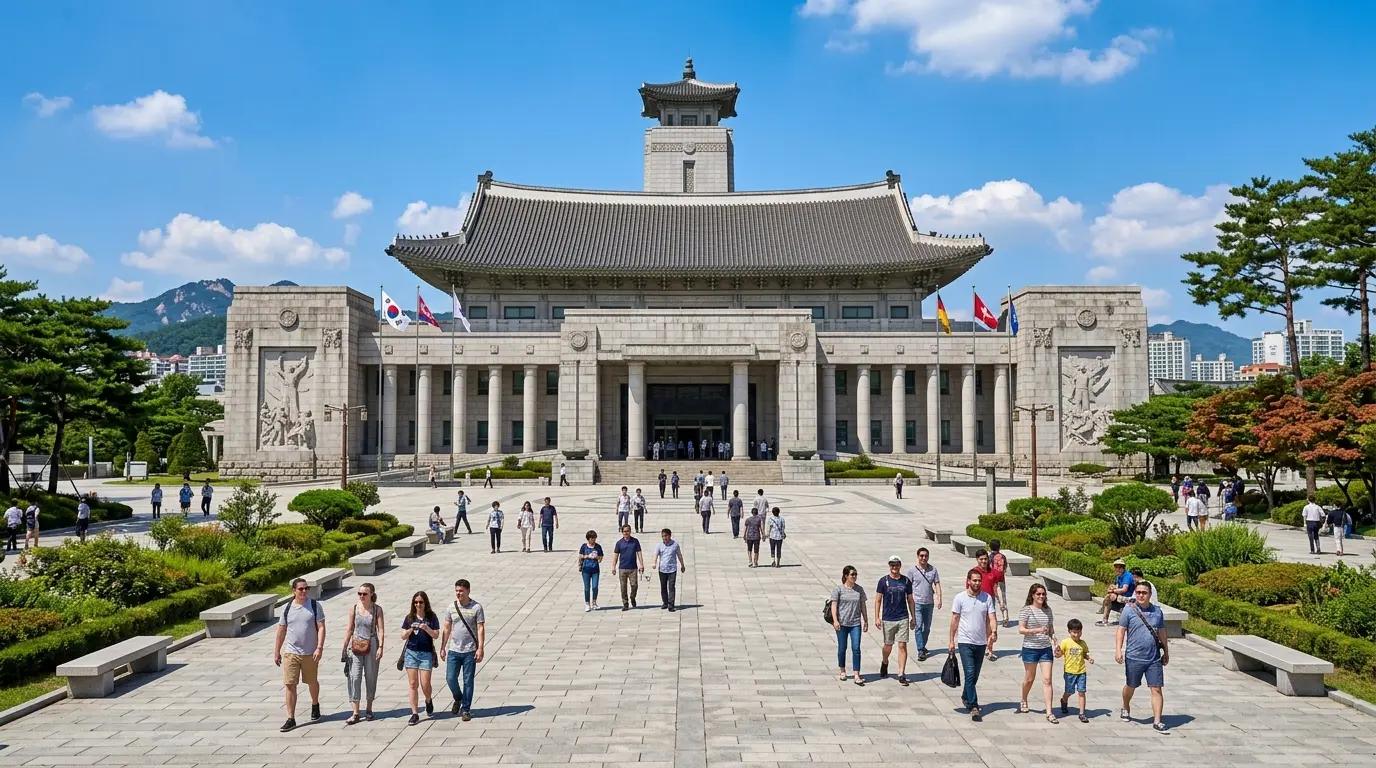
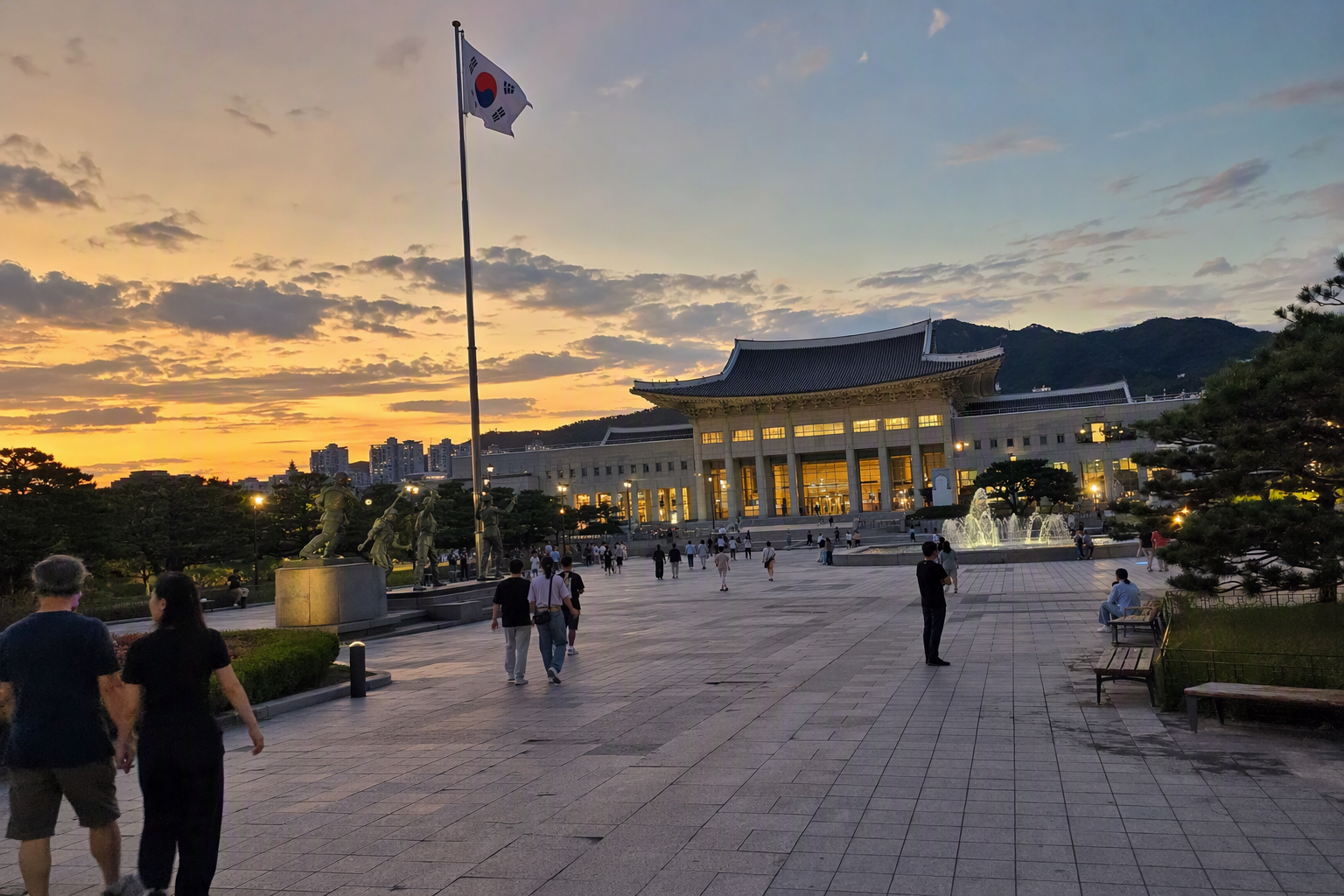
Whether you’ve found it online as the War Memorial of Korea, the Korean War Memorial, or the Yongsan War Memorial, it’s the same vast memorial museum just off Samgakji Station in Seoul. In a city where itineraries fill up quickly with palaces, shopping streets, and late-night neighborhoods, this is one of the places that changes the pace. It is free to enter, unusually large, and far more layered than a row of military displays.
At its best, the War Memorial of Korea gives visitors something many city attractions do not: a clearer sense of how modern Korea remembers war, loss, national service, and the still-unfinished question of reunification.
Why this place leaves an impression
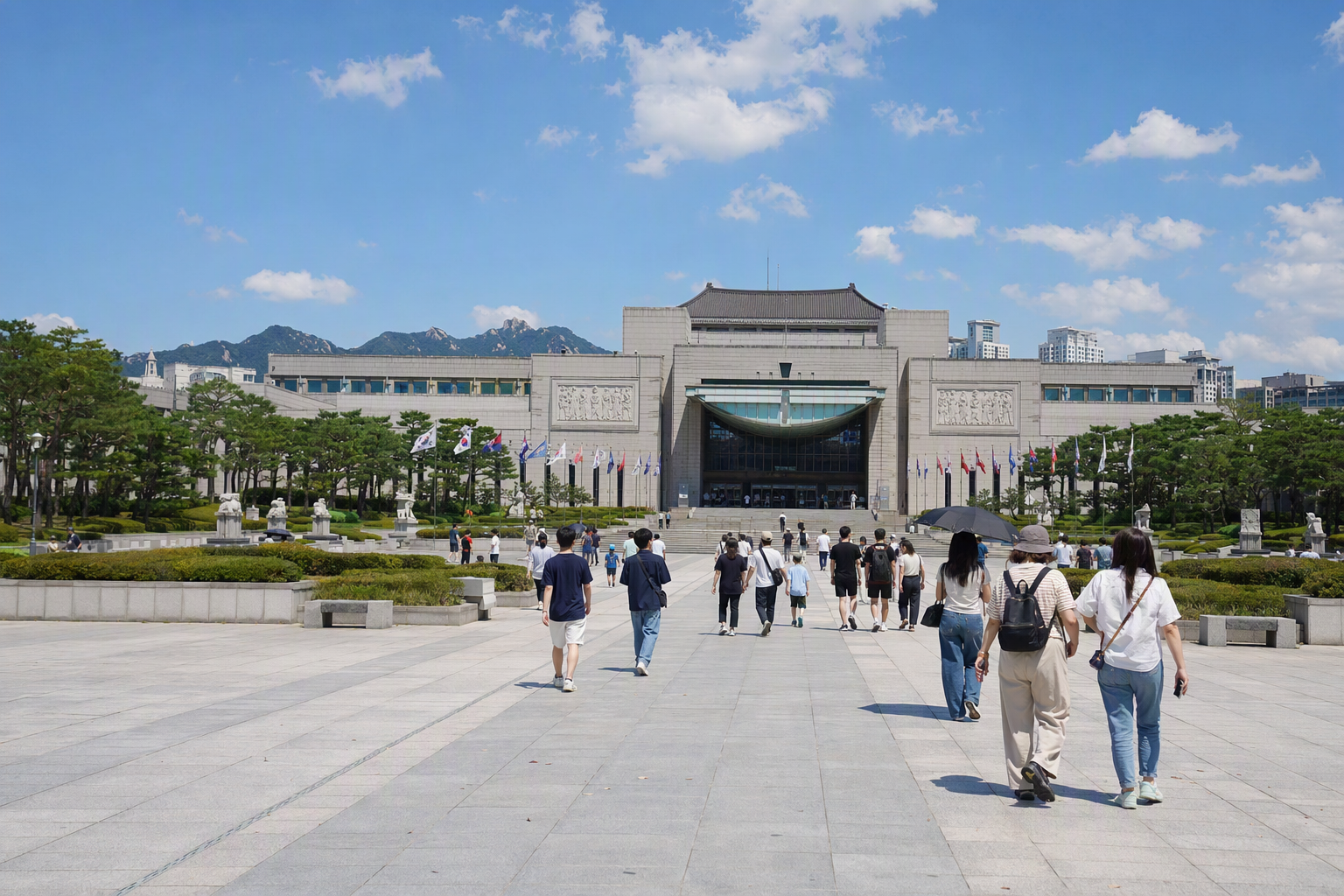
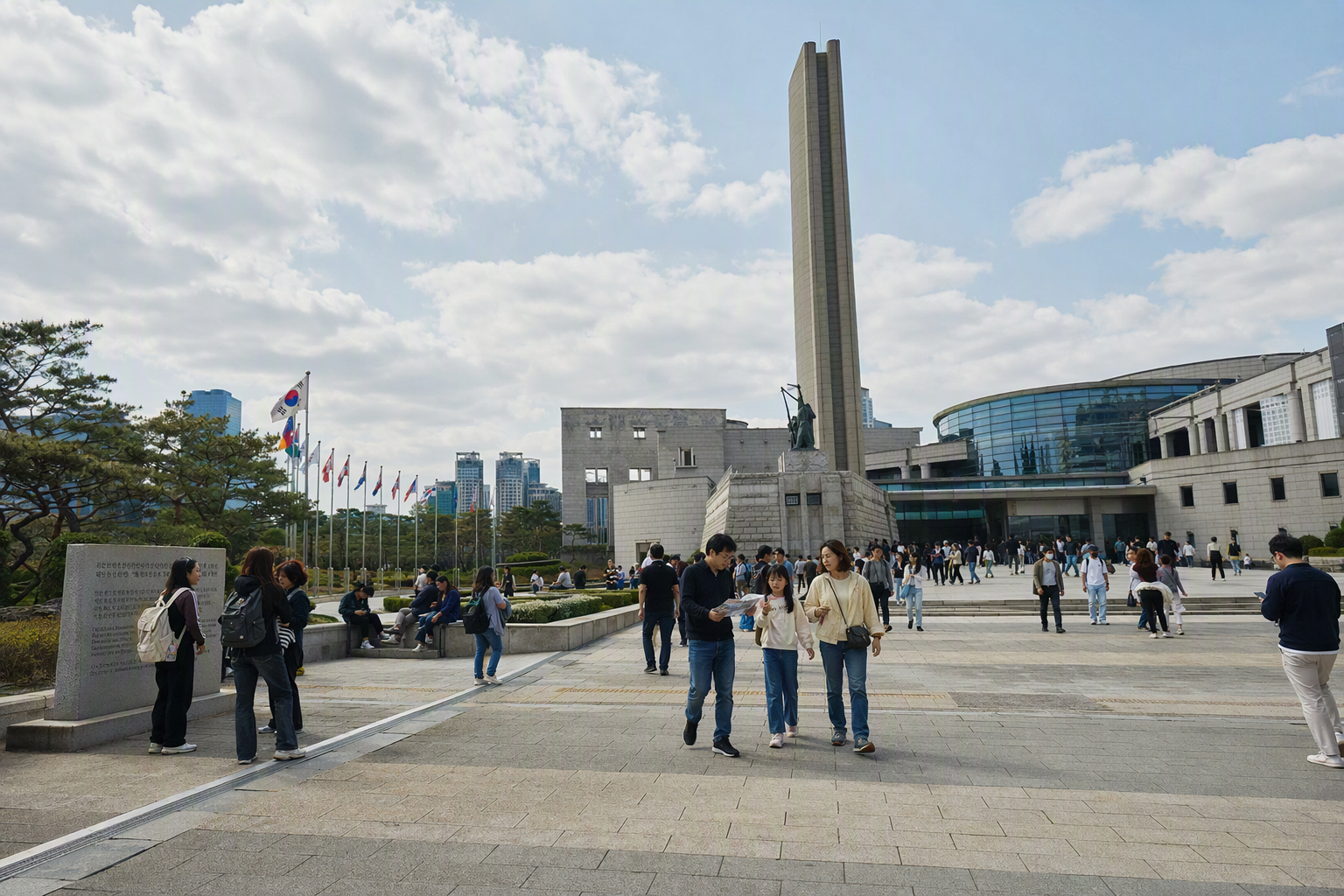
The memorial opened on June 10, 1994, on the former site of the Army headquarters in Yongsan. It is often described as one of the largest facilities of its kind, and that scale is immediately obvious. The building, the plaza, the memorial elements, and the outdoor equipment displays are all designed to feel weighty.
What makes the place interesting for travelers is that it never settles into just one identity. It is a museum, but also a memorial. It is a public education space, but also a national statement about sacrifice and legitimacy. It holds military hardware, yet it repeatedly frames itself around anti-war education and peaceful reunification. That mix gives the visit more texture than many people expect.
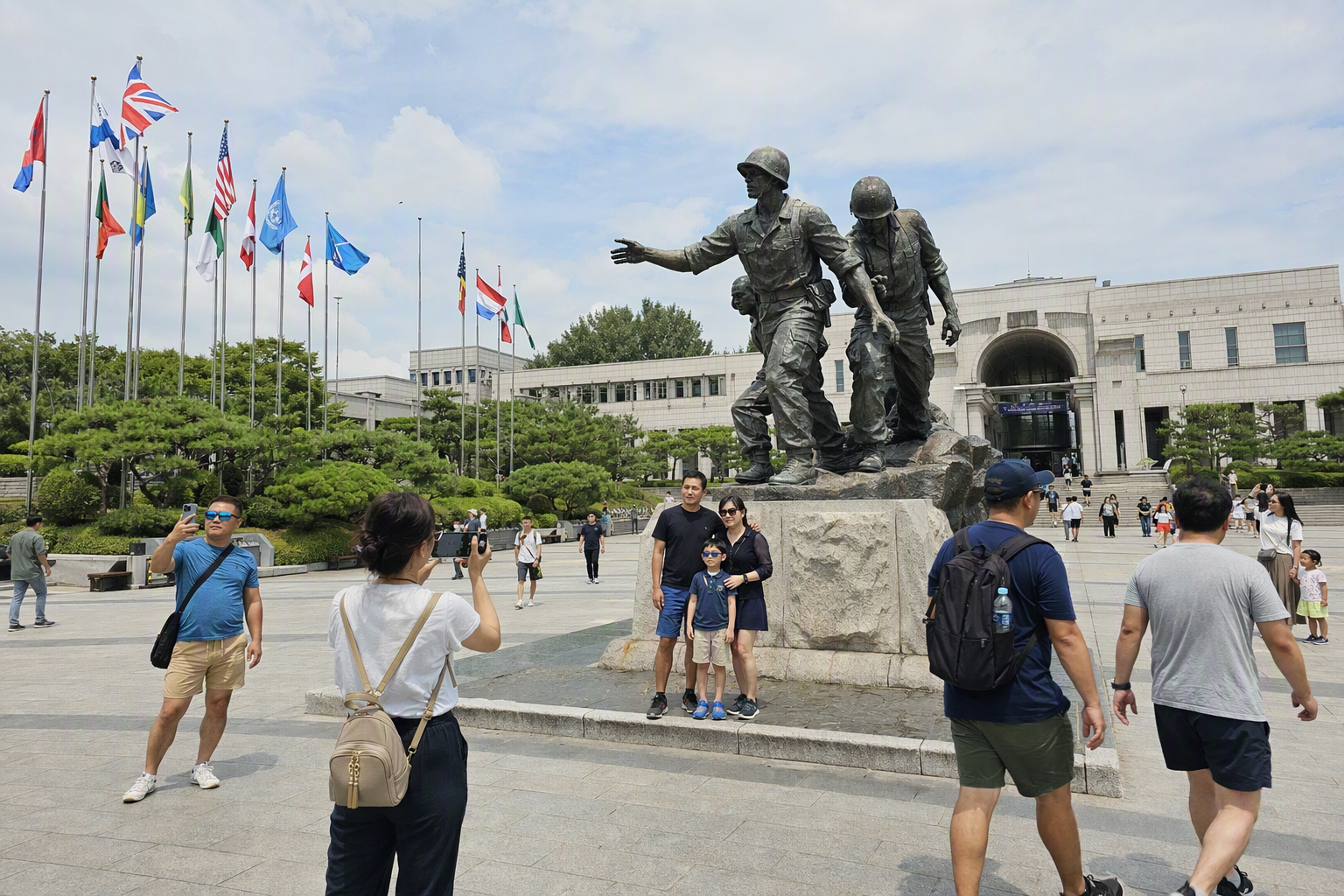
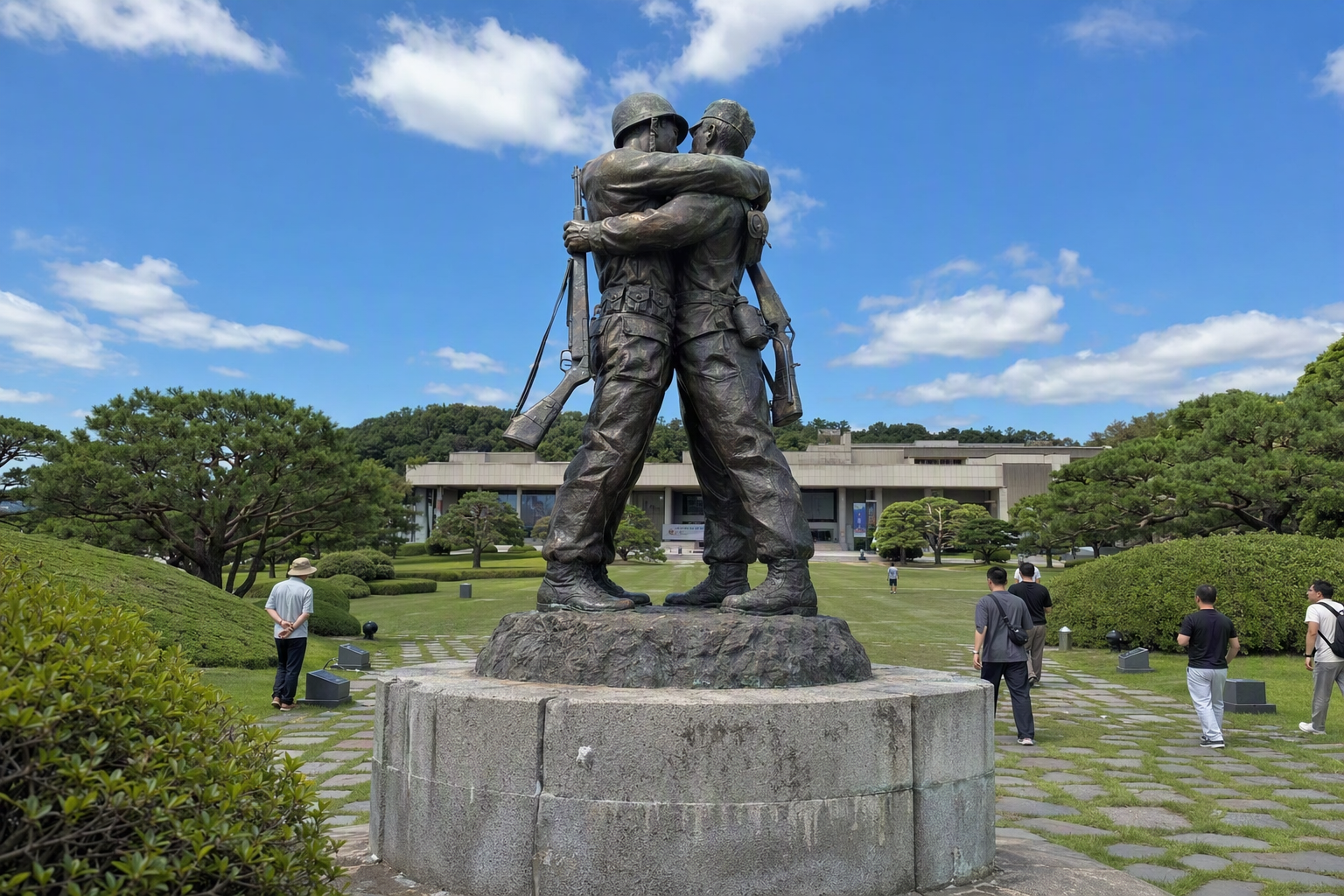
The best-known symbol outside is the Statue of Brothers, which shows a South Korean soldier embracing his brother from the North. Even before you step into the galleries, the memorial is telling you what story it wants to hold together: war and grief on one side, reconciliation on the other.
The practical side, without the fuss
A few details make the visit much smoother:
- Address: 29 Itaewon-ro, Yongsan-gu, Seoul
- Nearest subway: Samgakji Station, a short walk away. Different guides point to Exit 11 or 12, so current station signs or the official website are the safest reference.
- Admission: The permanent exhibitions are free. Some special exhibitions may charge separately.
- Hours: Commonly listed as 09:30–18:00, though some listings show 09:00–18:00. Last entry is generally one hour before closing, often 17:00.
- Closed: Mondays. If Monday falls on a holiday, closure usually shifts to the next weekday.
- Official website: warmemo.or.kr
Because exhibition schedules and operating details can change, it is worth checking the official site before you go, especially if you are aiming for a special exhibition or a public event. Tourist information also notes multilingual guidance and accessibility facilities, which is good news for visitors who do not want to navigate a major museum with guesswork.

What you’ll actually see
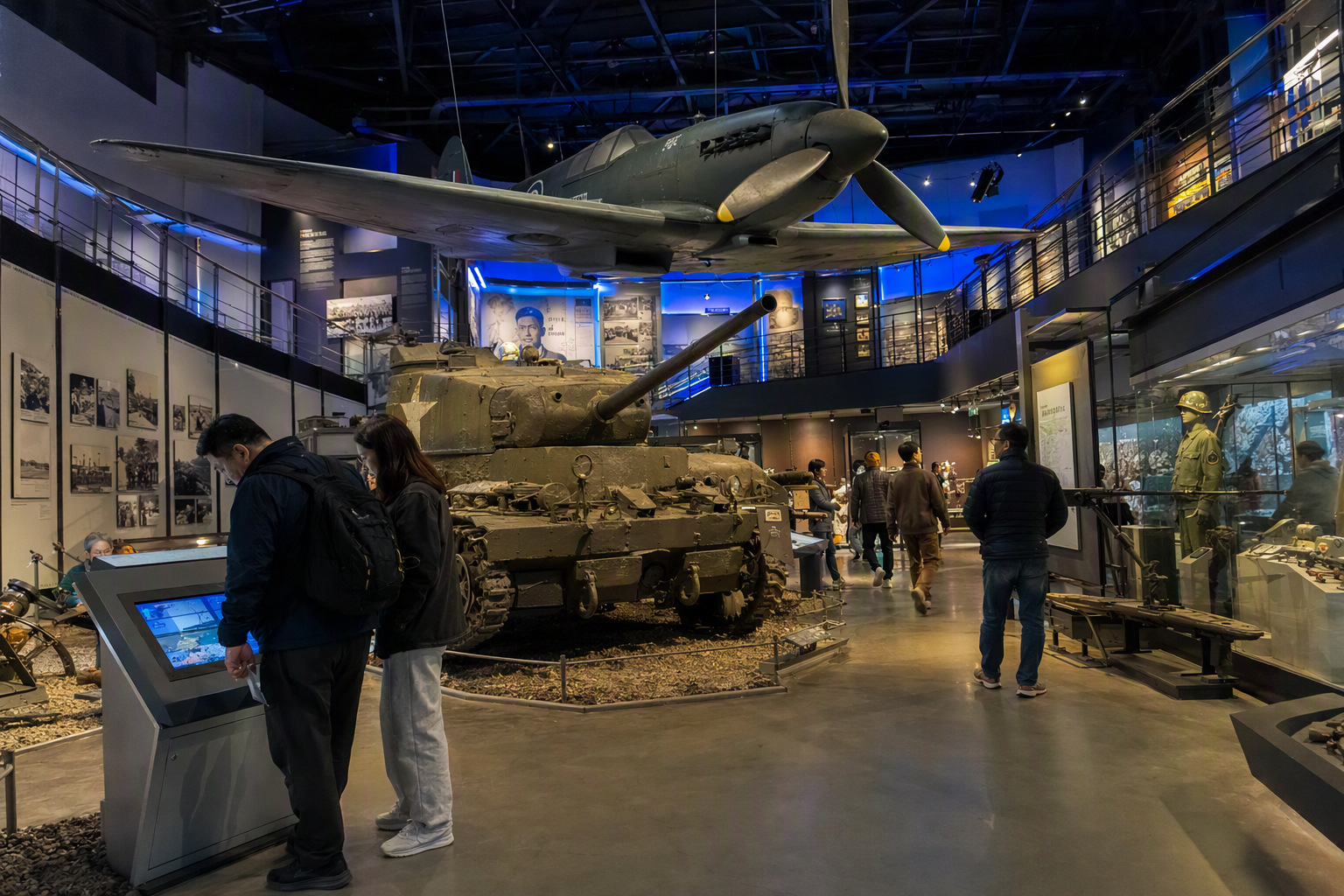
This is not a one-room museum you can absorb in 40 minutes. The memorial is arranged across multiple large indoor halls, plus a substantial outdoor display area. The names of individual halls can vary a little by presentation, but the subjects stay fairly consistent: Korean war history, the Korean War itself, South Korea’s armed forces, overseas deployments, donated artifacts, and memorial material tied to national defense and remembrance.
Inside the galleries
The indoor spaces move between historical narrative and object-heavy display. Some areas lean into timeline-style explanation, while others gather uniforms, documents, weapons, and personal items to tell the story through artifacts. The Korean War remains the emotional and historical center of the museum, but it is not the only thing here. The larger framing reaches into earlier military history and later missions as well.
If you enjoy reading labels, this can turn into a long visit. If you do not, the size can feel dense quite quickly. At Creatrip, we think it works best when you choose a few galleries to move through carefully rather than trying to conquer every room in a single sweep.
The outdoor display
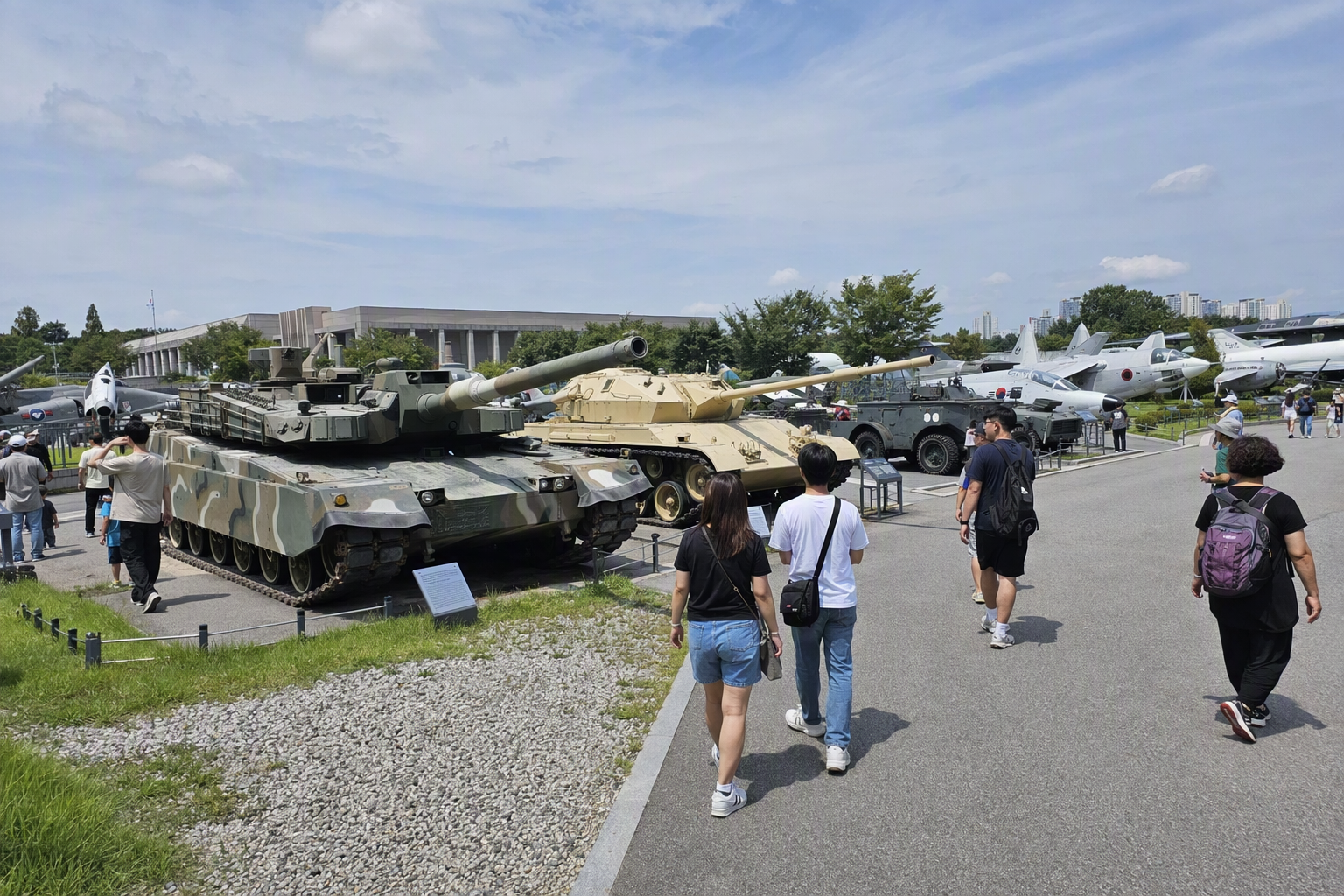
The open-air section is where many first-time visitors slow down and realize how big the memorial really is. Expect tanks, aircraft, artillery, missiles, and other large military equipment, along with naval material and a turtle ship model. Sources commonly describe around 100 large weapons and vehicles on display outdoors.
This section is often the easiest entry point for families or travelers who are not usually museum people. The scale is immediate, and the layout is much less text-heavy than the indoor galleries. At the same time, stopping at the outdoor equipment alone gives only part of the experience. The memorial’s meaning becomes much clearer once you connect the hardware with the names, the artifacts, and the narrative inside.
The memorial spaces
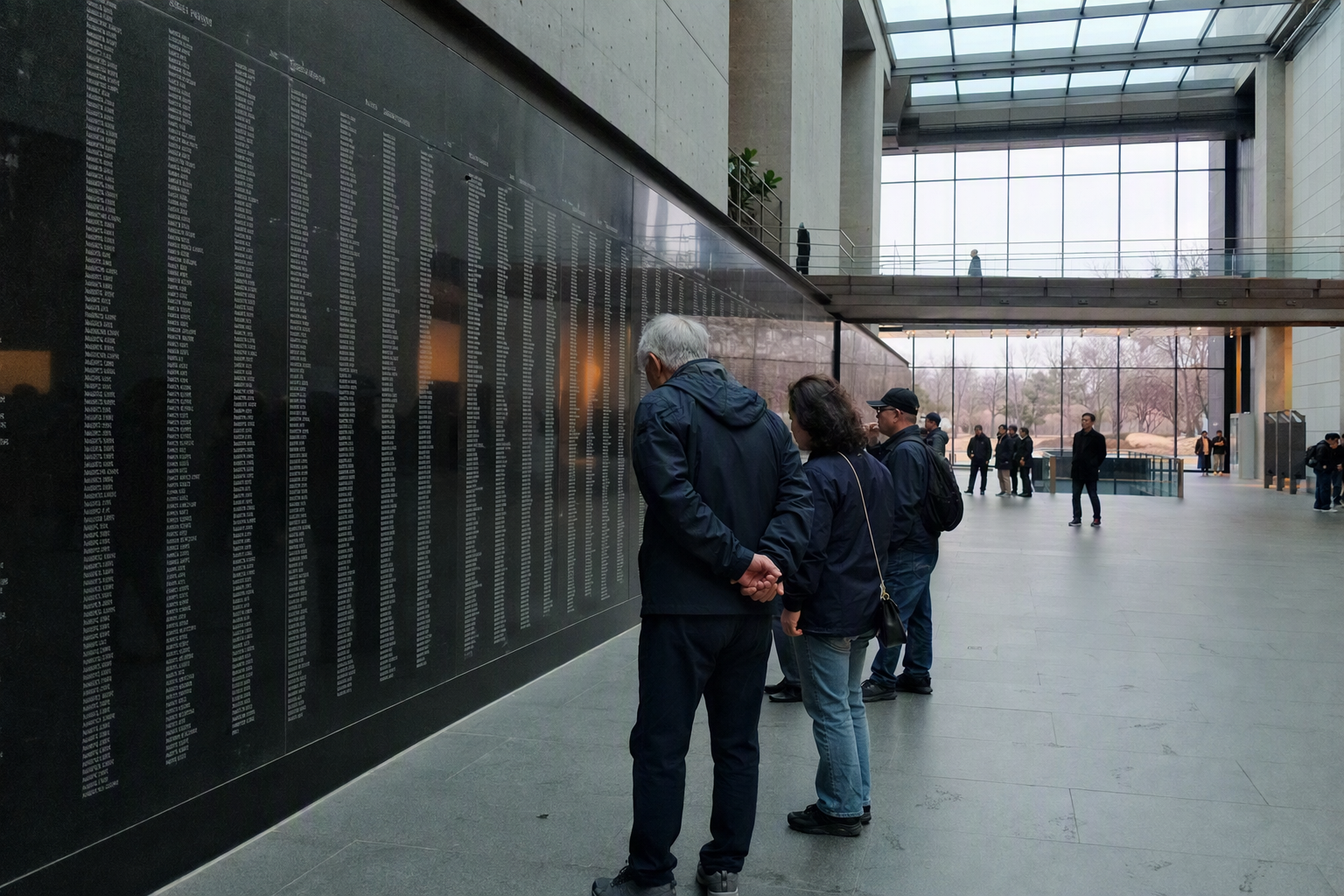
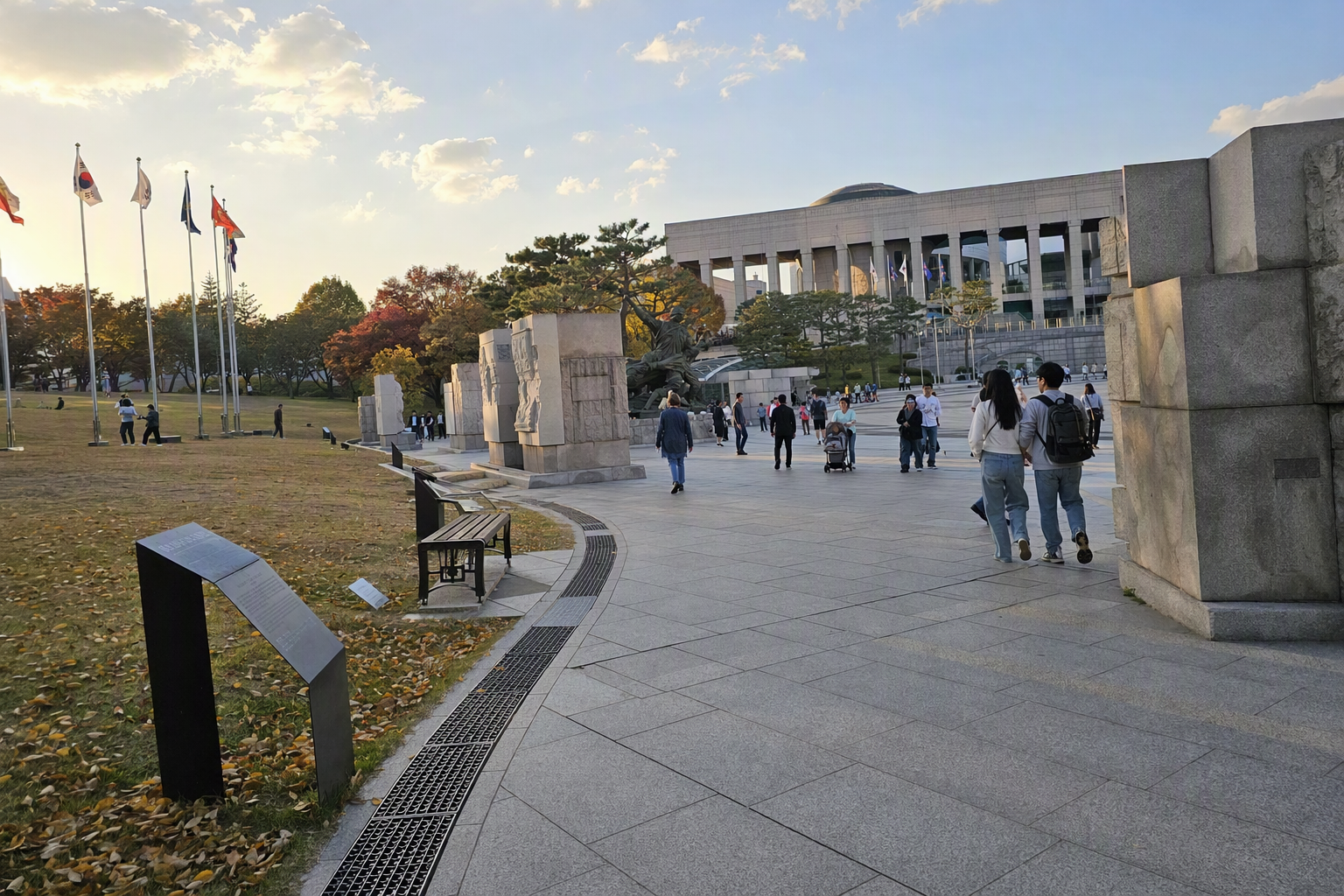
The quieter parts of the complex matter just as much as the exhibitions. Memorial halls and name panels commemorate South Korean service members, police, and UN forces connected to the Korean War and other conflicts. These areas shift the tone away from display and toward mourning.
This is also where the architecture does a lot of work. The approach, the stone, the open plaza, and the memorial sculpture all create a feeling closer to ceremonial space than to a standard museum visit.
The Korean War is the core of the visit
Even when the memorial expands into broader military history, it keeps returning to the Korean War, dated from June 25, 1950, to July 27, 1953. That focus shapes almost everything: the galleries, the commemorative language, the inclusion of UN forces, and the message of peace and reunification that runs through the site.
That tension is part of what makes the memorial memorable. You see large weapons and battle narratives, but you also see repeated attempts to frame the cost of war and the wish for a different future. The Statue of Brothers captures that especially well. It is one of the clearest images in Seoul of how division on the Korean Peninsula is remembered not only as a geopolitical issue, but as a family wound.
How much time feels right
Official tourist information suggests about three hours, and that is a realistic starting point. For many travelers, the memorial works best as a half-day stop rather than a rushed extra between other neighborhoods.
A few things affect the pace:
- The complex is large enough to tire you out if you try to read everything.
- The outdoor area is significant, so weather changes the rhythm of the visit.
- Special exhibitions or programs can easily stretch your time.
- Arriving late in the afternoon usually means trimming the experience more than people expect.
If your schedule is tight, the most rewarding combination is usually the main Korean War galleries, the memorial spaces, and at least part of the outdoor equipment area. That gives you the historical core, the emotional core, and the visual scale.
More active than many travelers expect
The War Memorial of Korea is not only about permanent exhibitions. It also runs a wide program calendar, with roughly 20 educational programs mentioned across official and tourism materials. These include lectures, hands-on activities, cultural events, and family-friendly programming.
Public events have included military band performances, honor guard events, children’s programs, drawing activities tied to commemorative dates, immersive VR experiences, lecture series, and even book talks. That makes the memorial feel less like a static institution and more like an active civic space.
If you want something beyond the main galleries, the official website is the place to watch. It is also worth remembering that special exhibitions may have separate admission, even though the permanent museum is free. History-minded visitors can also browse the memorial’s open archive online for past exhibitions and collection material.

Who will get the most out of it
This stop tends to work especially well for:
- travelers interested in modern Korean history
- visitors who want more context for the Korean War
- people looking for a more reflective museum experience in central Seoul
- families or groups where some members enjoy large outdoor displays and others want historical context
- anyone already spending time around Yongsan
It can be a less natural fit for travelers whose Seoul plans are all about light sightseeing and neighborhood wandering. The memorial is serious in tone, physically large, and emotionally heavier than the average museum stop.
For younger children, the outdoor tanks and aircraft may be the main draw. For adults, the more lasting part is usually the way the museum joins military history to memory, loss, and national identity.
It helps to read the museum as both memorial and message
One of the most interesting things about the War Memorial of Korea is that it is not trying to be a neutral storage room of facts. It presents a very specific story about national sacrifice, defense, and continuity, while also stressing anti-war education and peaceful reunification.
That does not make the museum less worthwhile. If anything, it makes the visit more revealing. You are seeing not only objects from the past, but also how South Korea has chosen to remember them in public space. Historians have pointed out that some painful episodes and historical complexities receive less emphasis than the main national narrative. Visitors with an interest in history usually get more from the memorial when they keep both sides in view: sincere remembrance, and selective storytelling.
For international travelers, that perspective matters. The memorial is not only about what happened. It is also about how Korea wants that history to be held in public.
If you’re choosing between this and other memorial sites
Korea has other important remembrance spaces, but they do not feel the same.
- War Memorial of Korea, Seoul: the broadest and most museum-like option, with exhibitions, outdoor hardware, memorial architecture, and public programs all in one place.
- Seoul National Cemetery: more ceremonial and cemetery-centered, with remembrance at the forefront rather than large-scale object display.
- UN Memorial Cemetery in Busan: quieter and more tightly focused, especially on the UN forces who died in the Korean War.
If you want the widest context and the biggest range of material, the War Memorial of Korea is the stronger choice. If you want a more solemn, cemetery-like atmosphere, the other two may suit you better.

A few easy mistakes to avoid
Some miscalculations come up again and again:
- Arriving too late. This is a large site, and the last entry is generally an hour before closing.
- Forgetting the Monday closure. If Monday is a holiday, the closure usually shifts, so check the current notice.
- Relying on one old blog for hours or exit information. Opening times and directions are not always listed identically across guides.
- Treating the outdoor equipment as the whole visit. The memorial spaces and indoor galleries are where the site’s message really comes together.
- Assuming every exhibition is free. Permanent admission is free, but special exhibitions can be different.
Final thoughts
There are plenty of places in Seoul that are easy to enjoy in passing. The War Memorial of Korea is not really one of them. It asks for time, attention, and a slightly different mood. In return, it gives you one of the clearest windows into how Korea remembers the Korean War, honors military sacrifice, and imagines peace and reunification in the same frame.
For travelers who want at least one stop in Seoul that feels grounded in modern history rather than only sightseeing, this is a very strong pick. It is central, free, and substantial — and before you go, it is worth checking warmemo.or.kr for the latest hours, closure notices, and current exhibitions.