Complete Guide to Hanyang Univ. | From Language School to Transportation and Campus Environment
From classroom and course features to campus environment, this introduces Hanyang Univ. Language School's learning environment and campus life infrastructure all at once.

Hello! We are Creatrip, sharing the latest Korea travel info every day from locals.
When people talk about Korea’s top universities, Hanyang University is always one of the names that comes up.
It’s especially well known as a university with strong competitiveness in engineering and medicine.
If you want to attend a language institute in Korea, and you’re looking for a school with convenient transportation, a great campus environment, and solid Korean speaking practice, Hanyang University is definitely an option worth considering.
Today, we’ll cover everything at once, an introduction to the Hanyang University International Education Institute (language institute) and its key features, plus the campus location and how to get there.
So, shall we take a look together at what the learning environment and campus vibe are like at Hanyang University’s language institute?
1. Hanyang University | Basic Overview
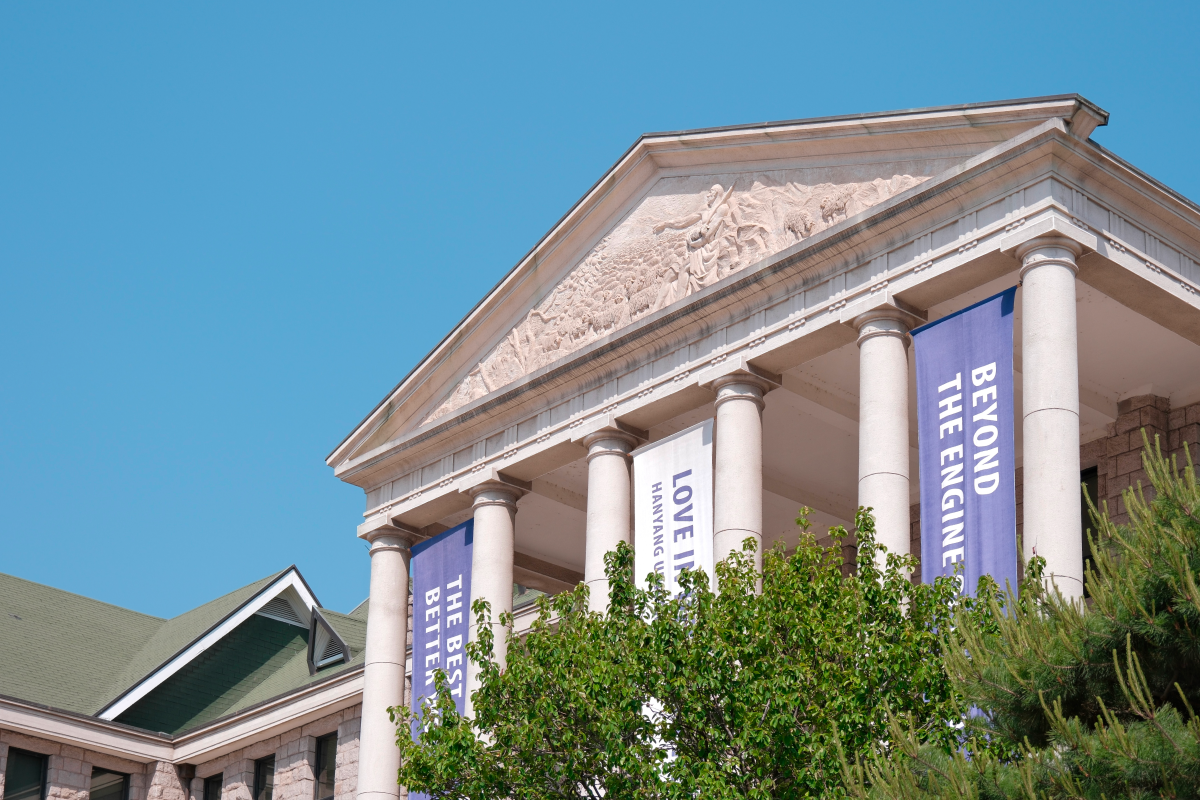
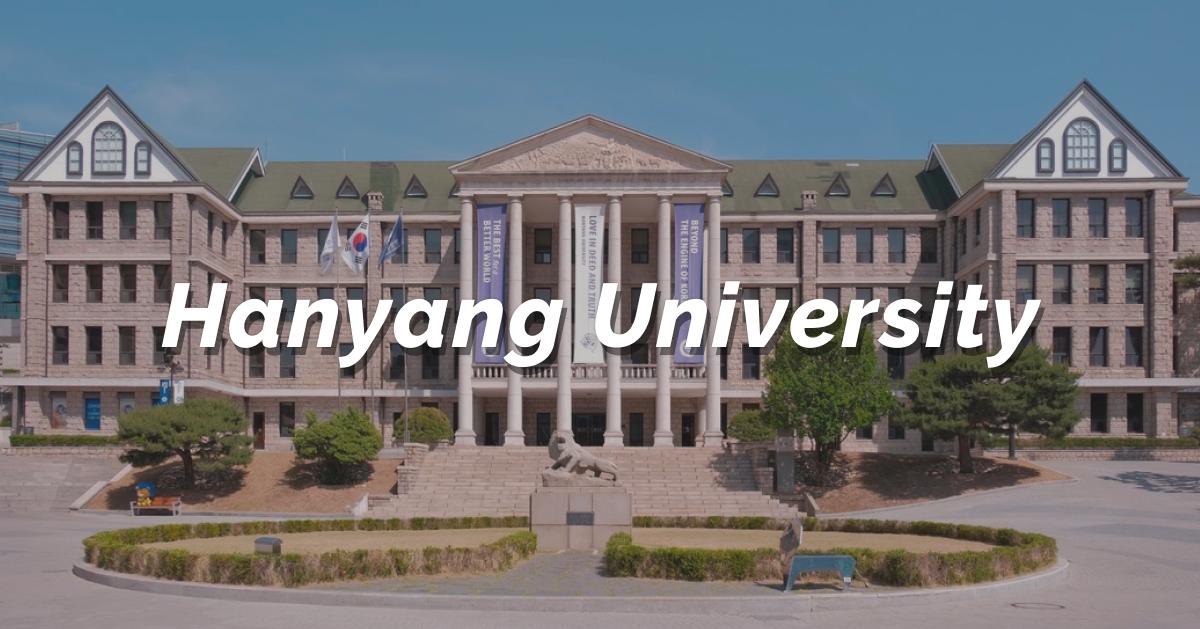
Hanyang University, founded in 1939, is one of Korea's leading private universities with a long history.
It has been highly regarded in Korean higher education for many years, and even today it is considered one of the top universities many students hope to attend.
Hanyang University is especially well known for its strength in engineering.
It continues to earn strong reviews across a wide range of fields, including mechanical engineering, electrical engineering, architecture, new materials, and industry-academia cooperation, and it is also widely recognized among Korean students.
Beyond its strengths in STEM, it is competitive in internationalization, research capacity, and industry-academia collaboration, which is why it remains popular not only with Korean students but also with international students.
Also, according to the QS World University Rankings 2026, Hanyang University is ranked 159th in the world. If you are considering academic competitiveness, campus infrastructure, and the convenience of living in Seoul, Hanyang University can be a very appealing choice.
2. Hanyang University | Location and Transportation
Hanyang University operates two campuses, the Seoul campus and the ERICA campus (Ansan, Gyeonggi-do).
In this article, we will focus on the Seoul campus, which language institute students most commonly attend.
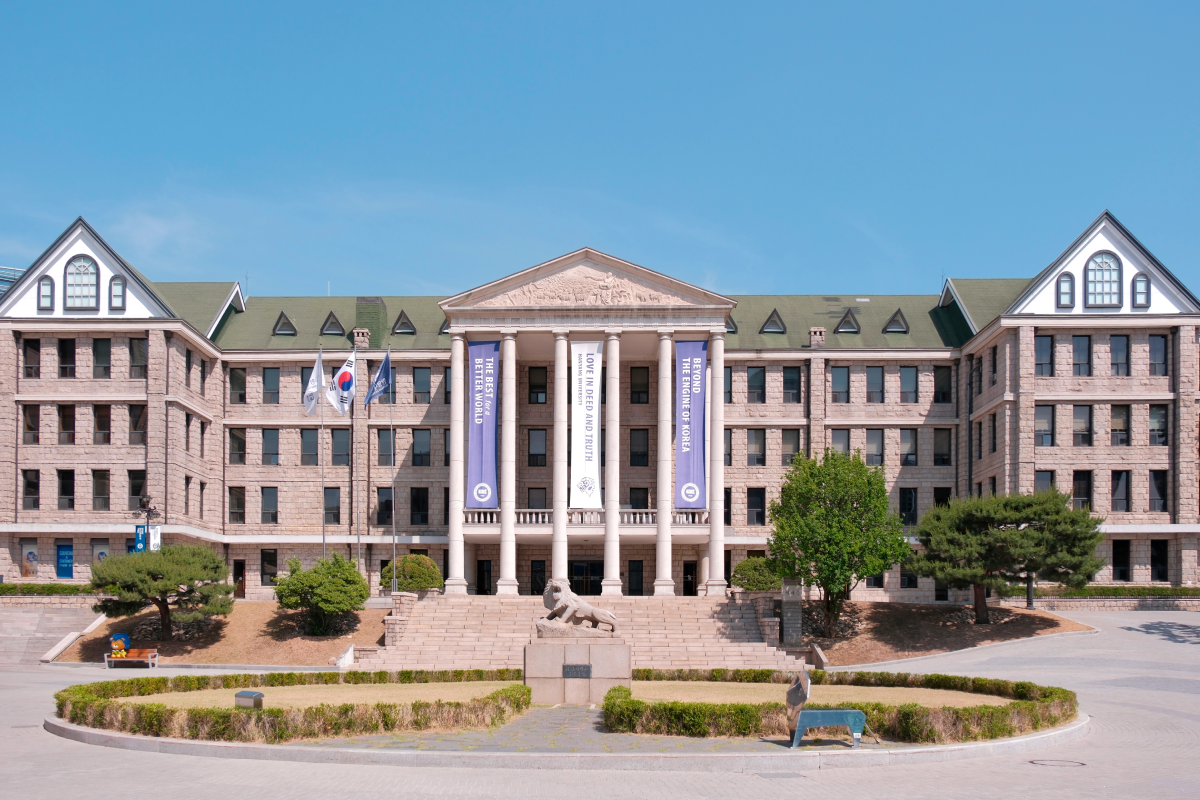
Hanyang University operates two campuses, the Seoul campus and the ERICA campus (Ansan, Gyeonggi-do).
Hanyang University’s Seoul campus is located in Seongdong-gu, Seoul, so transportation is very convenient. Not only is it great for commuting to school, it is also easy to find housing nearby or head into downtown Seoul on weekends, making it an especially advantageous location for international students.
The biggest advantage is that it is very close to Hanyang University Station on Subway Line 2. Exit 2 of Hanyang University Station connects directly to the campus, which creates a truly convenient environment for language institute students who need to commute every day.
With a short commute and easy travel, it feels less burdensome even on rainy days, or when the weather is extremely hot or cold. For students starting their study abroad life in Korea for the first time, having such strong transportation access is a major plus.
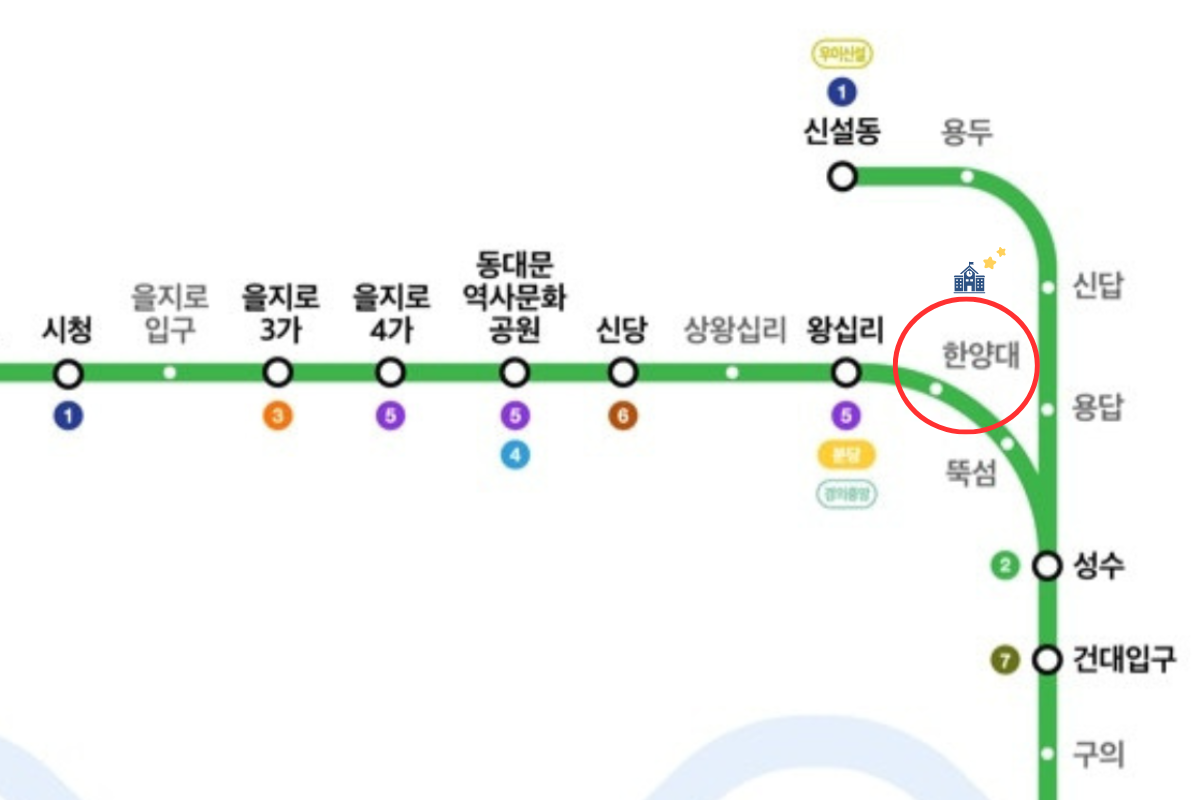
Plus, because the campus is in such a great location, the surrounding neighborhood infrastructure is also very convenient.
You can reach major areas like Seoul Forest, Seongsu, and the Wangsimni commercial district in just 10 minutes by subway, perfect for a quick outing on a day off from classes.
Beyond that, it is also easy to get to key Seoul areas such as Myeongdong, Dongdaemun, Hongdae, Gangnam, and Konkuk University, which makes it an even more appealing base for international students balancing study and daily life.
3. Hanyang University International Education Institute | Korean Language Education
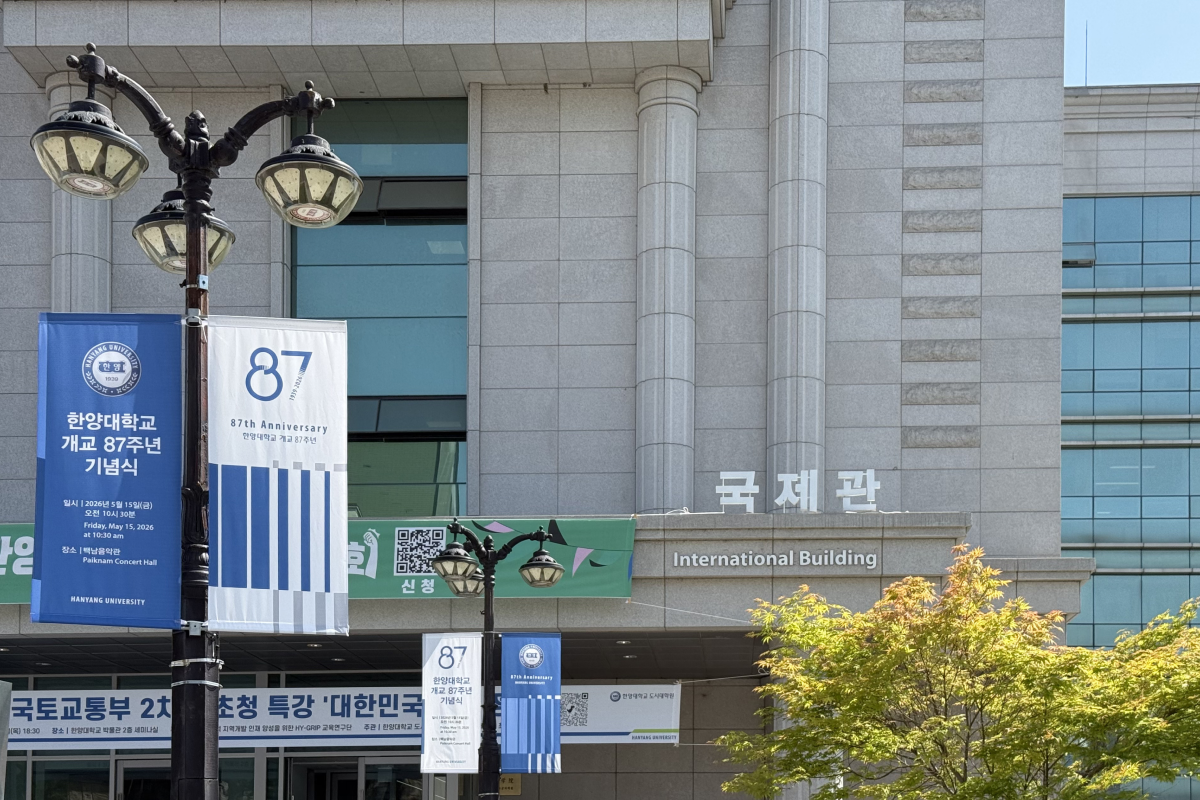
The Hanyang University International Education Institute runs a well-structured Korean language program for international students from around the world. The curriculum offers a balanced mix of speaking, listening, writing, and reading centered on real-life situations, helping learners strengthen their communication skills and build the Korean proficiency needed for admission to undergraduate and graduate programs.
3-1. Language Institute Classrooms and Facilities
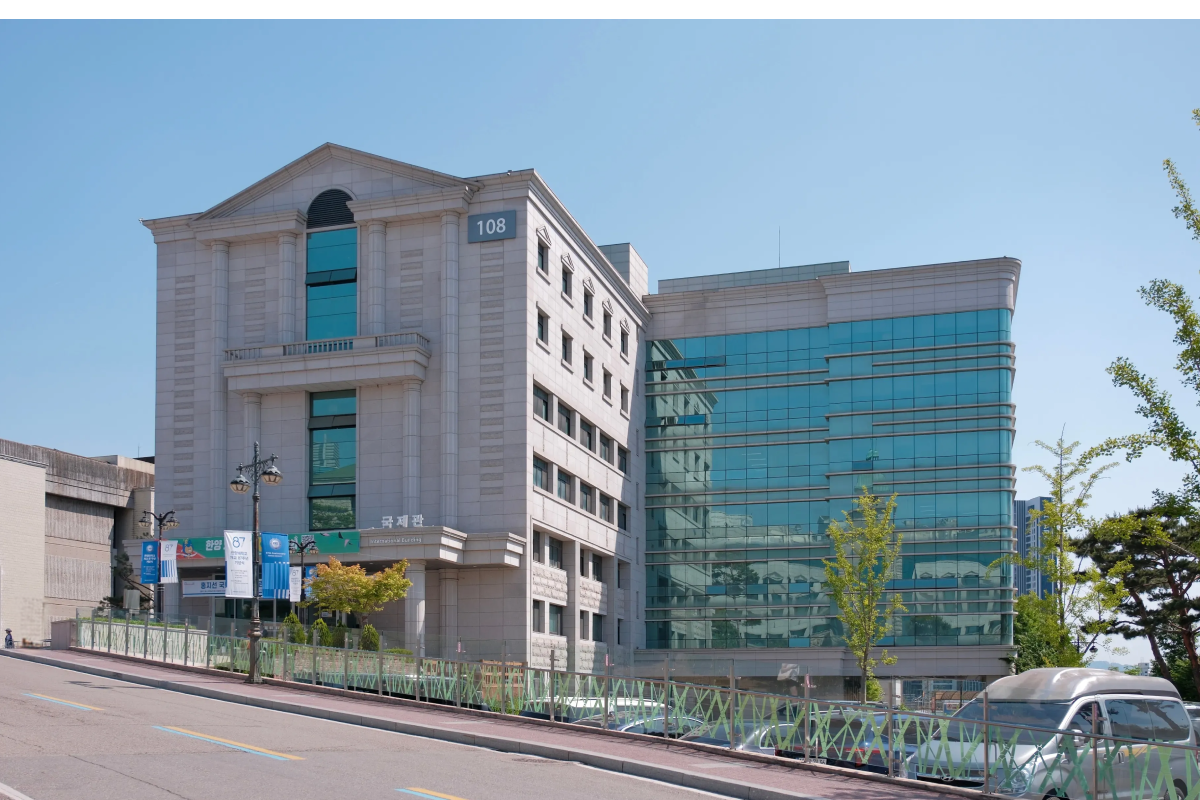
Hanyang University’s Language Institute is mainly located in the on-campus International Building (108).
It is close enough to reach in about a 1-minute walk from the subway station, so even first-time visitors can find it fairly easily.
Office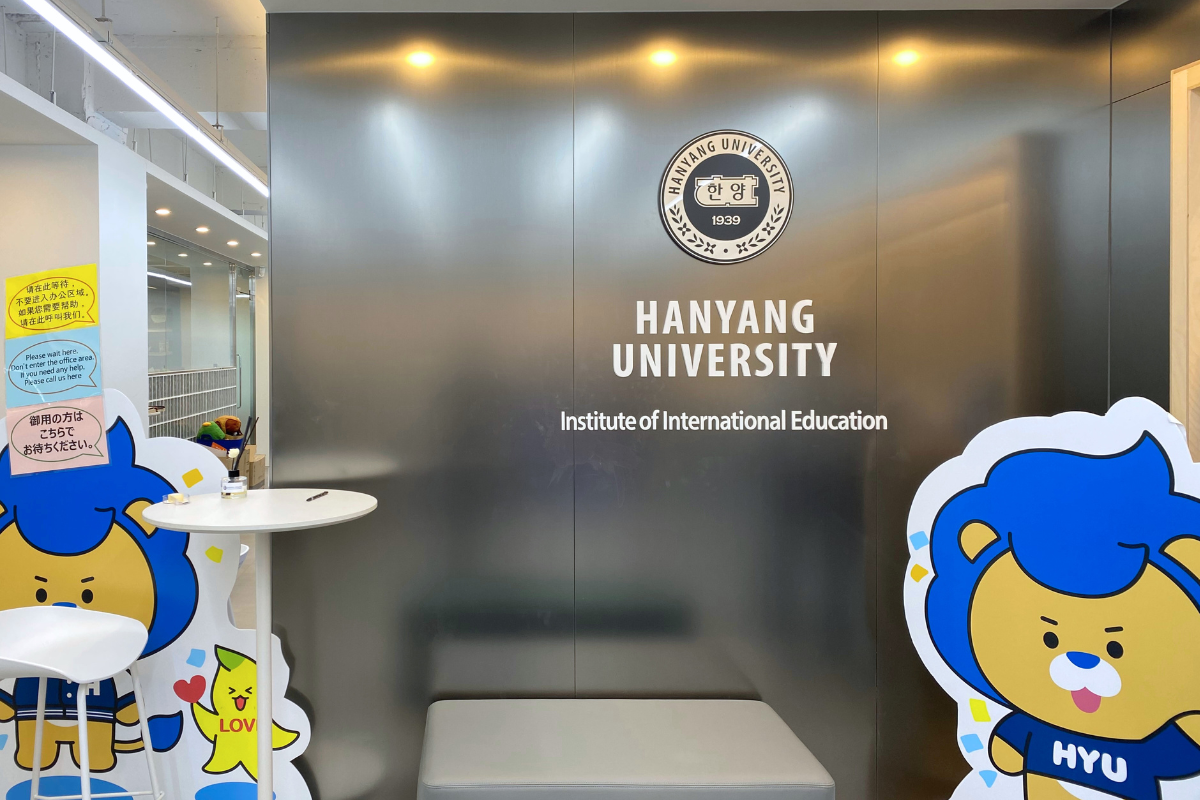
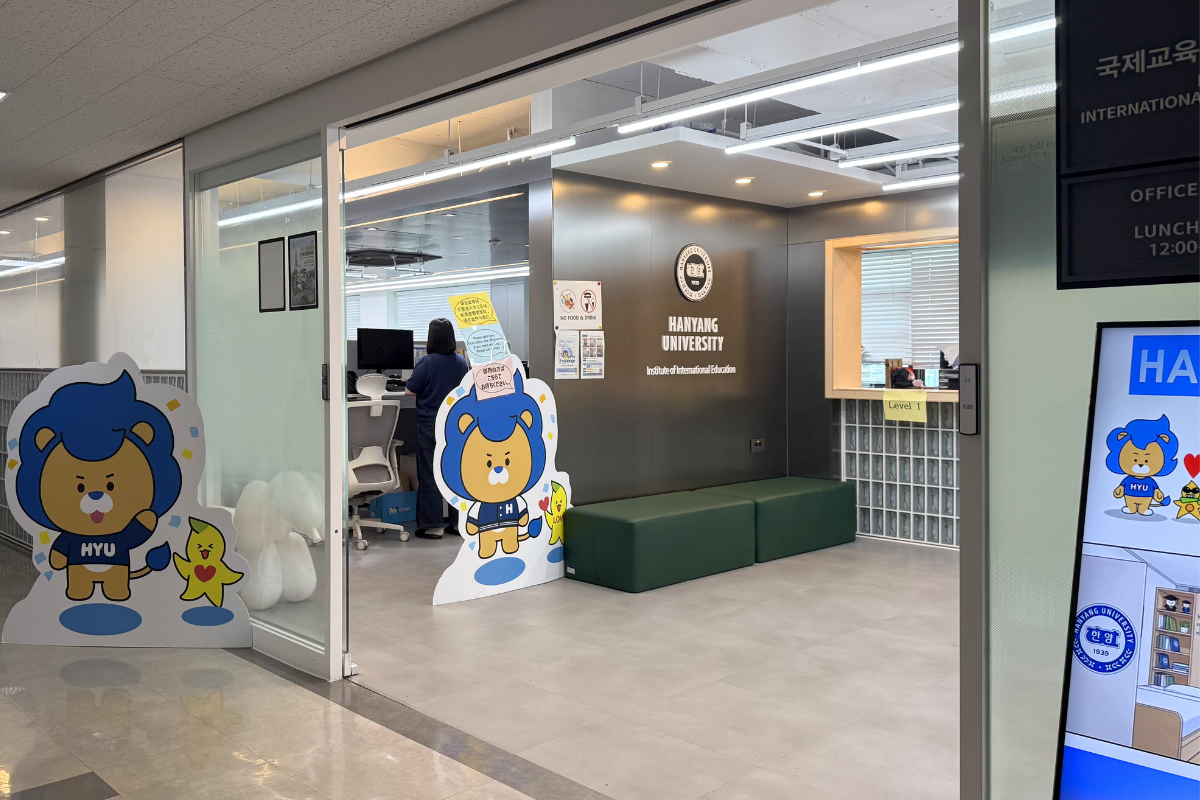
The International Education Institute office is on the 3rd floor of the International Building, and the building itself is relatively clean and comfortable.
Overall, it feels bright and well organized, leaving a good first impression even on your first visit.
When you enter the building, you can also see Hanyang University’s mascots, Hylion (HYlion) and Hynari (HYnari).
Little touches like these make the campus feel even more welcoming.
Another plus is that the office has staff who can communicate in Chinese.
Many students find it difficult to understand registration procedures, class information, or visa-related details right after arriving in Korea, so having a place where you can ask in your native language is a bigger advantage than you might expect.
Classrooms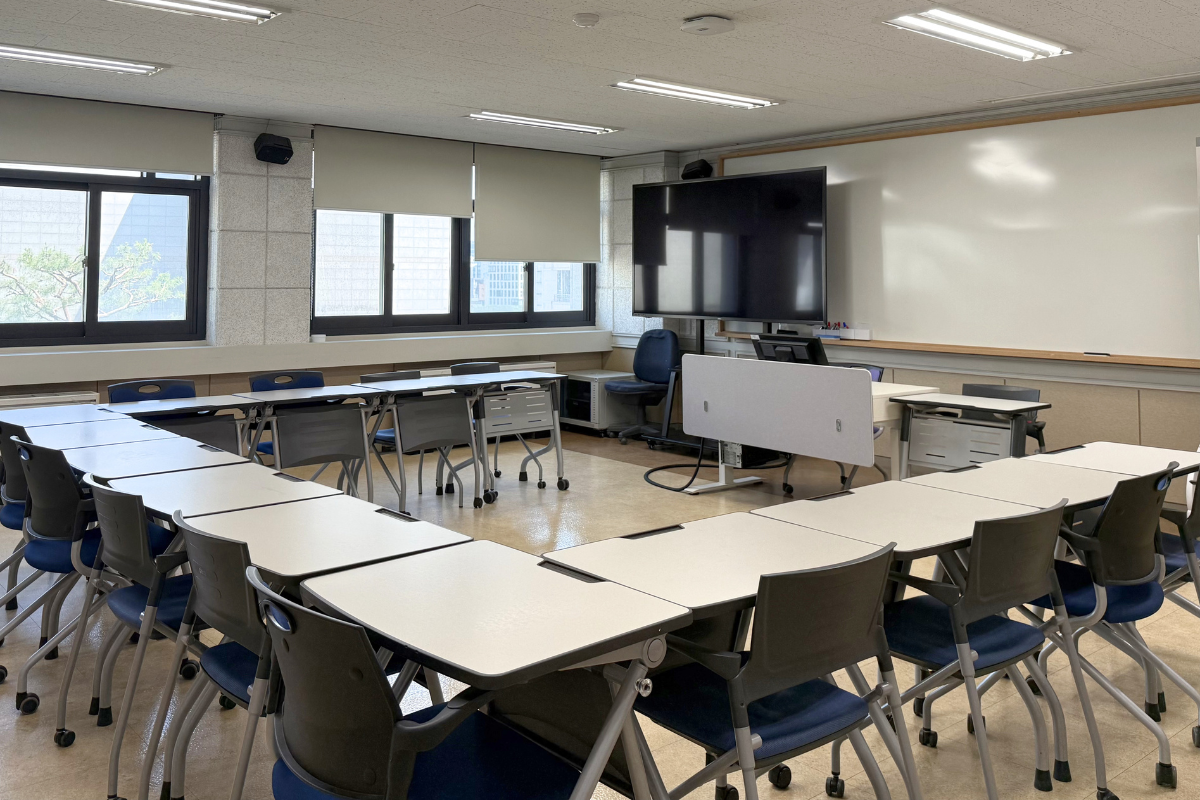
International Building classroom
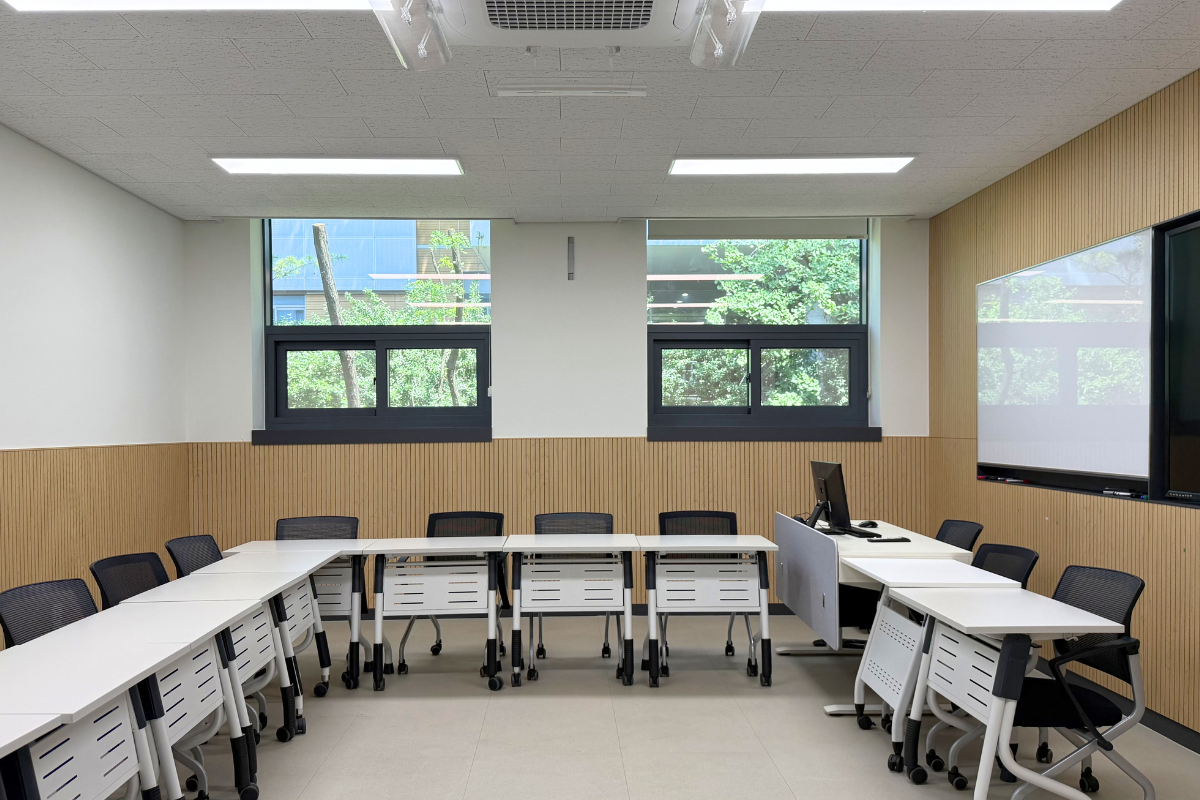
Second Medical Building classroom
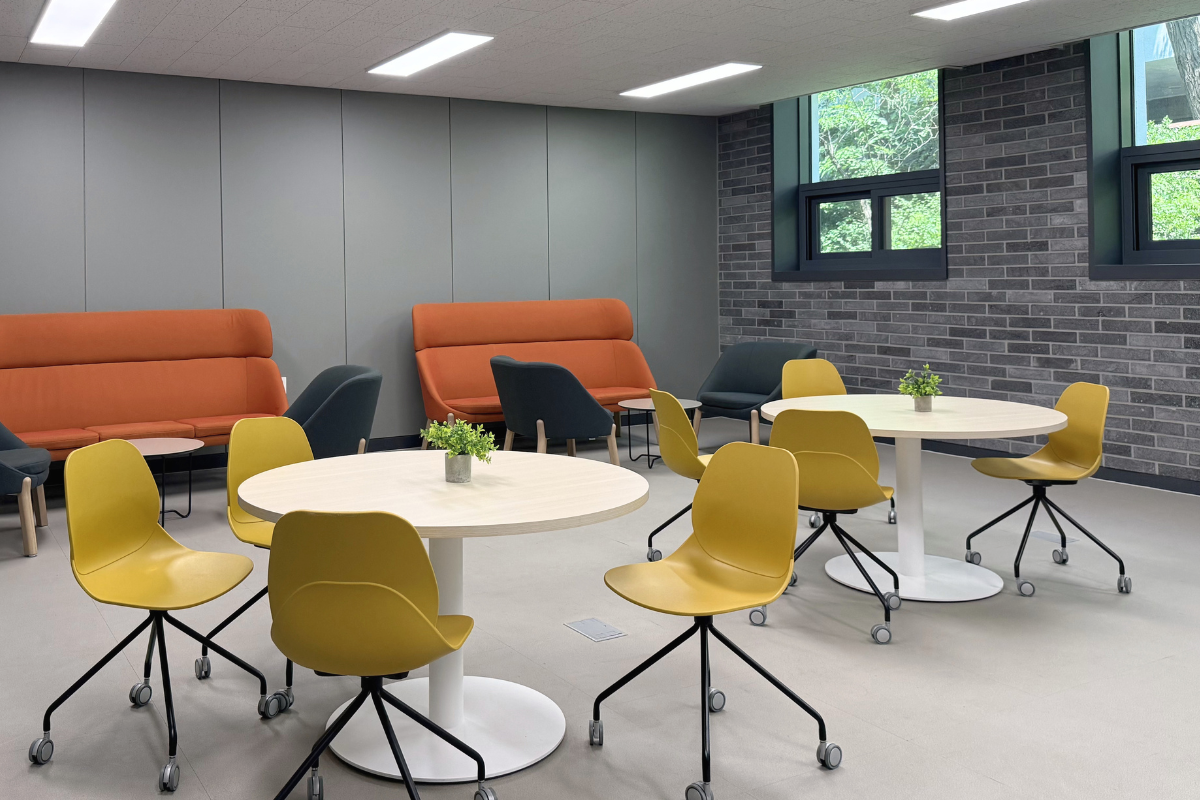
Second Medical Building lounge
Inside the classrooms, basic teaching equipment like large screens is well provided, and class sizes are kept to a reasonable level.
With a maximum of about 15 students per class, teachers can pay closer attention to each student, and students also get more chances to speak Korean directly.
Overall, both the classroom environment and the class atmosphere give the sense that Hanyang University puts a lot of effort into Korean language education.
3-2. Key Features of Hanyang University International Education Institute Korean Language Programs
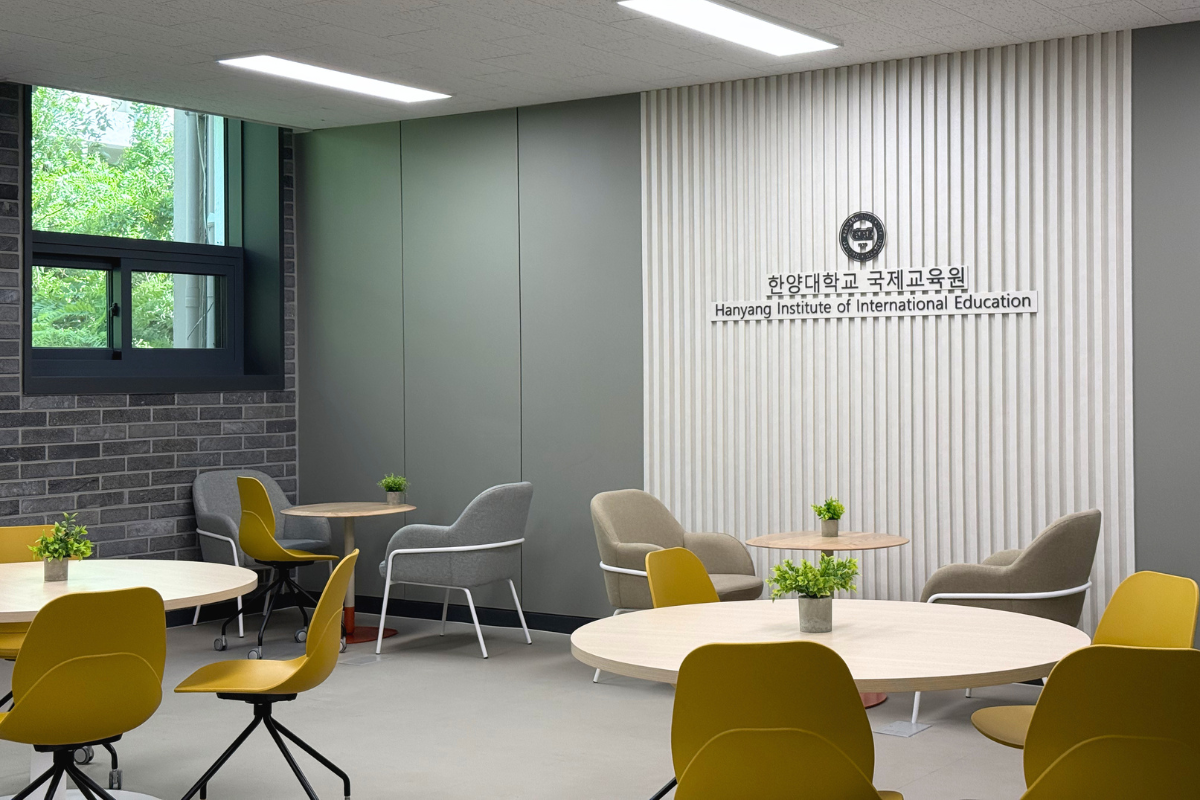
The Korean language program at Hanyang University’s International Education Institute is structured into six levels, from Level 1 to Level 6, and is designed to help you improve speaking, listening, reading, and writing in a balanced way. Rather than focusing on just one area, the program stands out as an integrated curriculum that emphasizes developing real-life communication skills and academic Korean proficiency together.
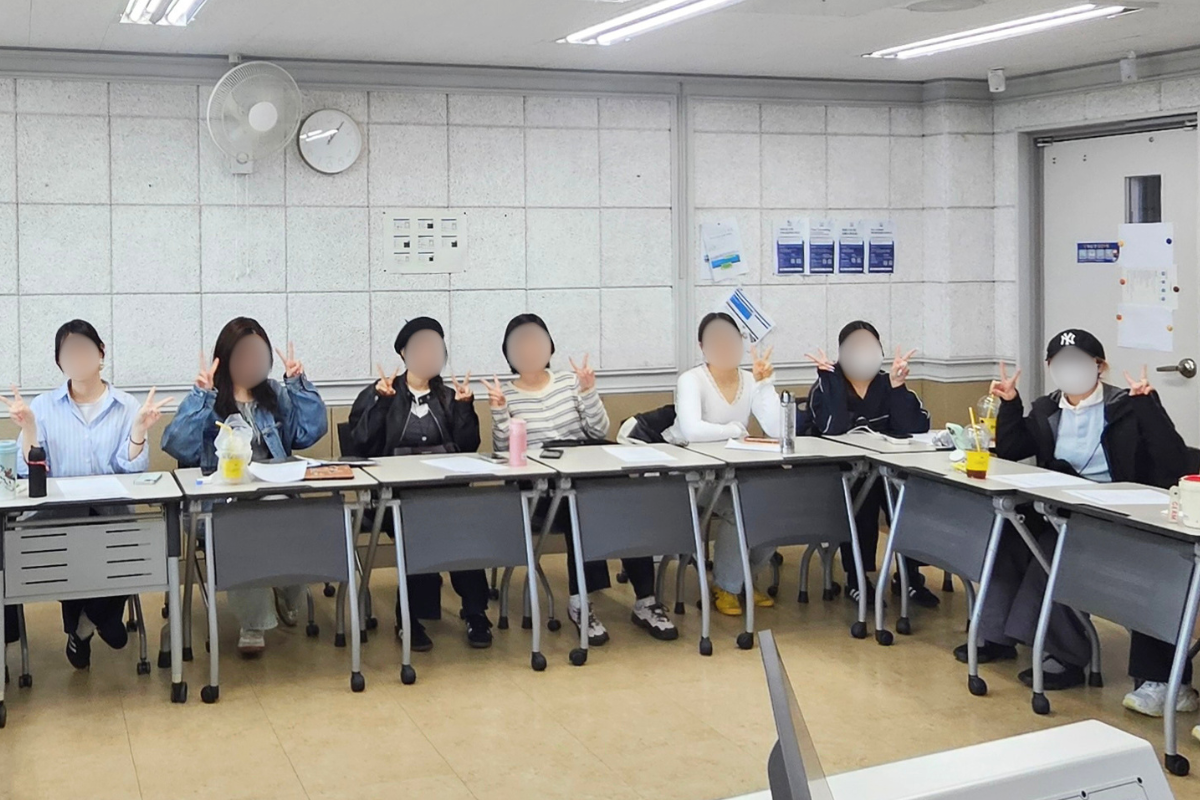
Beginner: Levels 1 and 2
At the beginner stage (Levels 1 and 2), instruction focuses on the basic communication skills needed for everyday life and using public facilities. In particular, the program strengthens practical speaking and listening activities, offering conversation classes centered on real communication situations so learners can adapt to life in Korea quickly. At the same time, students also learn the core grammar system of Korean, such as honorific and casual speech, connective endings, and reported speech, so it is structured to foster a balanced foundation in both communication and grammar, not just simple conversation practice. Classes also cover aspects of everyday Korean culture to help learners understand language and culture in an integrated way.
Intermediate: Levels 3 and 4
At the intermediate stage (Levels 3 and 4), learners deepen their Korean skills for maintaining social relationships and handling basic work tasks. Beyond simple daily conversation, understanding and expressing social and abstract topics becomes a key focus. Students practice expressing their opinions logically in speech and writing, and learn a wide range of expressions used in real Korean, including differences between spoken and written styles, idioms, proverbs, and onomatopoeia and mimetic words. In other words, the curriculum is structured to gradually expand from practical conversation-based learning to academic and social communication skills.
Advanced: Levels 5 and 6
At the advanced stage (Levels 5 and 6), instruction aims to build high-level Korean proficiency needed for entering graduate or undergraduate programs, conducting research, and performing professional work. This makes it a suitable curriculum for learners who want to participate in Korean university or graduate-level classes. Based on a wide range of topics including society, economics, culture, and politics, students focus intensively on academic writing, presentations, and discussion skills. As a result, classes place an even stronger emphasis on Korean for academic purposes rather than everyday Korean, and the content is also well suited for preparing for the advanced level of the Test of Proficiency in Korean(TOPIK).
How Classes Are Run
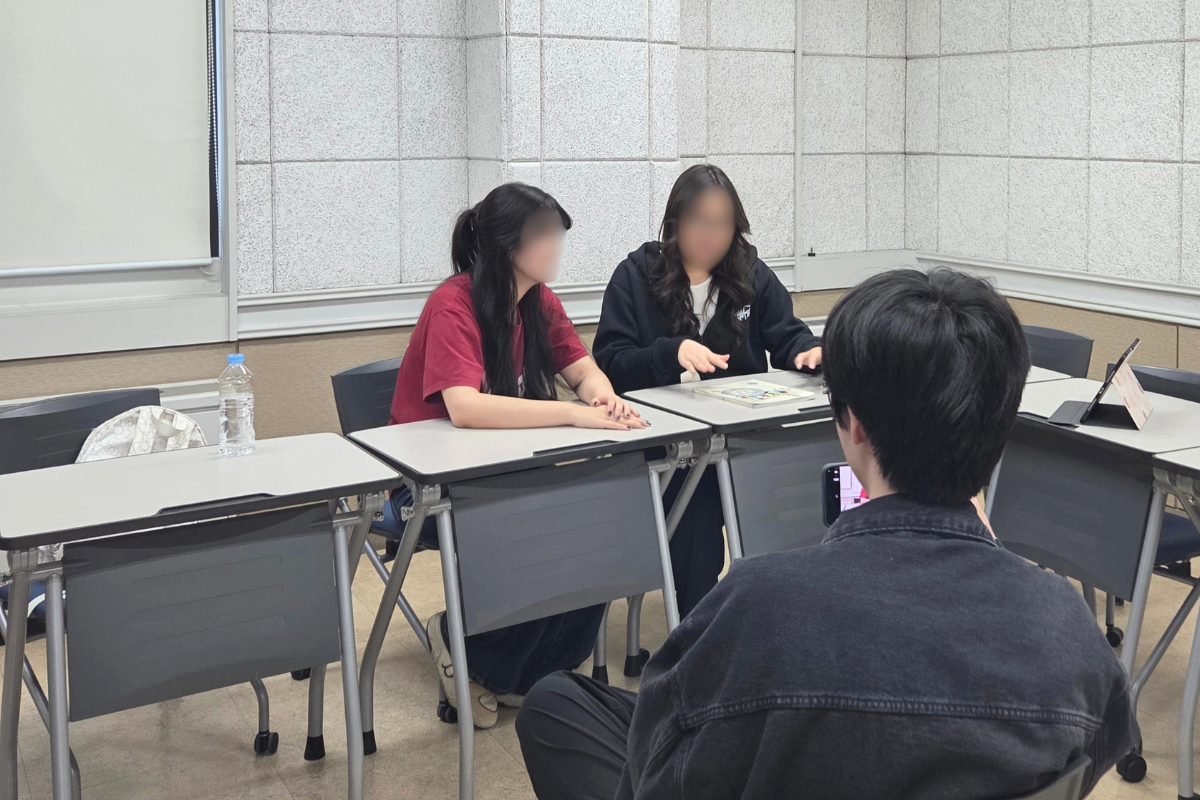
Classes are run around a variety of content and activities. At the beginner level, interactive lessons strengthen spoken, conversation-focused speaking and listening activities, helping learners build confidence in communication and use grammar and vocabulary naturally.
At the intermediate level, students expand their social and logical communication skills through discussions, presentations, role-plays, and collaborative tasks. In particular, by practicing how to speak with supporting reasons and respond to others’ opinions, learners can develop more natural and fluent speaking skills. Classes are also designed so that, through activities linking reading and writing, learners can improve written communication skills by expressing their opinions logically.
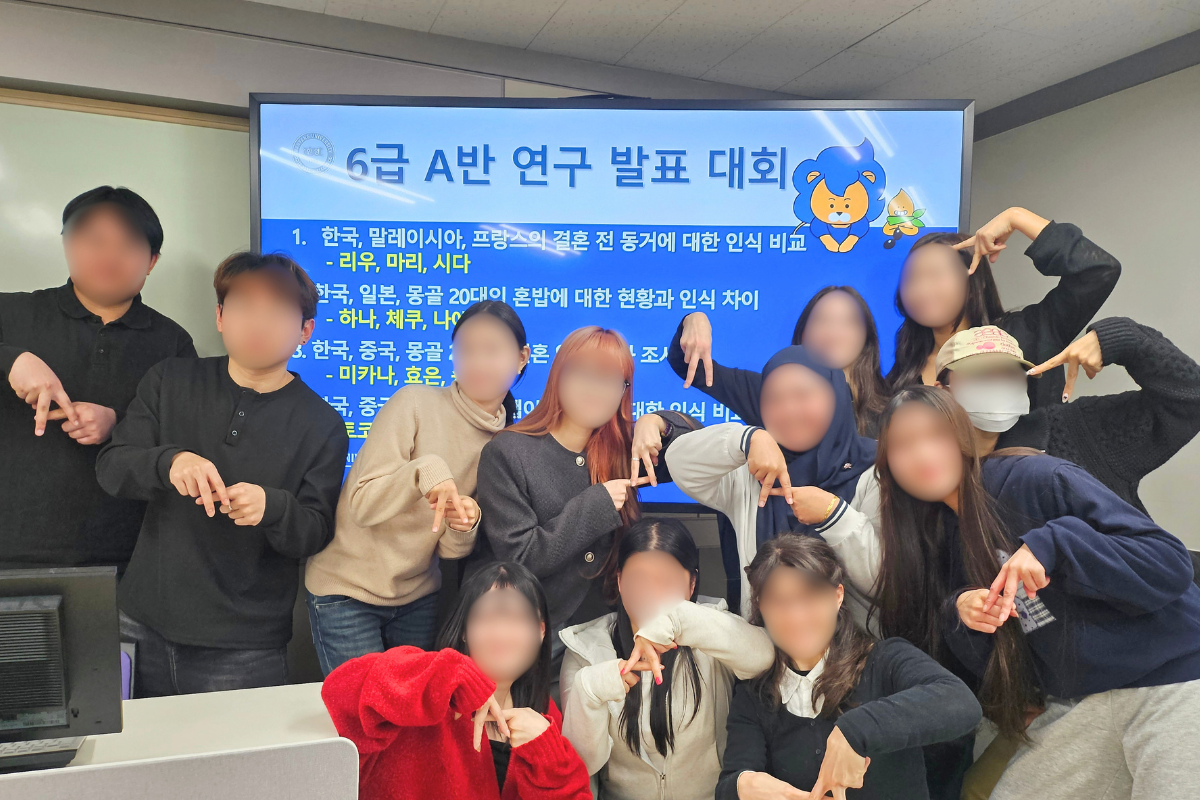
At the advanced level, the goal is to build professional-level Korean proficiency while covering a variety of topics related to Korean society overall. Activities using real-world materials, such as report writing, listening to news, debates, and presentations, are conducted actively and in depth.
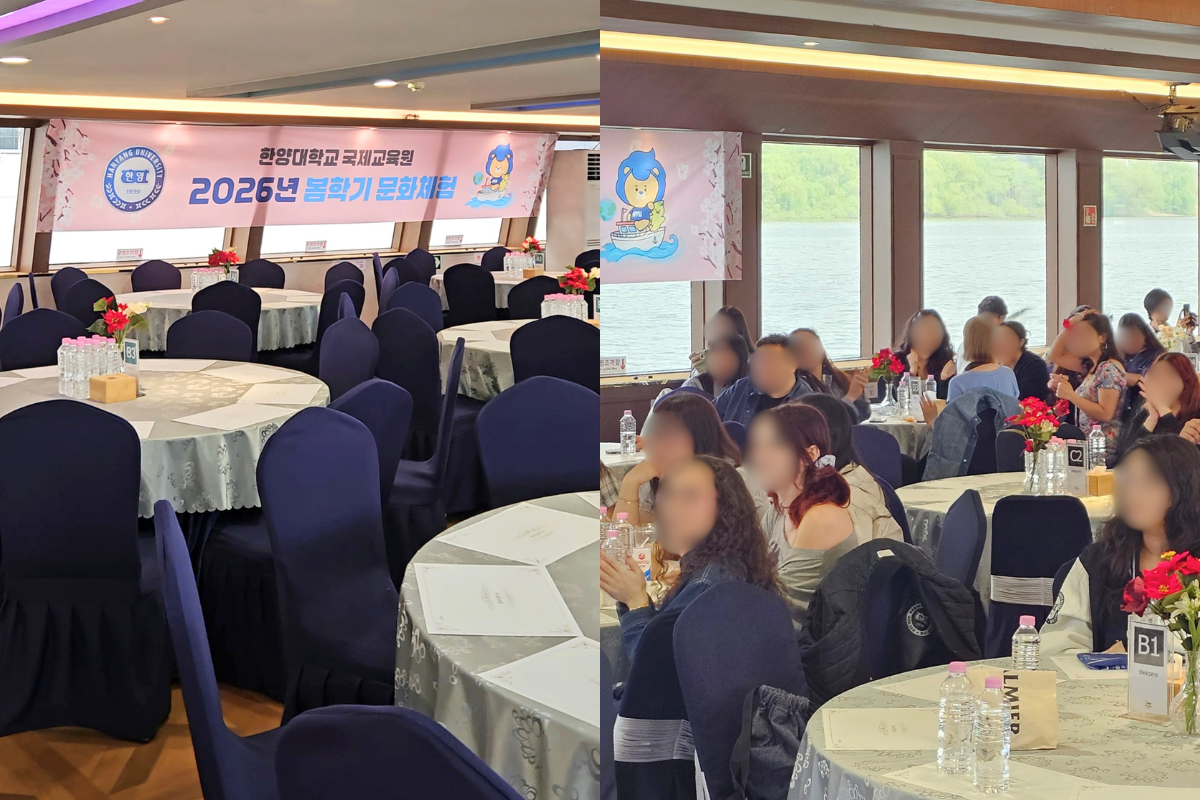
Cultural Experiences
Cultural experience programs vary each semester. Each term, the program is planned mainly around activities that students may find difficult to do on their own, taking into account group size, weather, and seasonal trends.
In 2025 to 2026, the following programs were held, and even more diverse activities are planned for the future!
- Spring Semester 2025: Making kimchi & Making kimchi pancakes
- Summer Semester 2025: Visiting a Folk Village and Lotte World
- Fall Semester 2025: Campus festival
- Winter Semester 2025: Watching a Korean film & Snack experience
- Spring Semester 2026: Hangang River cruise sightseeing and a jazz performance
4. Hanyang University | Campus Overview
Hanyang University’s Seoul campus is right by the subway station, making it easy to get to, and the campus is well equipped with iconic landmark buildings and convenient facilities.
Since you’ll be coming and going here every day once you start attending the language institute, it really helps to get a feel for the campus atmosphere in advance.
From here, we’ll introduce Hanyang University’s key spots one by one.
4-1. Aeji Gate
📍Starting point: Hanyang University Station on Subway Line 2
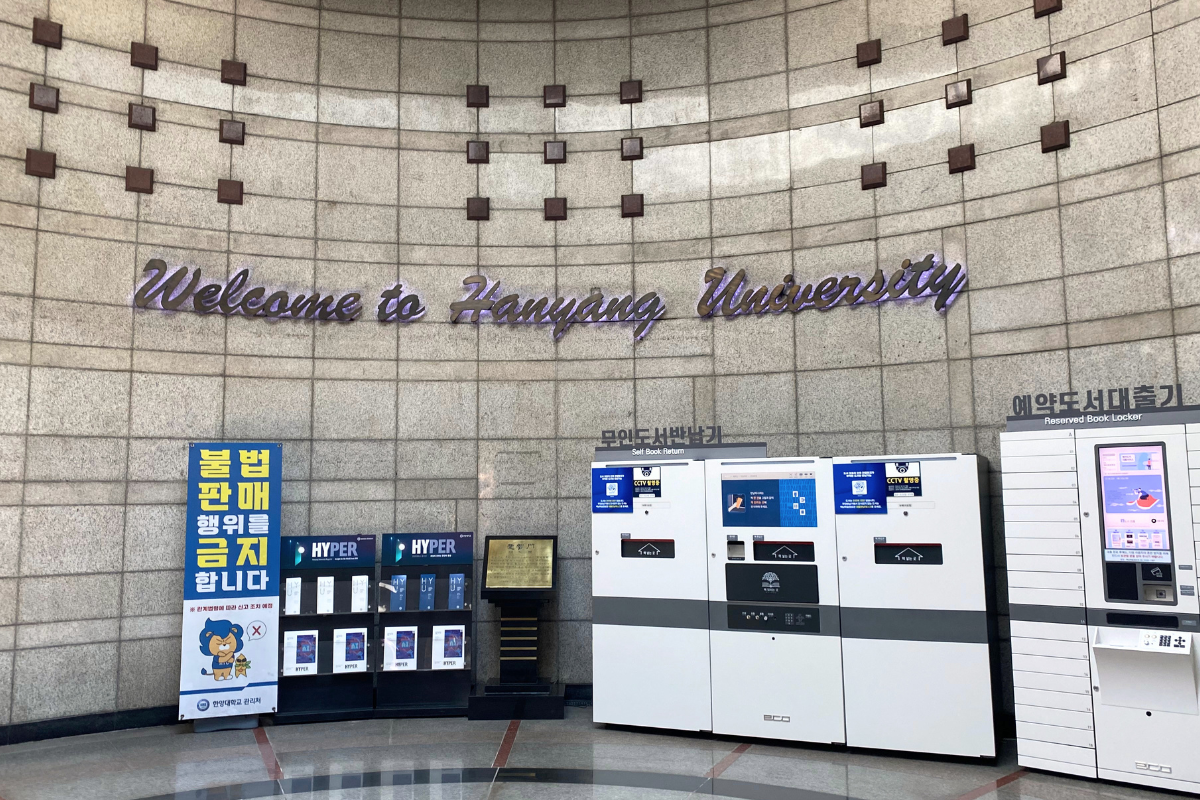
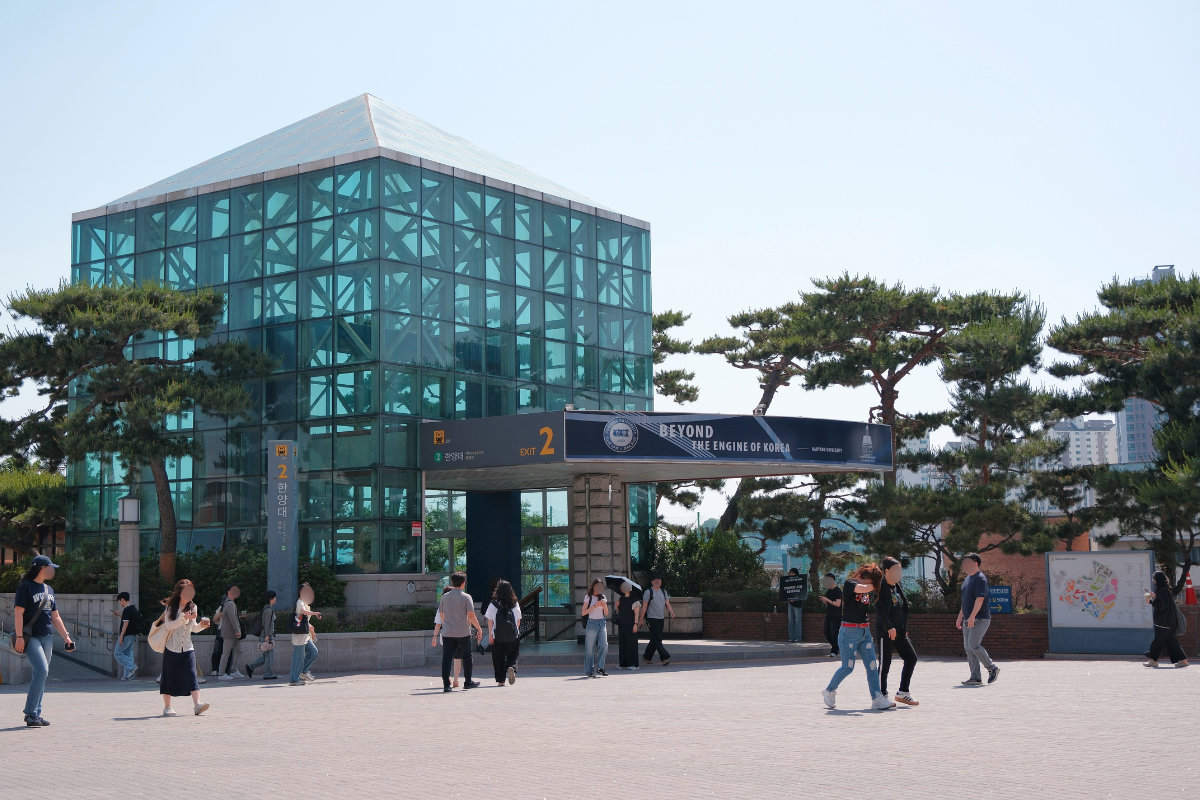
When you come out of Exit 2 at Hanyang University Station on Subway Line 2, it connects straight to the Hanyang University campus.
Because the station and the school are very close and directly connected, it is convenient to get to class even on rainy days or when the weather is not great.
This excellent access from the station to the school is one of Hanyang University’s major strengths.
For language institute students who commute every day, this transit setup is definitely something they are very satisfied with.
4-2. History Museum
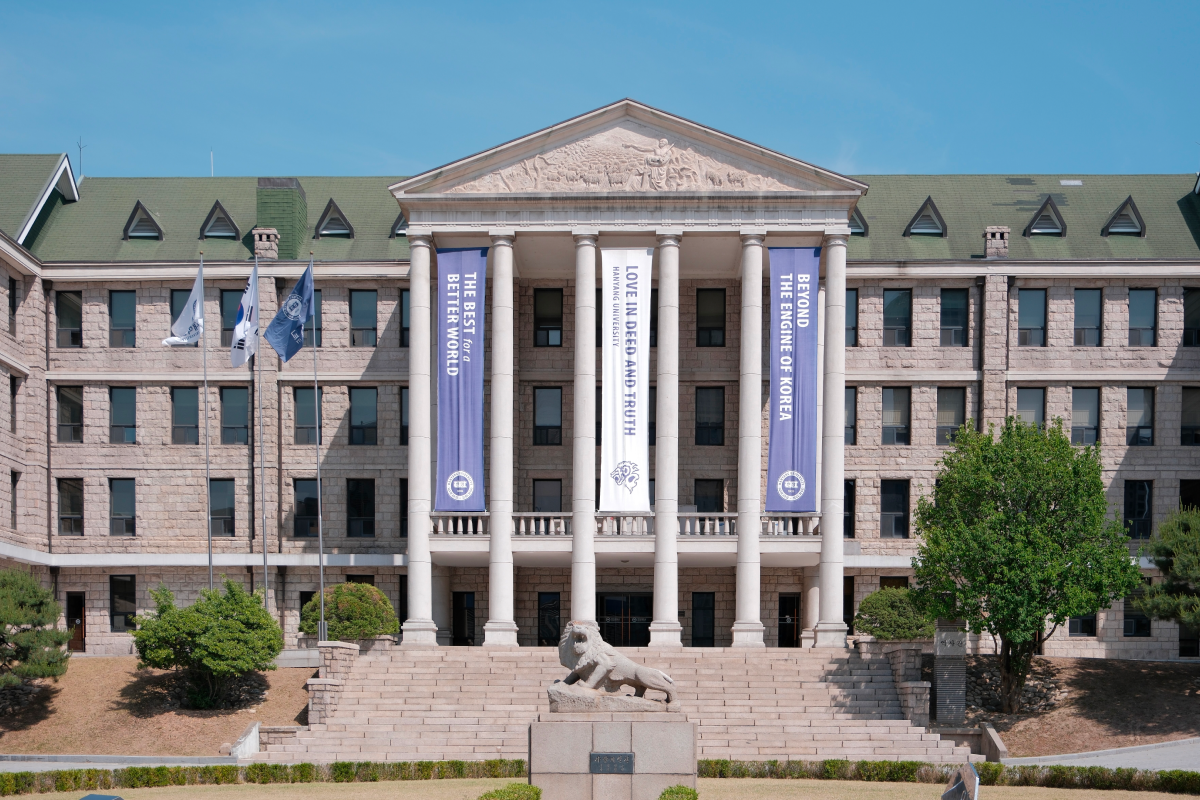
Next up is the History Museum (101), an iconic building that represents Hanyang University.
This building was designated as Registered Cultural Heritage No. 751 in 2019, it used to serve as the main building, and today it operates as a history museum introducing the history of Hanyang University.
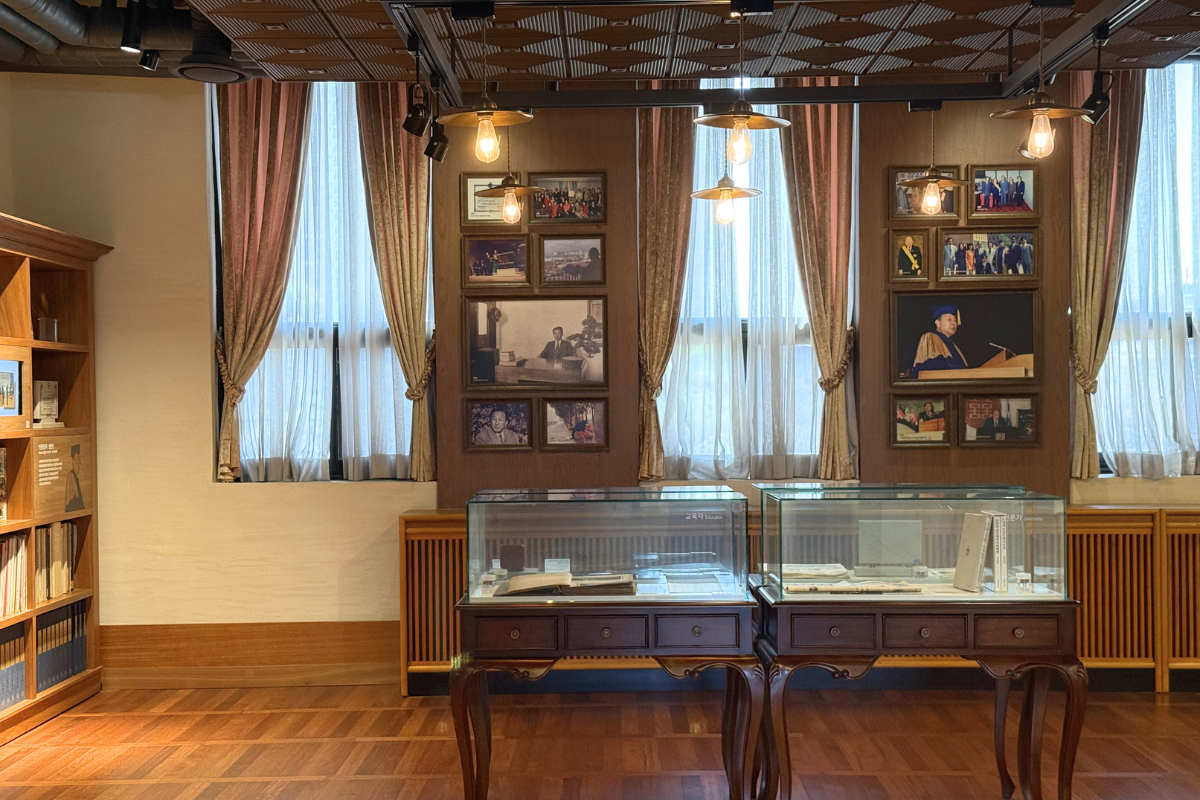
History Museum Visitor Information
- Hours: Weekdays 10:00-17:00
- Admission: Free
The History Museum is open to everyone, and the exhibits inside are quite well put together.
Along with the background of the university’s founding and its development over time, you can also see introductions to key figures and notable alumni who have shaped the school, which makes it a great place to deepen your understanding of the university.
At the History Museum, even if you’re not a student, you can issue a commemorative student ID card to keep as a souvenir, you can choose the design from versions used from shortly after the university was founded up to the present. If you visit the museum, why not try becoming a “student” of the department you hope to enter and print a student ID?
The interior is also neat and well organized, making it a great place to stop by while exploring the campus.
Souvenir Shop
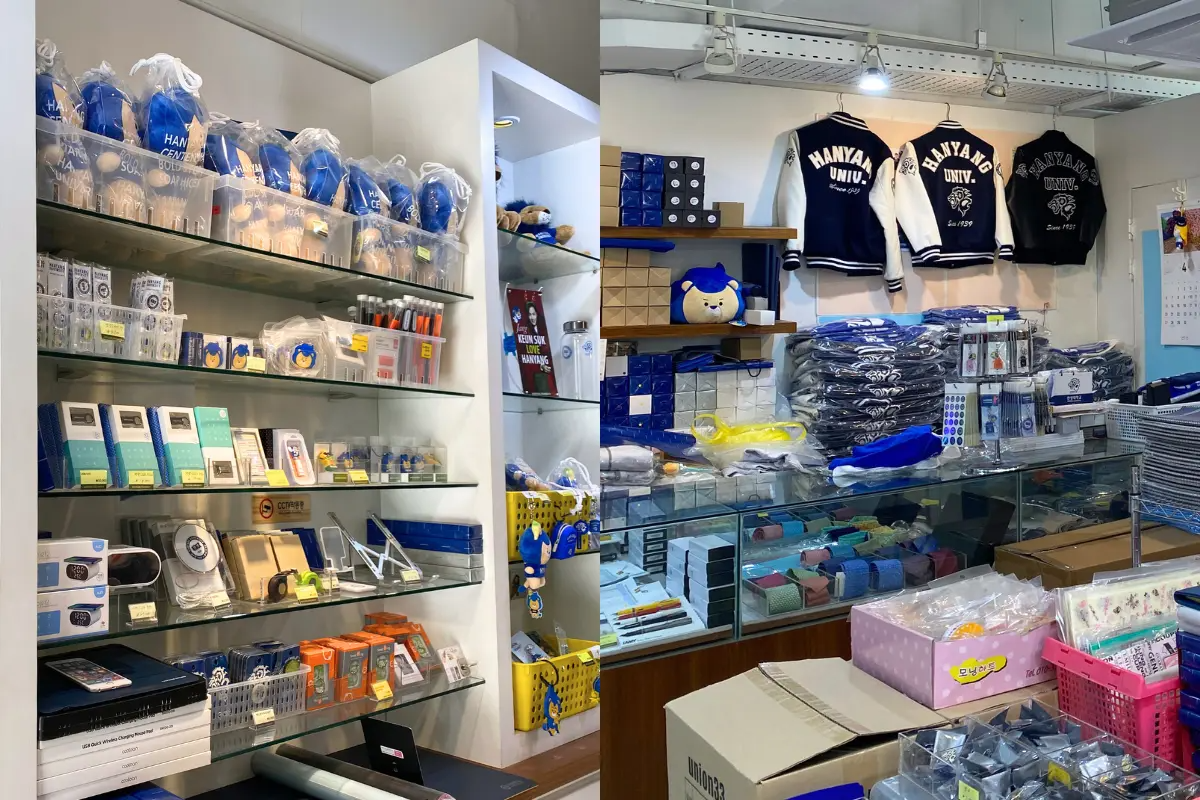
There is also a Hanyang University souvenir shop on the first floor of the History Museum.
They sell goods like tumblers and mascot dolls, as well as other Hanyang University related items, so it’s a nice place to browse for a keepsake.
📷 Photo Spot ✨
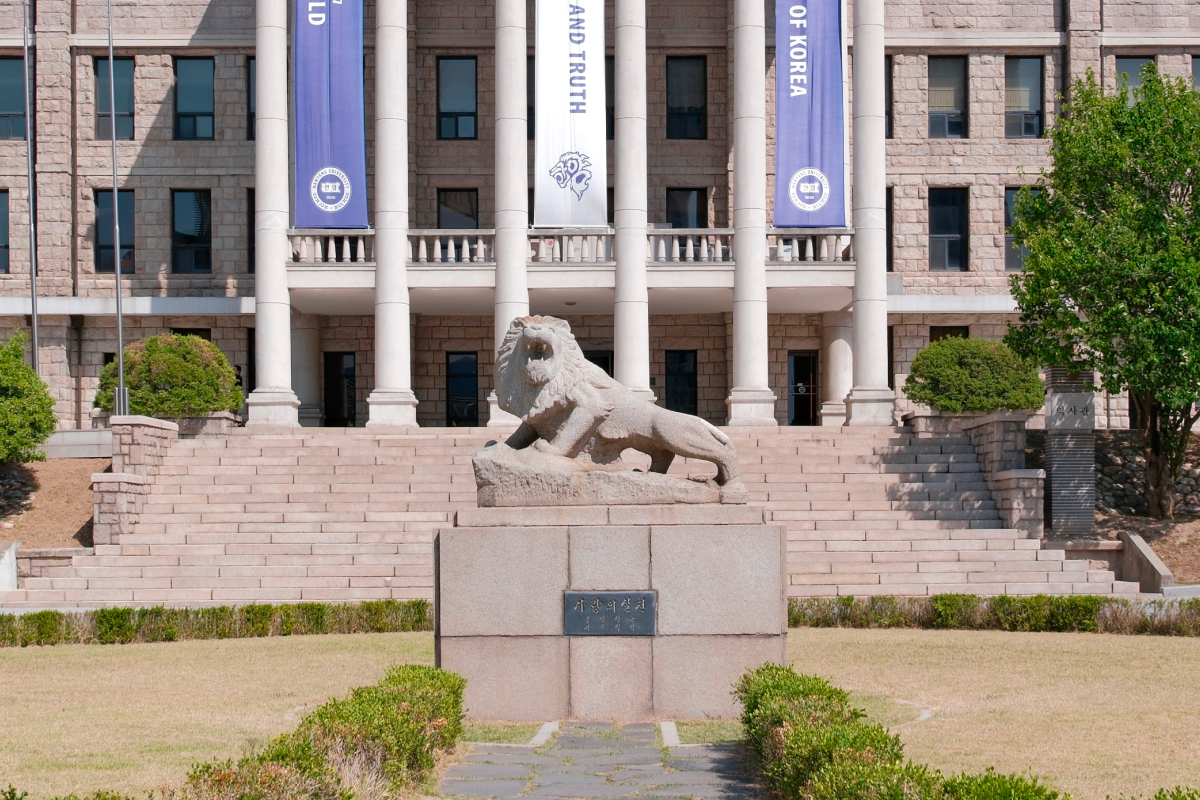
Right in front of the History Museum, there is also a lion statue that symbolizes Hanyang University.
This statue was erected in commemoration of the graduating class of 1965, and it is still used today as a representative image symbolizing the school’s tradition and pride.
This area is often mentioned as one of the best photo spots on the Hanyang University campus.
In particular, the area in front of the Hanyang University stone marker is a popular place for international students to take commemorative photos.
4-3. Hanyang Plaza
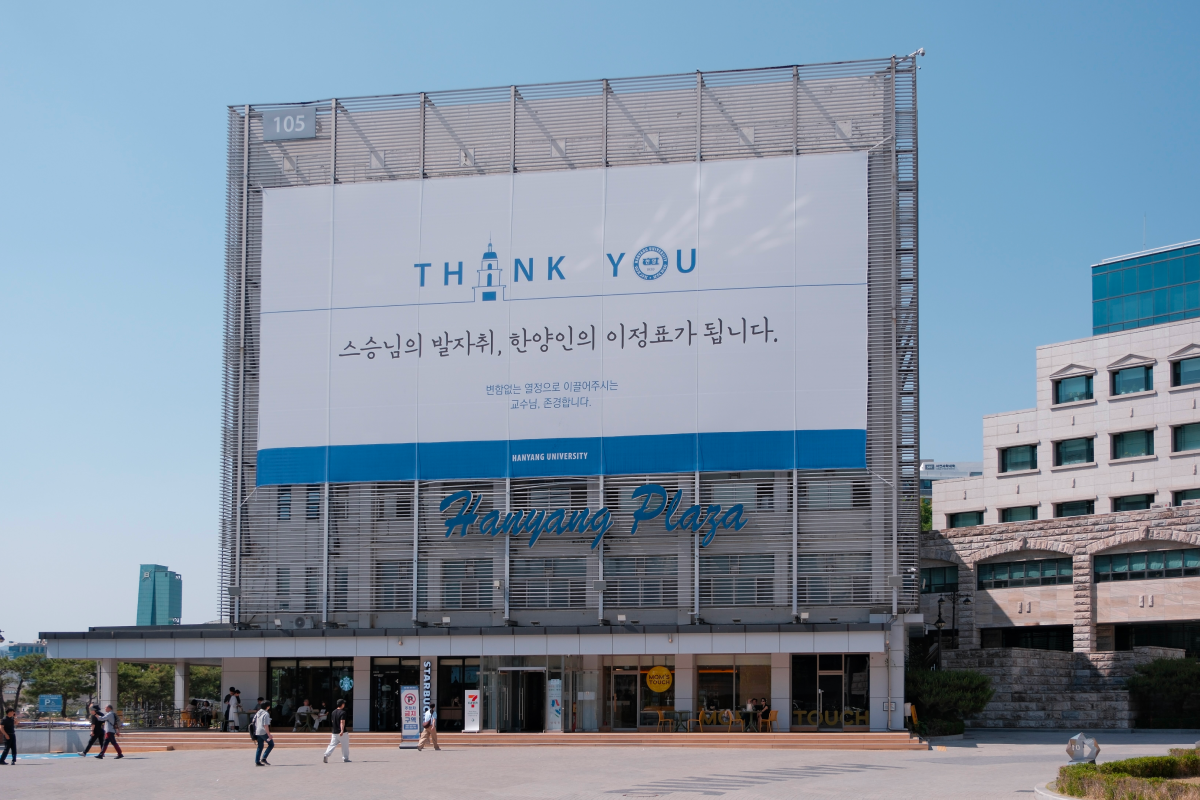
When you come out of Exit 2 of Hanyang Univ. Station, the first building you will notice is Hanyang Plaza (105).
The newly renovated first floor of Hanyang Plaza is home to a variety of restaurants. From salads to Western, Chinese, Japanese, and Korean snack foods, there are plenty of options that keep students covered for lunch.
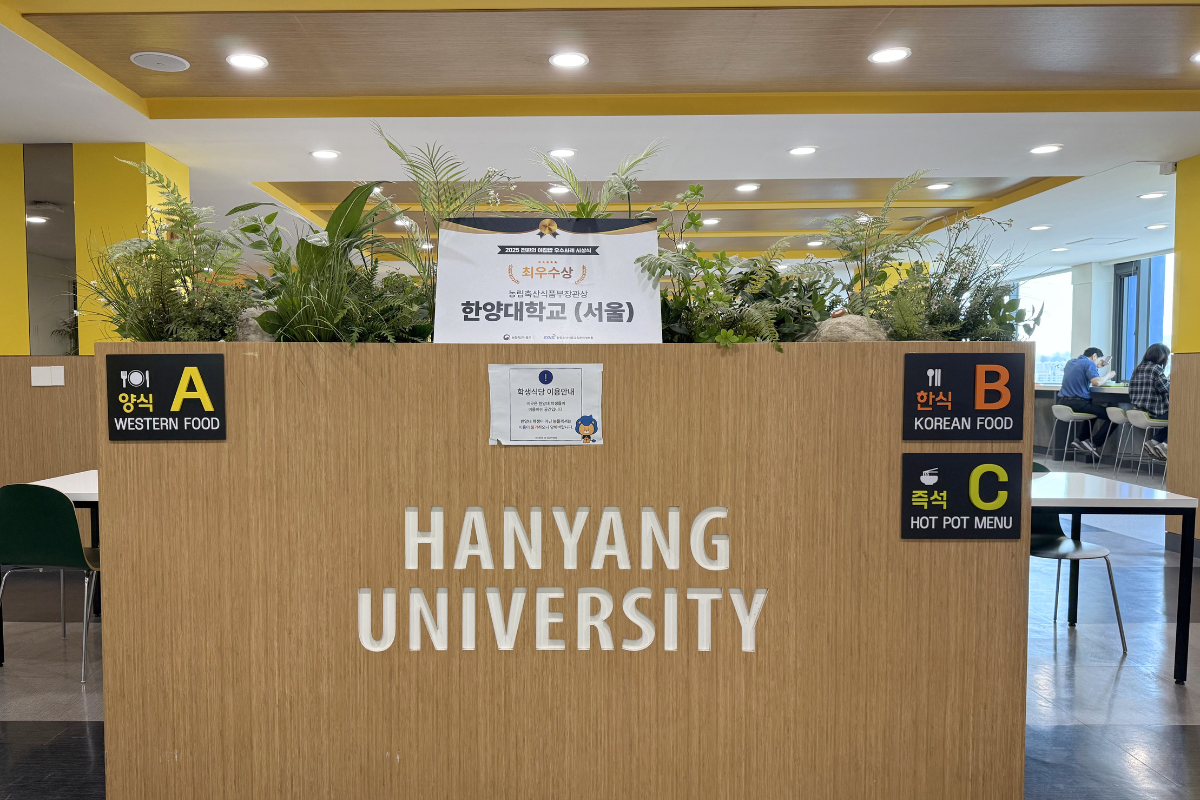
On top of that, the third floor has a student cafeteria where you can enjoy a more affordable, nutritious meal.
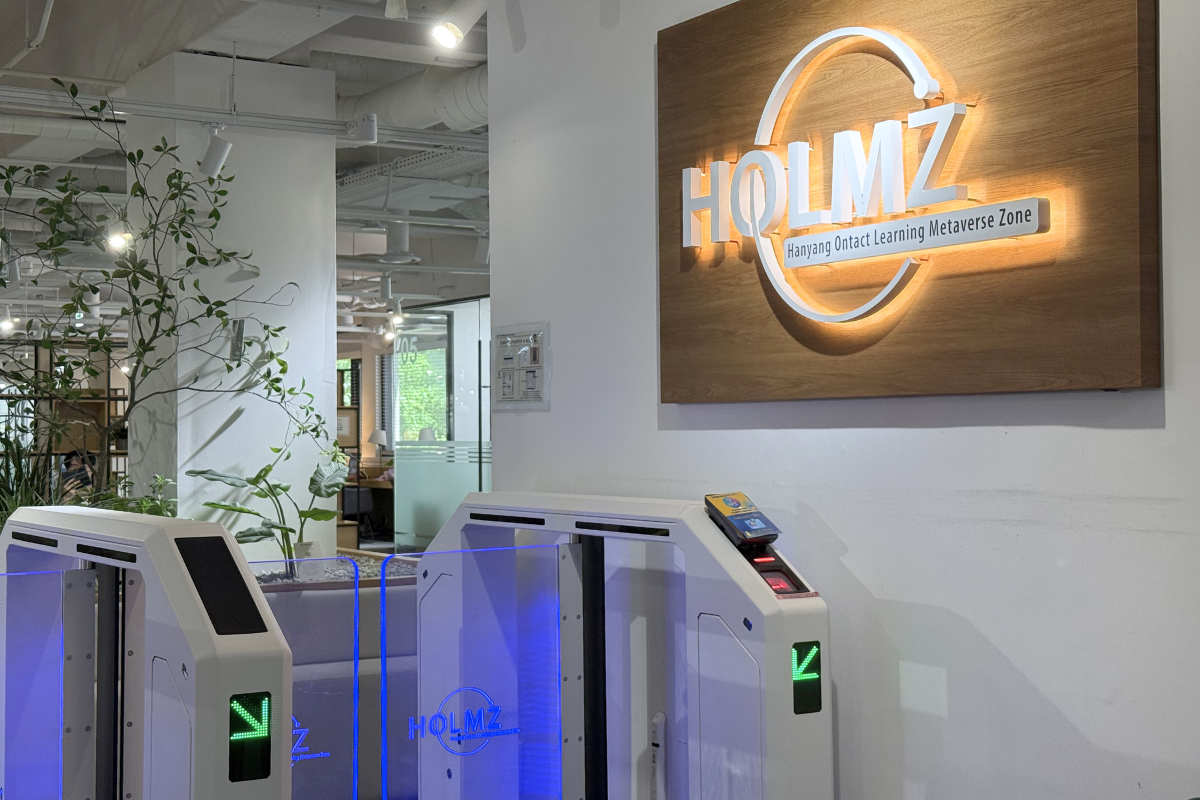
Besides the dining options, the second floor of Hanyang Plaza has study spaces for students. You can study at HOLMZ for midterms, finals, or TOPIK prep.
Since it also offers a convenient spot to grab a quick meal or take a break on campus, it is a pretty useful place for language school students as well.
4-4. Outdoor Amphitheater
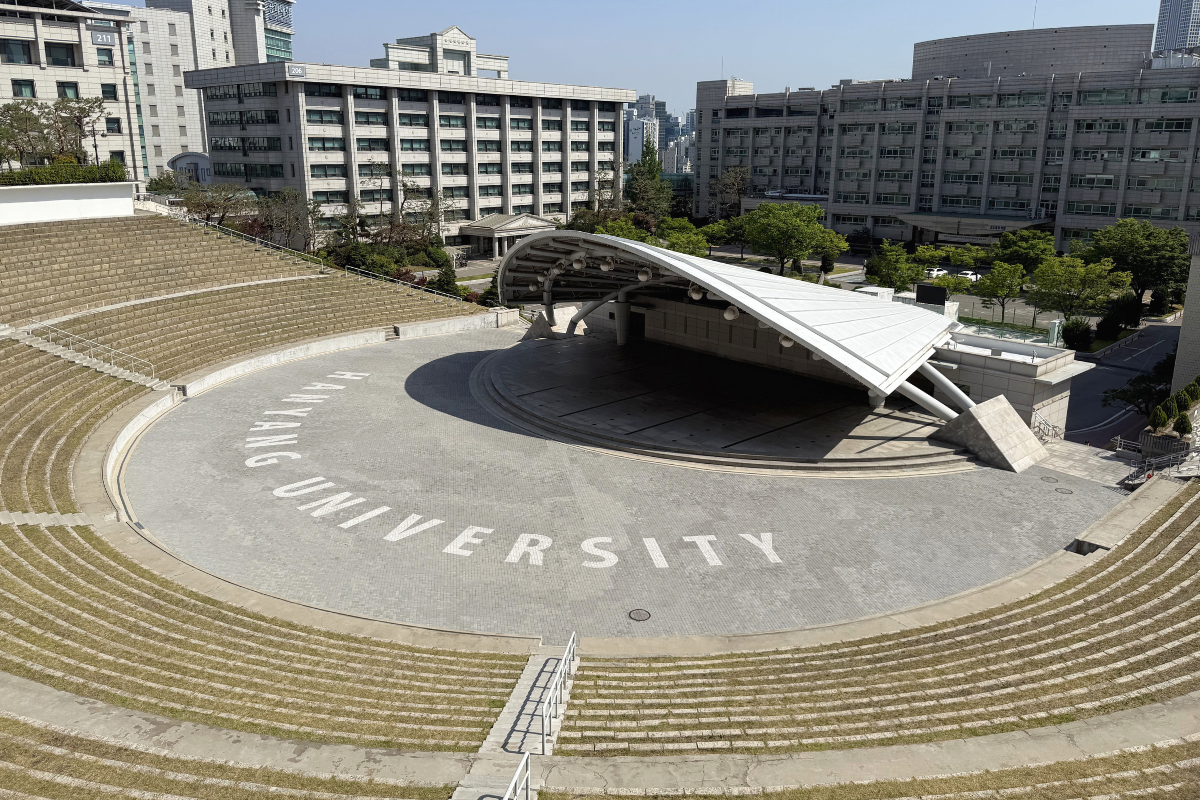
The outdoor amphitheater is one of the places on the Hanyang University campus where students often gather.
On a typical day, you will often see students eating lunch, chatting, and taking a break here, and it is also one of the best spots to experience the campus vibe in the most natural way.
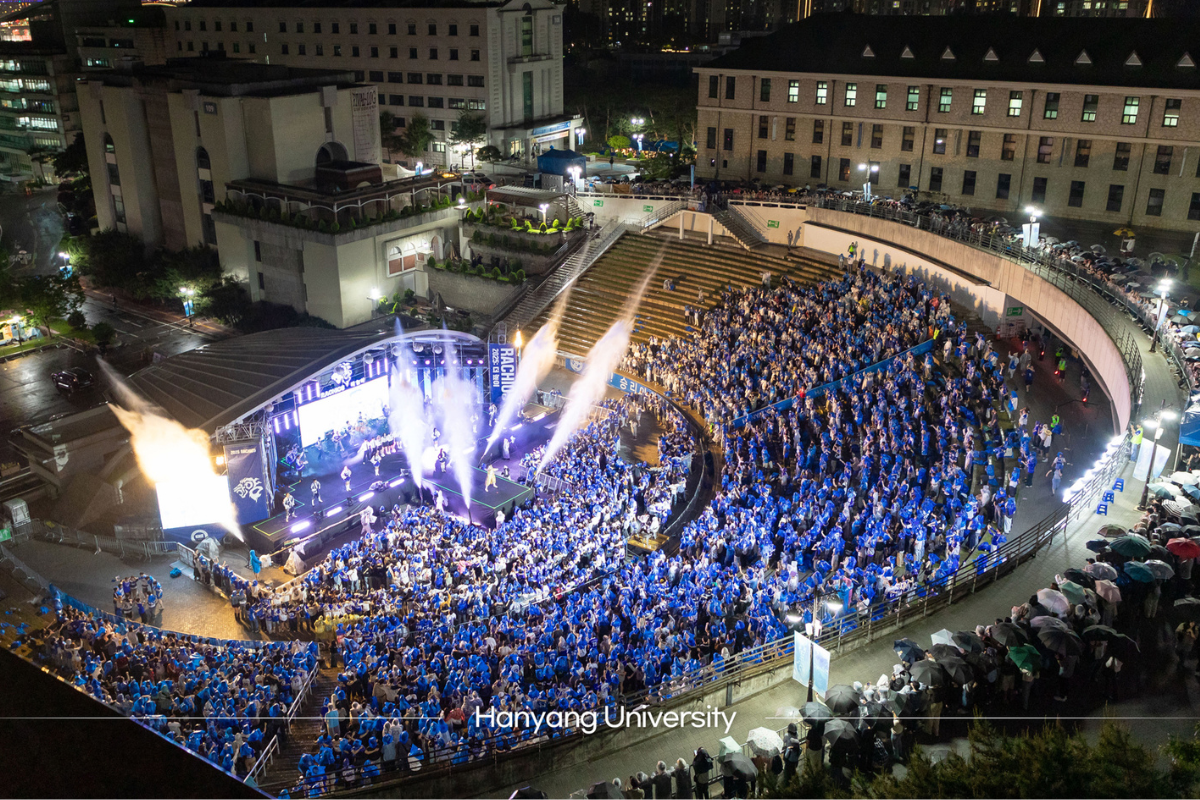
Source: Hanyang University
It is also well known as a venue for Hanyang University festivals and major events.
Especially during the festival season in May each year, performances and a variety of programs take place, making the campus feel even more lively.
4-5. Library
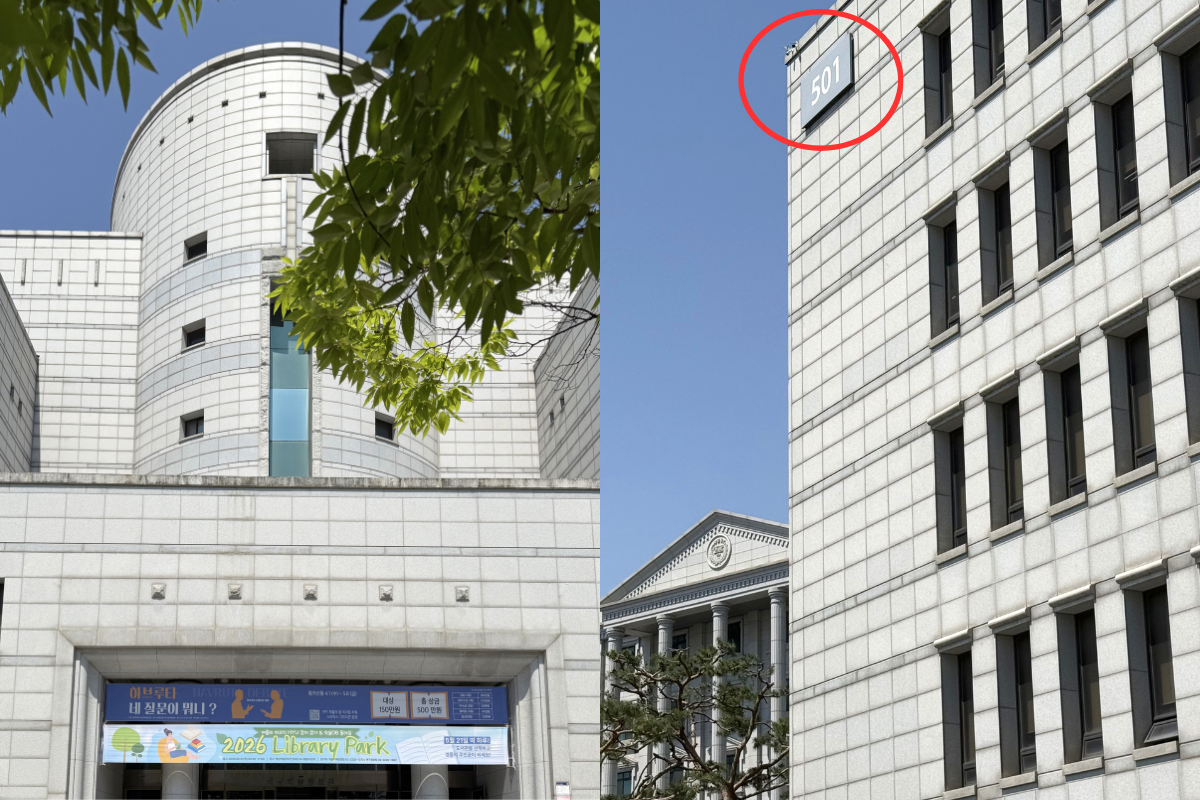
Hanyang University Library is one of the central spaces where students study and look up materials.
Even on campus, it is a place where you can feel a relatively quiet, calm atmosphere, so you could say it is a space that shows the school’s academic vibe well.
Korean language program students can also read books in the library or use the study areas. Only degree program students can borrow books, but it is still a great way to use a university library and experience the study atmosphere.
5. FAQ
Q. Any tips for applying to Hanyang University’s Korean Language Program?
A. New students are generally assigned to afternoon classes. However, if spots open up in the morning classes, students are placed into the morning class in the order their tuition payment is received, so we recommend applying as early as possible to catch even a small chance.
Q. What benefits do I get if I apply for Hanyang University’s Korean Language Program?
A. Creatrip-exclusive benefits are available! If you apply for Hanyang University’s Korean Language Program through Creatrip, you can receive a 70% discount coupon usable in the Seongsu area 🎟️✨ Please check the event page during the application for detailed benefits.
Q. Can I apply even if I don’t know any Korean at all?
A. Yes, you can. You’ll be placed in a class that fits your level through a placement test. There is also a beginner class for students starting from absolute zero that teaches Korean consonants and vowels for 4 days before the term starts. (4 classes, 60,000 KRW, textbooks provided)
Q. How is the placement test conducted?
A. The placement test is conducted offline, and you just need to come to the classroom that was announced in advance. The test includes a writing section and a speaking section, and your final level is determined based on an overall evaluation of both.
Q. Can I also apply for a dorm?
A. Yes, dorm applications are available! However, dorm spaces are limited and are assigned on a first-come, first-served basis according to the order of payment. If you want to live in a dorm, we recommend applying as early as possible during the application period.
Q. Is there a buddy program?
A. At Hanyang University’s Korean Language Program, the term “buddy program” is generally not used, instead, it’s called a mentoring program.
Hanyang University’s International Education Institute currently runs a 1:1 Korean mentoring program. Any language program student can apply regardless of Korean level, and you can do 1:1 mentoring with a Hanyang University degree-seeking student.
Q. Are there plenty of chances to make Korean friends?
A. Through the mentoring program or cultural exchange programs (HOU Friends), you can meet Korean students currently studying at Hanyang University. Also, by taking part in activities like the school festival, you can connect with a wide range of students.
This time, we introduced Hanyang University’s campus and its Korean Language Institute facilities and programs!
Hanyang University’s Korean Language Institute offers a well-equipped learning environment, making it a great place to effectively build practical Korean skills. It’s especially well-suited for those who want to improve their language ability while experiencing Korean culture firsthand.
It’s also a Korean Language Institute we can confidently recommend to anyone considering applying to a university or graduate school in Korea in the future.