
A Barrier-First Korean Skincare Routine for Sensitive Skin
What the famous 10-step routine gets wrong, and what to buy instead while shopping K-beauty in Korea

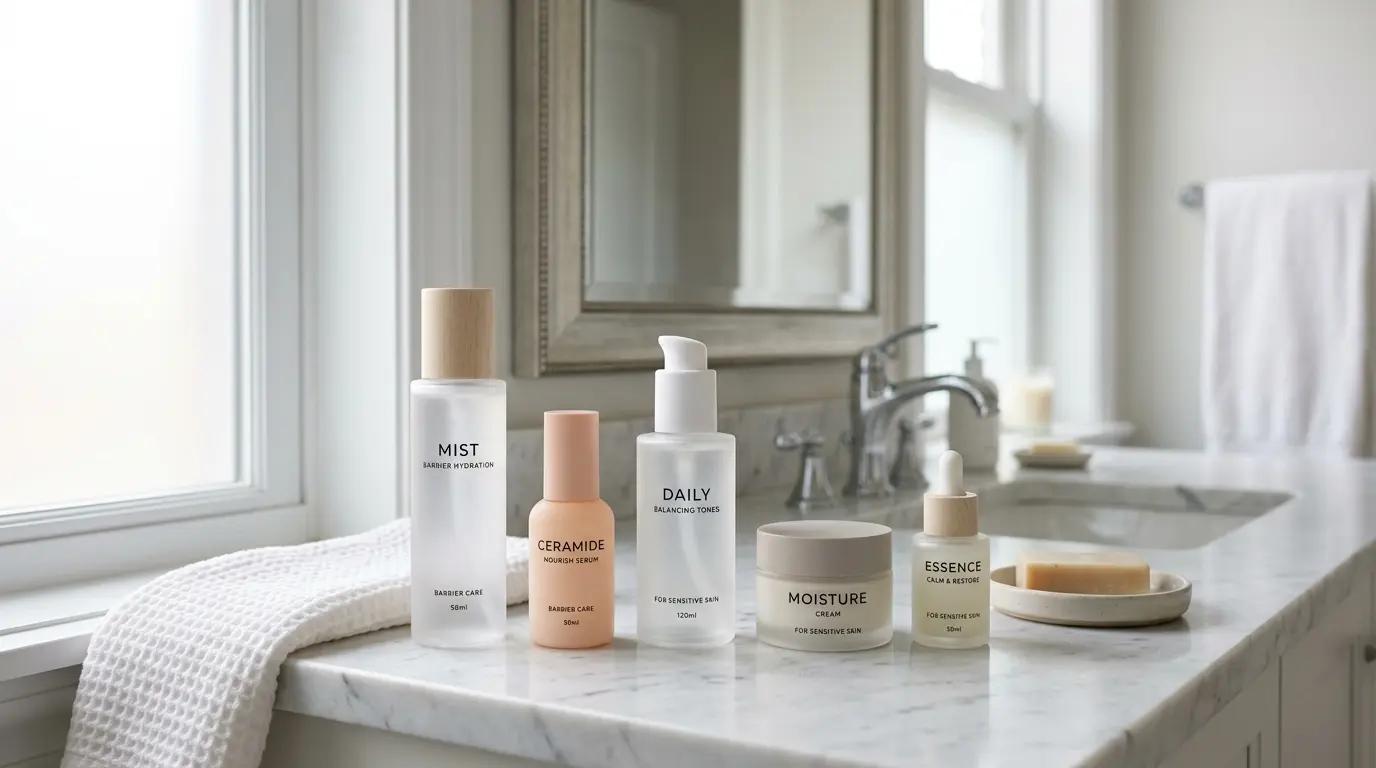
Korea is one of the easiest places to overbuy skincare. The shelves are full of calming ampoules, elegant sunscreens, and promises of smoother, brighter, calmer skin. But sensitive skin has its own opinion. It usually does not want the biggest korean skincare routine, the strictest korean skin care routine 10 step lineup, or the loudest active. It wants fewer variables, softer textures, and a barrier that stops feeling irritated halfway through the day.
For a lot of travelers, that is the smarter reset. The best korean skincare routine for sensitive skin is rarely the most dramatic one. It is the one you can repeat for weeks without stinging, flushing, or waking up to a face that suddenly hates everything.

The Korean skincare routine sensitive skin actually wants
The classic 10-step story made Korean skincare famous, but sensitive skin was never meant to treat that number like a rule. K-beauty has always been more flexible than the internet version of it. On reactive skin, a routine with 4 to 7 steps is usually plenty, and during a bad stretch even 3 to 4 steps can be the better call.
There is a simple reason for that: every extra bottle means another chance for fragrance, essential oils, strong acids, or plain old friction. Sensitive skin does not need less care. It needs less disruption.
That is why the most useful korean beauty skincare routine for sensitive skin now looks very barrier-first: gentle cleansing, hydrating layers that calm instead of tingle, a cream that supports the skin barrier, and daily sunscreen. When your barrier is already upset, simplifying for 6 to 8 weeks can make a real difference, and very overworked skin may need longer before it feels reliably calm again.

The Korean skincare routine order that usually works
The korean skincare routine order is still built on one easy idea: lighter, more watery textures first, richer ones later, and sunscreen last in the morning.
Morning
AM: water rinse or gentle low-pH cleanser → hydrating toner or essence → optional calming serum → moisturizer → sunscreen
Very reactive skin, rosacea-prone skin, or skin that already feels dry by breakfast often does better with just water in the morning instead of a full cleanse. If your face feels oily or you used a heavier night product, a very gentle cleanser is still fine.
The next step is where Korean skincare really shines for sensitive skin. A simple toner or essence can add hydration without that tight, squeaky feeling that harsher cleansers leave behind. If you use hyaluronic acid, it generally behaves best on slightly damp skin. A serum is optional, not mandatory; if your skin is already happy with toner and cream, that is enough.
Finish with a barrier-supporting moisturizer, then sunscreen. For daytime in Korea, an SPF 50+ / PA++++ formula is the safest default, especially if you are out sightseeing for hours.
Night
PM: oil cleanser only if you wore makeup or stubborn sunscreen → gentle water-based cleanser → hydrating toner → optional serum or ampoule → barrier cream
Double cleansing is helpful, but it is a night tool, not a twice-daily religion. If you wore makeup or a tenacious sunscreen, an oil cleanser first and a gentle water-based cleanser second is a solid Korean face routine. If you did not, there is no prize for over-cleansing.
This is also the place where sensitive skin benefits from honesty about texture. Dry, eczema-prone, or barrier-damaged skin often likes a richer ceramide cream at the end. Oily but reactive skin usually feels better with a lighter gel-cream or a less occlusive barrier cream. Calm skin is the goal, not the thickest finish.

Ingredients worth making room for
Sensitive-skin K-beauty can look crowded on a shelf, but the ingredient logic is surprisingly consistent. These are the names worth spotting on the box:
- Centella asiatica or CICA for visible redness and general reactivity
- Ceramides for reinforcing the skin barrier
- Panthenol for comfort and barrier support
- Madecassoside for soothing, especially in centella-focused formulas
- Hyaluronic acid or sodium hyaluronate for water-based hydration
- Niacinamide in a lower, gentler range if you flush easily, since it can support the barrier, help with excess oil, and soften uneven tone
A short ingredient list can be a real advantage. Sensitive skin often responds better to formulas that feel almost boring on paper: fewer moving parts, less perfume, less sensory drama. Snail mucin, mugwort, and houttuynia also appear often in gentle Korean formulas and can suit some people well, but they make more sense as supporting players than the foundation of a routine.
Ingredients that are easier to regret
Some ingredients are not permanently banned from a korean skin care regimen, but they are often the reason a routine feels exciting for two days and miserable by day three.
- Fragrance or perfume
- Essential oils
- Denatured alcohol high on the ingredient list
- Menthol or camphor
- Scrubs and gritty exfoliants
- Strong AHA or BHA used too often
- Retinol introduced too early or too aggressively
- Pure L-ascorbic acid vitamin C if your skin is extremely reactive
Sensitive skin does not owe anyone bravery. A tingle is not a badge of honor. If your barrier is compromised, calm it first and bring actives back one by one later.

Gentle K-beauty lines worth noticing in Korea
Walking into a Korean beauty store can make every product sound urgent. For sensitive skin, the better move is usually to look for lines that already have a reputation for keeping things simple. Availability varies by store, and formulas can change, so it is worth checking the latest ingredient list on the box or on the brand’s official page before you buy.
Etude SoonJung
SoonJung has become a familiar name for a reason. The line is built around minimal, sensitive-skin-friendly formulas and a pH-conscious approach. Its barrier creams tend to feel easier under makeup than heavier balm-like options, so it suits travelers who want comfort without a very rich finish.
SKIN1004 Madagascar Centella
If your skin likes soothing products but hates heavy ones, SKIN1004 is usually where the conversation goes next. The centella-focused lineup is especially appealing for red, reactive, or acne-prone sensitive skin, and the lighter gel-cream side of the brand is often a better match when dense creams feel clogging.
PURITO Centella Unscented or Wonder Releaf
PURITO’s fragrance-free centella products hit a very useful middle ground. They are calming and barrier-minded, but usually not as heavy as the richest repair creams. For a lot of sensitive-skin shoppers, that balance is the sweet spot.
Illiyoon Ceramide Ato
This is the classic dry-skin answer. Illiyoon Ceramide Ato is very barrier-focused, rich, and comforting when skin feels raw, flaky, or generally overworked. The trade-off is texture: if you are oily or clog-prone, it can feel too thick.
Pyunkang Yul
Pyunkang Yul makes sense for people who want a low-pH cleanser and calming barrier care without lots of extras. It is one of those lines that feels quietly dependable, which is exactly what sensitive skin usually wants.
Beauty of Joseon Relief Sun
For sunscreen, Beauty of Joseon Relief Sun keeps showing up because it is fragrance-free, easy to wear, and does not leave the white cast that makes some daily SPFs hard to love. It is a strong pick if your skin tolerates non-mineral filters well.

Sunscreen is the step that matters most
A good korean face care routine can be beautifully built, but sunscreen is still the part doing the heaviest lifting. Without it, every calming, brightening, or barrier-supporting step has to work harder.
One reason Korean sunscreens are so easy to fall for is texture. Many use newer UV filters that allow lighter, more elegant finishes than older formulas, which is a big deal when sensitive skin already complains about weight, heat, or stinging.
Mineral, chemical, or hybrid
Mineral sunscreen with zinc oxide or titanium dioxide usually makes the most sense when skin is very reactive, rosacea-prone, or quick to sting. It offers immediate protection and is often the lower-risk choice for those angry, flushed periods. The trade-offs are familiar: more white cast, a drier finish, and sometimes a heavier feel.
Modern chemical or hybrid sunscreen is often the easier daily-wear option if your skin tolerates it. These formulas usually feel lighter, layer better, and are less likely to tempt you into skipping reapplication because they are simply nicer to wear.
Tinted or tone-up mineral sunscreen can be especially handy when visible redness is part of the problem, since it gives a little color correction while protecting the skin.
Application that makes the product actually work
- Use about a quarter teaspoon for the face, or follow the two-finger rule
- Reapply every 2 hours when you are outdoors in meaningful sun
- Give chemical sunscreen around 15 to 20 minutes before sun exposure
- Cleanse a little more carefully at night if your sunscreen is stubborn or mineral-based
The best sunscreen is not the one with the prettiest campaign photos. It is the one that does not sting your eyes, upset your red areas, or make you dread putting it on again.

A Korean face routine by skin situation
The nicest part about Korean skincare is that it is flexible. The same shelf can build a korean face routine for barrier repair, light acne care, or tone concerns without forcing every skin type into the same ritual.
Barrier repair first
AM: water rinse → centella or panthenol toner → ceramide cream → mineral sunscreen
PM: oil cleanse only if needed → gentle low-pH cleanser → hydrating toner → ceramide cream
This is the reset routine. Skip acids, scrubs, and retinol until your skin stays calm for a while.
Sensitive and oily or acne-prone
AM: gentle cleanser → centella or low-strength niacinamide toner or serum → light moisturizer or gel-cream → sunscreen
PM: double cleanse if you wore sunscreen or makeup → soothing toner → centella serum → light barrier cream
This is where lighter SKIN1004-style textures often make more sense than a dense ceramide cream.
Sensitive and dealing with dark marks
AM: gentle cleanse → vitamin C derivative or low-strength niacinamide → moisturizer → sunscreen
PM: cleanse → hydrating toner → tranexamic acid or niacinamide serum → barrier cream
This kind of korean skin care regimen only works if sunscreen is steady. Otherwise brightening steps end up chasing the same problem on repeat.
Sensitive and curious about retinol
AM: keep the routine simple and barrier-focused, then finish with sunscreen
PM, once or twice a week to start: cleanse → wait until skin is fully dry → pea-sized retinol → moisturizer
Do not stack retinol with strong acids in the same session, and keep vitamin C in a different routine. Sensitive skin usually prefers patience over ambition here.

The mistakes that ruin a good Korean skin care regimen
A short trip can make skincare shopping feel impulsive. That is exactly when sensitive skin likes to punish enthusiasm.
-
Buying a full line on day one
One good toner does not mean the matching ampoule, cream, and sleeping pack will all suit you too. -
Double cleansing morning and night
Clean is good. Stripped is not. For many sensitive skin types, that extra morning cleanse is just irritation with nice packaging. -
Confusing heavy with healing
Rich barrier creams are excellent for dry or damaged skin, but they can feel suffocating on oily, acne-prone faces. -
Layering every active because it is popular
Retinoids plus AHA or BHA, retinoids plus vitamin C, or strong vitamin C plus acids are common ways to turn a good routine into a reactive one. -
Testing everything at once during the trip
Patch test for 3 to 5 days when you can, or at least 24 hours, and add one new product at a time. If your barrier is recovering, spacing new products by 1 to 2 weeks is even safer. -
Treating sunscreen like a bonus step
It is not extra. It is the part protecting every other product you paid for.

The version worth taking home
The best part of K-beauty right now is that gentle skincare is no longer hard to find. You do not need a dramatic korean face routine to enjoy what Korea does well. Sensitive skin usually rewards short ingredient lists, thoughtful textures, and products you can finish without negotiating with your face.
So if the famous korean skin care routine 10 step idea still sounds tempting, keep the spirit and lose the pressure. Layer lightly. Buy slowly. Let centella, ceramides, panthenol, and a sunscreen you genuinely enjoy do most of the work. The best korean beauty skincare routine is the one your skin stays friends with all trip long, and long after you fly home.