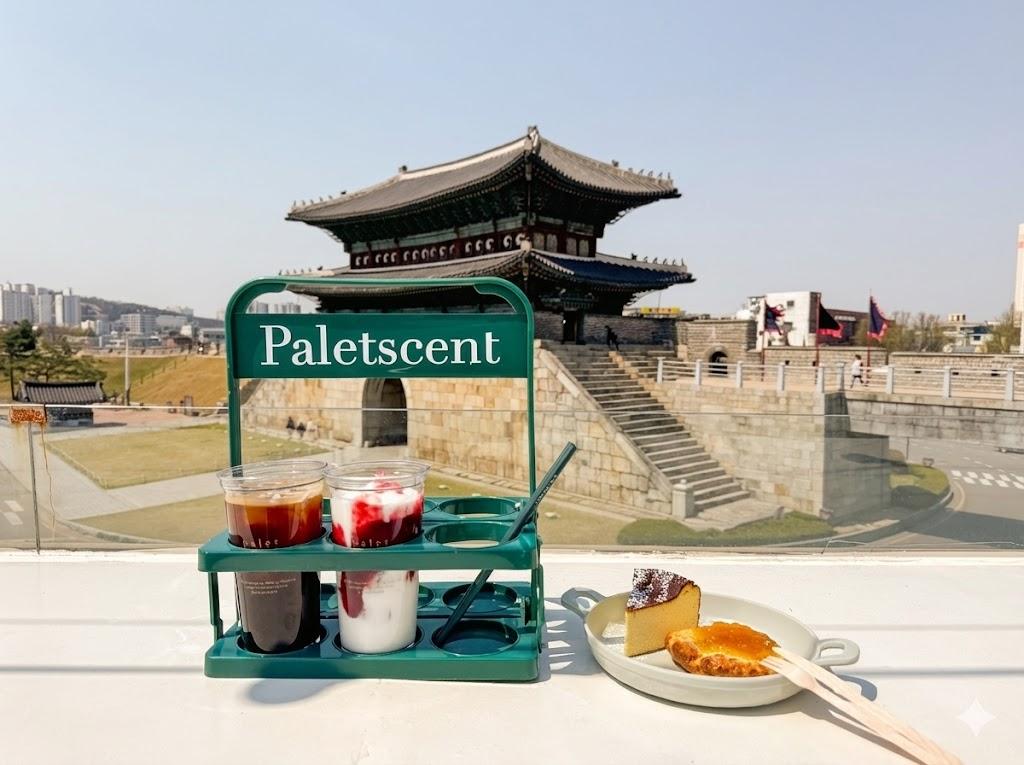
I don’t tell my team, "I’m going to get coffee." I tell them, "I’m going to a cafe."
In English, it’s a subtle distinction. But in Seoul, these are two entirely different mental states. "I'm going to get coffee." (커피 마시러 간다) is a transaction for a beverage. "I'm going to a cafe" (카페에 간다) is a strategic move to secure a destination. It’s about leasing a workspace, a meeting room, or a sanctuary for the next few hours.

The numbers back up this obsession. According to the National Tax Service, South Korea now has over 100,000 cafes—a 114% increase from just five years ago. In Seoul alone, there are roughly 25,000 coffee shops, boasting a density nearly 15 times higher than New York City. Visitors think we just love caffeine, but the data tells a different story: South Koreans drink an average of 367 cups of coffee per year, more than double the global average of 161.
Yet, as a local Korean who has navigated this city for decades, I can tell you: the coffee is just a cover charge. We haven't just built a coffee culture; we’ve built the world’s most sophisticated infrastructure of "Third Places."
The "One-Room" Survival Strategy
To understand why we need 100,000 public living rooms, you have to look at how we live.
As of 2024, one-person households make up over 35% of all Korean households, surpassing 9.5 million. Most young professionals in Seoul live in a "One-Room"—a studio apartment that typically averages between 16 to 23 square meters (about 200 sq. ft.). In that space, your bed is effectively your kitchen, your desk, and your closet.
One-Room
Psychologically, these spaces are claustrophobic. You don't invite friends over to a 20-square-meter room; it’s too intimate and, frankly, too cramped. The cafe serves as a domestic expansion. For the price of a 5,000 KRW ($3.70) Americano, you are upgrading from a 20sqm studio to a 300sqm designer lounge with floor-to-ceiling windows.
In the West, you pay rent for your home and go to a cafe as a treat. In Korea, you pay a "base rent" for a tiny room and pay a "daily subscription fee" (the coffee) to access your actual living room.
Regional Anthropology: The Persona of Seoul’s Spaces
Not all cafes are created equal. To walk through Seoul is to walk through different philosophies of space. As a business leader, I choose my "office" for the day based on the mindset I need to inhabit.
- Seongsu-dong (The Industrial Renaissance): This is where you find the "Anti-Aesthetic." Abandoned shoe factories and dye plants have been left with their cracked concrete and rusted beams intact, but filled with mid-century modern furniture. It is Korea’s answer to Brooklyn, but with a higher budget. It appeals to the "MZ Generation" who craves "Newtro" (New + Retro) authenticity.
- Yeonnam-dong (The Alleyway Secret): This area is built on the scale of the human walk. Small, residential houses converted into 4-table cafes. It’s about intimacy and the feeling of discovering a secret. This is where the "real" Seoul hides in plain sight.
- Gangnam (The High-Efficiency Hub): These are the "Workhorses." Massive, multi-story glass boxes designed for digital nomads. The lighting is bright, the outlets are plentiful, and the atmosphere is one of collective productivity. You don't come here to relax; you come here to execute.
- The Suburban "Mega-Cafe" (대형 카페): This is the newest frontier. On weekends, families drive 40 minutes to the outskirts of Seoul to visit cafes that are essentially architectural museums. Spaces like The Dirty Trunk or Forest Outings can exceed 3,000 square meters. Some have indoor forests; some are built on cliffs overlooking the Han River. For the Korean family, the Mega-Cafe has replaced the Sunday church or the public park.
Café in Seongsu-dong: the industrial Renaissance
Café in Yeonnam-dong: About intimacy and the feeling of discovering a secret
Café in Gangnam: HIgh Efficiency Hub
The Social Engine: The 2-Cha Pivot
Then there’s the functional separation of our social lives. In the West, a "dinner date" is one long event. In Korea, socializing moves in "Rounds" (Cha).
- 1-Cha (The Meal): High-energy, loud, and focused on food.
- 2-Cha (The Cafe): The conversation phase.
Unlike restaurants in Europe or the US, where you might linger over wine for three hours, Korean restaurants are optimized for high turnover. The staff will clear your table the moment you're done. The cafe is where the "real" engagement happens. Without the cafe, the Korean social engine would have nowhere to idle.
In Taiwan, you might linger at a restaurant. In Singapore, a hawker center can be a hangout spot. In Korea, the functional separation is sharper. And because cafes carry the entire burden of "where do we go to actually talk," there need to be a lot of them.
The "Honorary Retirement" Economy
There is a structural reality behind the sheer number of cafes that I often have to explain to my overseas partners. It’s what we call "Honorary Retirement."
In Korea’s somewhat rigid corporate hierarchy, the "career ceiling" often hits earlier than in the West—sometimes around age 45 to 50. Middle managers often find themselves pushed toward early retirement packages. With Korea’s self-employment rate hovering around 20%—one of the highest in the OECD—these retirees need a "Second Act."
Opening a cafe is seen as the most "dignified" form of survival. It’s cleaner than a fried chicken shop and requires less technical skill than a tech startup. This is why the market is flooded with capital from severance packages.
However, the competition is brutal. The three-year survival rate for Korean cafes is only about 54%. This "survive-or-die" pressure is what drives the incredible innovation you see. Owners spend between 100 million to 300 million KRW ($75k - $225k) on interior build-outs alone just to stand out. It’s a relentless aesthetic arms race where the consumer is the ultimate winner.
The Silent Social Contract and the "Kagong-jok"
One thing that never ceases to amaze my expat colleagues is the "MacBook Test."
In a Seoul cafe, you can leave a $2,500 laptop on a table, walk away to use the restroom, or even step outside for a 15-minute phone call. When you return, it will be exactly where you left it. This high-trust social contract is a cornerstone of our cafe culture. It reflects a society that respects the "lease" you've taken on that seat.
This environment has given birth to the "Kagong-jok" (카공족)—people who study or work in cafes for extended periods. There is a silent agreement with the owners: in exchange for the "cover charge" of a coffee, the student or freelancer gets a sanctuary.
Kagong-jok
While Western owners might grumble about "laptop campers," many Korean owners historically embraced them. A busy cafe looks successful, and a successful-looking cafe attracts more foot traffic. However, as rent prices climb, this contract is being tested. We are seeing the rise of "No-Laptop Zones" in high-rent districts and the explosion of "Study Cafes" (스터디카페)—automated, quiet spaces that charge by the hour. This specialization shows that the traditional cafe is now splitting into its functional components: social space vs. deep-work space.
Why This is Korea’s True Export
People ask me if this "Cafe Civilization" can be exported. I tell them it’s unlikely because it’s a solution to uniquely Korean problems: extreme urban density, a rigid corporate exit culture, and a lack of public "Third Places."
I’m writing this now from a converted warehouse in Seongsu-dong. I’ve been here for three hours. The sunlight is hitting the exposed brick just right, the lo-fi beat is at the perfect decibel, and my mental productivity is triple what it would be in my office.
For 5,000 KRW, I didn't just buy a cup of bean juice. I bought a slice of peace in the middle of the world’s most caffeinated, fast-paced city.
Is it an "over-supply" driven by a pressurized labor market? Perhaps. Is it a symptom of a housing crisis? Likely. But it’s also a testament to our ability to create beauty and community in the gaps between our crowded homes and our high-stress offices.
So, if you’re in Seoul, don't just "get coffee." Find a seat. Order an Americano. And realize that for the next three hours, you don't just live in a 20-square-meter room—you own the city.

This post is exclusive premium content reserved for Creatrip Membership subscribers. Our members receive two deep dives every month: one exploring the profound nuances of Korean culture and another providing curated, insider travel tips to help you navigate Korea like a local.