
Seoul or Busan? Which City Should You Study In? | Difference between Seoul and Busan Language Schools
When you're unsure whether to choose Seoul or Busan, scroll down!


When someone decides to study abroad in a certain country, the most deeply considered issue is the selection of the region. Since each country has its own unique characteristics by region, it is important to choose the right region that suits oneself, and this is also the case in Korea. Today, we will explore the language schools in Seoul and Busan, the representative cities of Korea and the cities most visited by foreigners, as well as the regional differences.
The Difference Between Seoul and Busan Language Schools
The types of classes offered at language schools in Seoul and Busan are not significantly different. The regular course of 10 weeks and 200 hours is fixed for each language school, and short-term courses may vary by school. So what is the biggest difference between language schools in Seoul and Busan? It is the tuition fee.
The tuition fee at language schools in Seoul is generally higher than in Busan. Let's compare the numbers in a chart.
| Region | University name | Tuition |
| Seoul | Seoul National University (Morning Class) | 1,944,000 KRW (average) |
| Sogang University (Morning Class) | 1,976,400 KRW | |
| Yonsei University | 1,911,600 KRW | |
| Korea University | 1,890,000 KRW | |
| Ewha Women's University | 1,890,000 KRW | |
| Hankuk University of Foreign Studies | 1,782,000 KRW | |
| Busan | Pusan University | 1,512,000 KRW |
| Busan University of Foreign Studies | 1,436,400 KRW | |
| Busan Catholic University | 1,296,000 KRW | |
| Yeongsan University | 1,382,400 KRW |
※The chart above is based on the regular courses of each school, excluding admission fees and textbook costs.
※The prices include commission fees from Creatrip.
As can be seen from the chart, the average tuition fee of language schools in Seoul is approximately 1.89 million KRW, while the average tuition fee of language schools in Busan is approximately 1.4 million KRW, making the tuition fees in Busan about 490,000 KRW cheaper. Another difference is that there is a tendency for foreign students to gather more in Seoul, so there are relatively fewer foreign students in Busan, making it a better place to practice speaking Korean.
Difference between Seoul and Busan
Education
As of 2022, around 25 out of the top 50 universities in Korea are located in Seoul, and approximately 30 are in the greater metropolitan area. Particularly, 16 out of the top 20 universities in Korea are located in the metropolitan area, indicating a high level of education. Therefore, most Korean students aim to attend universities in Seoul during their senior year of high school. If you plan to continue your undergraduate or graduate studies after completing your language program, it is advantageous to choose language schools in the metropolitan area, especially in Seoul.
Economy
If you fail to secure a spot in a university dormitory, you will need to find a place to live, and the cost of living in Seoul is about twice as expensive as that in Busan. Additionally, basic expenses such as food and coffee are much higher in Seoul, and students attending universities in the Seoul area typically spend around KRW 600,000 per month on living expenses.
Culture
While some people come to Korea because of their favorite idols, others want to have a fulfilling experience during their study abroad by enjoying cultural activities. In Korea, singers and idols hold regular concerts, and even if you are not a fan, it is recommended that you attend at least one concert as an experience. Furthermore, various genres of plays and musicals are quite active, and it is a common cultural activity among locals for dates or leisure time. The difference between Seoul and Busan is the frequency of performances and the variety of genres, as Seoul offers more diverse options in terms of performance types and showtimes.
Exchange
The best way to improve your Korean language skills quickly is to make Korean friends. Joining a school club, participating in extracurricular activities, volunteering, or registering for a language study group are all great ways to make Korean friends. Of course, school clubs differ by institution, but clubs or activities outside of school are more diverse in Seoul, with a larger number of participants. This is not to say that it is difficult to make friends in Busan, but since Seoul has a larger population, academic and job-related activities are more systematically organized.
Living
Seoul has a large population, resulting in heavy traffic. In particular, during rush hour, public transportation such as the subway is often referred to as the "hell-train," and buses can be congested to the point of traffic paralysis. However, since language students typically reside near their school, transportation is not a significant issue. Other advantages to compare are that Seoul is a city of economy and the center of Korean life, while Busan has the advantage of being a beautiful coastal city where you can easily go see the sea if you wish.
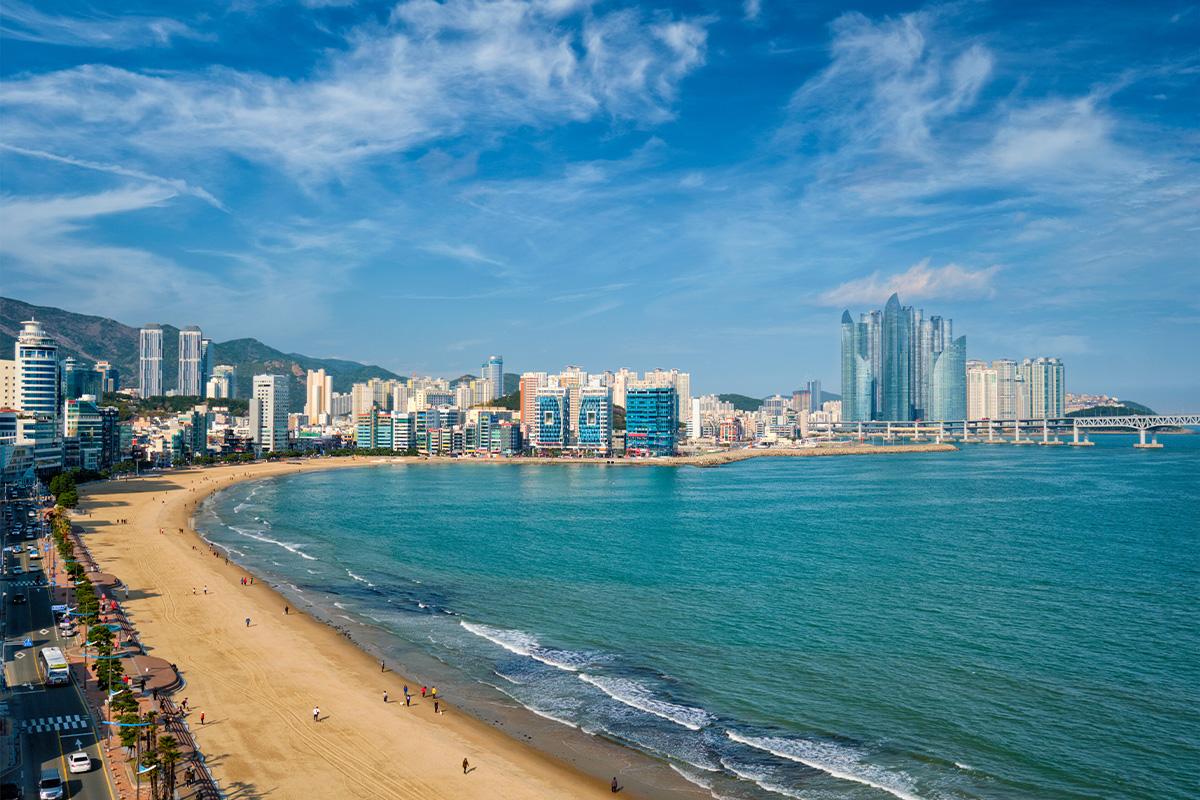

Today, we compared the Korean language schools in Seoul and Busan, as well as the differences between Seoul and Busan. However, regardless of which city you choose to study abroad in, there will always be pros and cons. We hope that you can refer to this article to choose the city that suits you best and have an unforgettable study abroad experience :)
We hope that this was helpful! If you have any questions or concerns, please leave a comment below or send us an email at support@creatrip.com! You can follow us on Instagram, TikTok, Twitter, and Facebook to stay updated on all things Korea!
Book all things trending in Korea on Creatrip! If you have any questions or concerns, please leave a comment below or send us an email at help@creatrip.com! You can follow us on Instagram, TikTok, Threads, and Youtube to stay updated on all things Korea!