
Korean Filler Words That Are Used Most In Conversations
Learn about the most common filler words used in daily conversations to make you sound like a native in Korea!


Did you know that there are meaningless filler words in every language? Terms such as "right," "like," "so," "you know," help direct the flow of conversation or show interest in English.

We often think that the more structured our sentences are, the better we are at speaking the language. But using some of these filler words can actually help sound more natural.
If you want to learn how to speak Korean like a native, or want to learn more about the phases often used in K-dramas, movies, and shows, please continue reading!
Sentence Starters
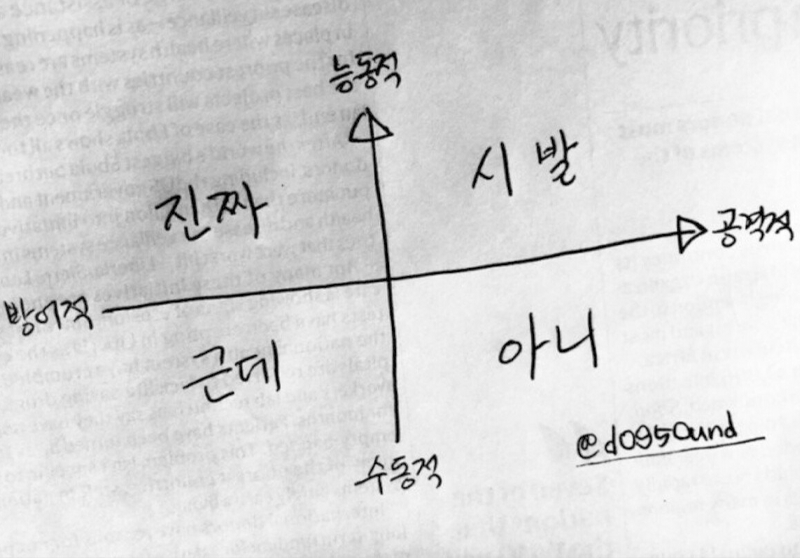
The schematic above became incredibly popular online in Korea titled "4 Korean Sentence Starters."
In the four quadrants are the different terms, on the vertical scale, from bottom to top, ranges from passive (수동적) to active (능동적). On the horizontal scale from left to right ranges from defensive (방어적) to aggressive. (공격적).
Overall it explains four different ways Koreans like to start their sentences and many people found it relatable.
1. 진짜 / jin-jja

Typically '진짜' means 'really' or 'real.' But, it can also be used as and an adverb, so then the meaning changes to 'very' or 'truly'.
However, when '진짜' is used as a sentence starter, it's just an expression without much meaning.
According to the schematic above, it has a defensive and active expression.
Examples:
진짜 숙제 너무 많이 주시는 거 아니에요?
Jin-jja, aren't you giving me too much homework?
진짜 자꾸 그럴래?
Jin-jja, you're going to continue being like that?
2. 근데 / geun-de
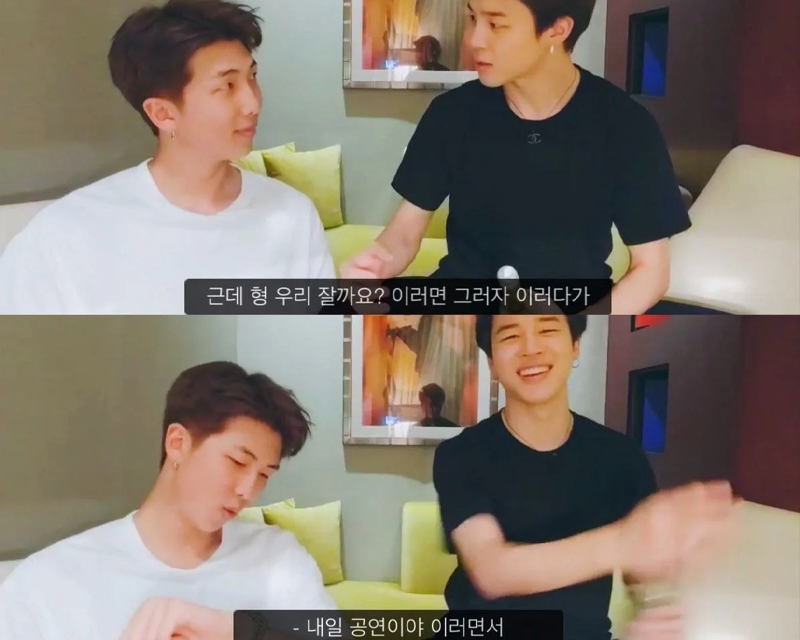
The word '근데' is short for '그런데' which can means 'anyways', 'but', 'well', 'by the way.'
The schematic above explains that it has a defensive and passive expression. This word is used at the start of a sentence to change the subject.
Example:
Situation: When a co-worker keeps bringing up different subjects in a meeting.
근데 우리 오늘까지 기획 회의 끝내기로 하지 않았나요?
By the way, didn't we decide to end the planning meeting by today?
3. 아니 / a-ni
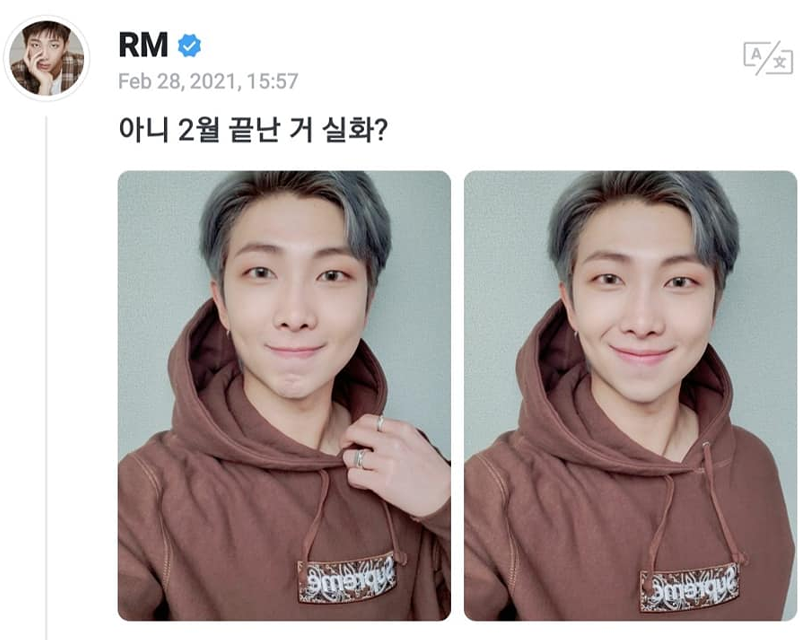
The word '아니' means no, which is often used to give a negative answer to a question.
However, if you start the sentence with '아니', it can mean that you are a bit angry or frustrated.
In the schematic above, it is described as a passive and aggressive expression.
BTS's RM used this word on Weverse saying, "아니 2월 끝난거 실화?" which translates to "No, is it real that it's already the end of February?"
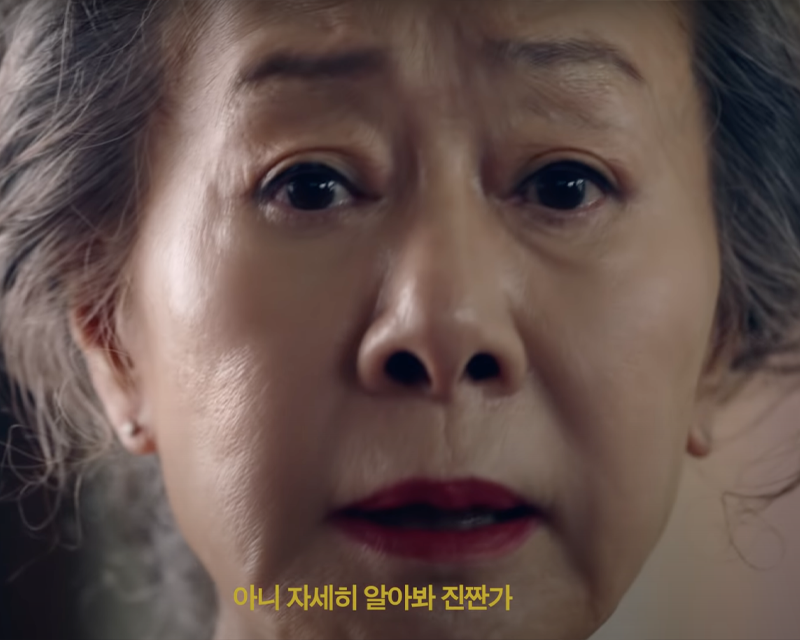
'아니' is often used at the start of a sentence in Korea.
Among Koreans, there is a term 'Anitiating' (아니시에이팅) which is a combination of the words '아니' meaning 'no' and 'initiating.'
This slang refers to the usage of the word '아니' at the beginning of a sentence to start blaming the other person.
Example:
아니 너 지금 뭐하는거야?
Ani, what are you doing?
아니 내가 케이크 내거니까 먹지 말라고 했잖아.
Ani, I told you not to eat the cake because it's mine.
아니 한국인들은 왜 아니 없으면 말을 못해?
Ani, why can't Koreans speak without the word "no?"
4. 시발/si-bal/씨발/ssi-bal

시* is a swear word used in Korea that's very offensive so it shouldn't be used lightly in professional settings or in front of elders.
When this word is used at the start of a sentence, it's not really used to offend someone, but as a strong expression of frustration.
It's highly active and aggressive. Of course, it's still profanity so it shouldn't be used carelessly.
Example:
시발 이게 지금 말이 되는 상황이야?
Si-bal does this situation make sense?

The aforementioned four terms can also be combined to convey more emotion!
According to the person who drew the schematic above, the combinations can be used in the following settings:
시발 아니: When you want to express anger with an expletive and point out the fault of others.
아니 근데: When you hear something ridiculous or absurd and want to interrupt the other person.
근데 진짜: When you bring something up carefully, but still want to express that you're right.
진짜 시발: The more you think about something, the more you feel you have something to say.
아니 근데 진짜 시발: When all emotions clash together overwhelmingly.
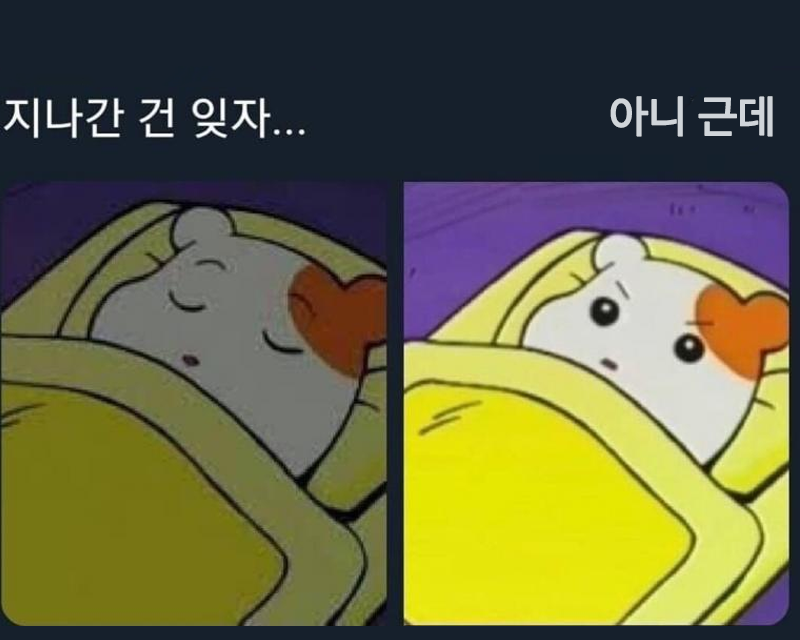
Isn't it really interesting that you can use all four terms at once? You can even change the order of the words and would still work!
Among all the combinations, the one most commonly used is '아니 근데.'
As we mentioned above, it can be used in ridiculous and absurd situations. Please note that it can also be used in positive situations too!
Example:
아니 근데, BTS 지민 너무 귀엽지 않아?
No, but isn't BTS Jimin so cute?
(Meaning that he is ridiculously cute).
5. 있잖아 & 있잖아요/ it-ja-na & it-ja-na-yo
 Source: YouTube JTBC ENTERTAINMENT
Originally, '있잖아' is a conjugated form of the verb '있다.'
But if '있잖아' is used at the beginning of a sentence, it doesn't have a special meaning and is used to get the listener's attention, like 'you know.'
It's often used when you want to change the topic of the conversation and say what you want to say to inform the other person.
Example:
있잖아, 나 어제 BLACKPINK 콘서트 다녀왔어!
You know, I went to BLACKPINK's concert yesterday!
있잖아, 나 너한테 할 말 있어.
You know, I have something to say to you.
Mid-Sentence Fillers
1. 어... / eo...
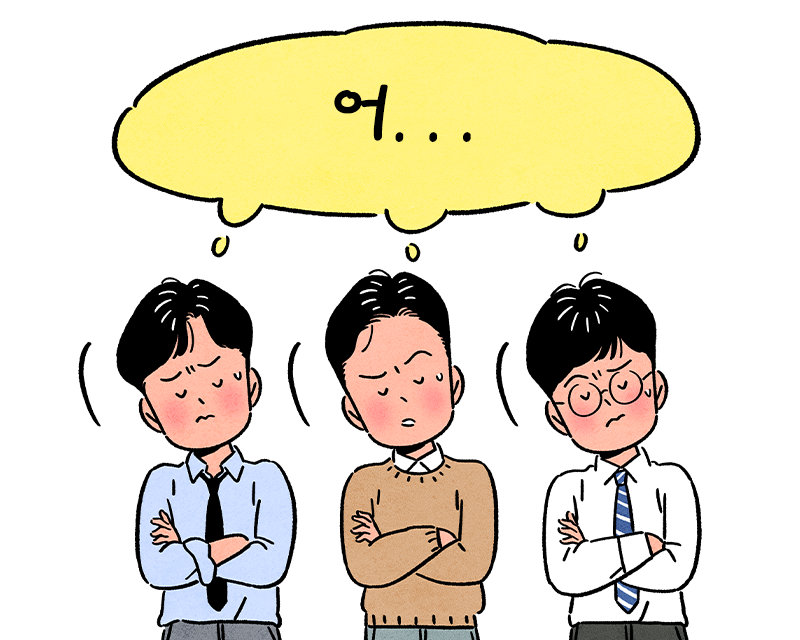
This expression can be used anywhere in the beginning or middle of a sentence. Similar to 'uh..', you can use this when you can't think of what to say next or need some time to organize your thoughts.
When using this word, make sure to lengthen the end of the word just like 'uhhhh.' Otherwise, it may sound like you're just saying 'yes' in Korean.
Example:
A: 너 ITZY 알아?
A: Do you know ITZY?
B: 응! 나는 ITZY 노래 중에, 어... 'WANNA BE'가 제일 좋더라!
B: Yes! I like ITZY's song, eo... "WANNA BE" the most!
2. 그... / geu...

This expression is similar to '어' that we introduced above.
When you can't think of what to say next or want to organize your thoughts you can use '그...'
But unlike '어...', this expression can be used in a variety of ways.
First, you can repeat '그' several times in a sentence quickly, in a staccato manner, to express that you're in a rush.
Second, you can say '그' followed by other words. For example, you can use '그... 뭐냐' or '그... 뭐더라' which means 'uhh.. what was it.'
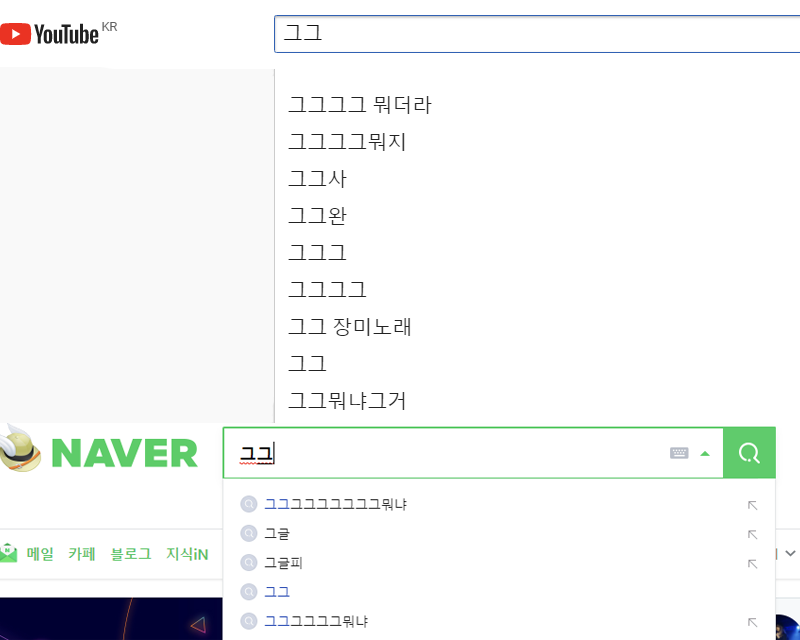
So when you search the word '그그' on the Korean search engine, NAVER or YouTube, you'll see auto search options such as '그그그그' or '그그그그뭐더라.'
This means that when people search online for something and forget what they were searching for, they type '그그그그' out of habit.
Example:
A: 점심에 뭐 먹었어?
A: What did you eat for lunch?
B: 나 그...뭐더라? 까만 소스에 비벼 먹는 면요린데...그그그그...
B: I ate geu... what's it called? The noodles in black bean sauce.. geu...geu...geu...
A: 짜장면?
A: Jjajang-myeon?
B: 그래! 짜장면!
B: Yes! Jjajang-myeon!
3. 막 / Mak
 Source: NAVER Webtoon LOOKISM
The word '막' is a shortened version of the adverb '마구' and has the meaning of 'extreme' or 'carelessly.'
However, when this word is used as a filler word, it has no meaning. If the meaning of a sentence is not changed even after removing the word 막, then it means that it was just used as a filler word.
The English equivalent is using "like" in the middle of a sentence!
Example:
너 설마 막 밤 새고 왔다거나 막 그런 건 아니지?
You didn't mak, stay the night or anything right?
어제 막 친구랑 집에 가는데, 갑자기 막 비가 오더라구.
I was mak walking home with a friend yesterday, and it just mak started pouring.
Today we introduced various filler words that are used the most in Korea!
If you incorporate any of the terms from this blog in your sentences, the way you speak can come off more natural! So why not start practicing today?
Also, please keep in mind that most of the expressions in this blog are only used in casual settings with friends, so avoid using them in cases where you need to be respectful.
Book all things trending in Korea on Creatrip! If you have any questions or concerns, please leave a comment below or send us an email at help@creatrip.com! You can follow us on Instagram, TikTok, Threads, and Youtube to stay updated on all things Korea!